The Society for Psychical Research was founded in 1882 by leading scholars and scientists who wanted to investigate strange phenomena like telepathy and apparitions using scientific methods. At the time, public interest in such phenomena grew, but skepticism was also high. The society aimed to study claims systematically, focusing on verifiable evidence and avoiding fraud. If you look further, you’ll discover how their disciplined approach helped shape modern parapsychology and scientific inquiry into the unknown.
Key Takeaways
- Founded in 1882 by prominent scholars to scientifically investigate phenomena challenging conventional understanding.
- Aimed to study psychical phenomena like telepathy and apparitions with rigorous, evidence-based methods.
- Emphasized skepticism, systematic experimentation, and transparency to ensure credible research.
- Addressed public fascination and scientific skepticism regarding unexplained phenomena.
- Laid the groundwork for modern parapsychology through disciplined, credible inquiry.
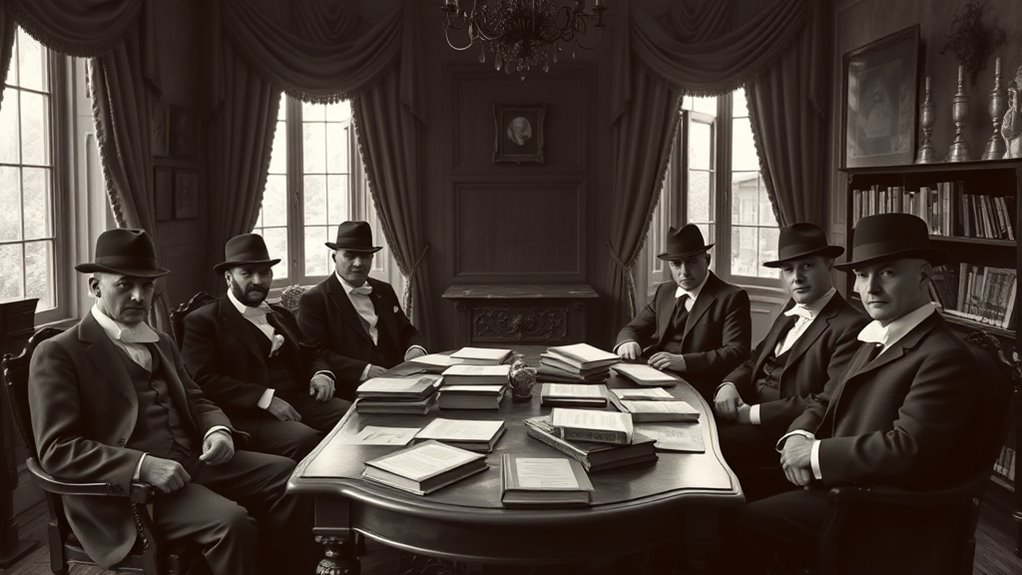
In 1882, a group of prominent scholars and thinkers founded the Society for Psychical Research to investigate phenomena that challenged conventional scientific understanding. At that time, many were intrigued by reports of psychical phenomena—events like telepathy, apparitions, and unexplained sensations—that seemed to defy the laws of physics and biology. These phenomena sparked curiosity but also skepticism, especially from the scientific community rooted in empirical evidence and rational inquiry. The founders recognized the importance of approaching such claims with scientific skepticism, aiming to separate genuine anomalies from illusions, frauds, or misinterpretations.
Founded in 1882, the Society for Psychical Research aimed to scientifically explore phenomena challenging conventional understanding.
You might find it surprising that, despite the skepticism, many respected individuals believed some psychical phenomena warranted serious investigation. The society’s goal wasn’t to endorse supernatural explanations but to apply rigorous scientific methods to study these phenomena systematically. They sought to gather verifiable data, replicate experiments where possible, and evaluate claims with objectivity. This approach marked a significant departure from earlier, often sensationalist, investigations into the paranormal, emphasizing instead the importance of evidence-based research. The founders understood that, to gain credibility, their work had to stand up to scrutiny and be transparent.
Sources for the society’s early efforts included personal accounts, experimental reports, and case studies, many of which seemed to suggest genuine occurrences of psychical phenomena. However, the society was cautious; they acknowledged that many reports stemmed from psychological biases, misperceptions, or outright deception. To address this, they devised standardized protocols for testing claims, such as controlled experiments and blind conditions. These methods aimed to eliminate bias and ensure that findings could be scrutinized and validated by others. Their work was pioneering, combining scientific skepticism with an open mind, setting a foundation for modern parapsychology. Additionally, they emphasized the importance of rigorous methodology to ensure the validity and reliability of their findings.
You should appreciate that the society’s founding was driven by a desire to understand the unknown, without dismissing it outright. They recognized that some phenomena appeared to challenge existing scientific paradigms, but they insisted on careful, methodical investigation rather than wild speculation. Over time, this balanced approach helped legitimize psychical research as a serious academic pursuit, even as debates about the nature of these phenomena continue today. Their cautious, skeptical stance fostered a more disciplined inquiry into the mysteries of the mind and beyond, shaping the way future researchers approached the unexplained.

Basic Psychic Development: A User's Guide to Auras, Chakras & Clairvoyance
- Condition: Used Book in Good Condition
As an affiliate, we earn on qualifying purchases.
Frequently Asked Questions
Who Were the Key Founders of the Society for Psychical Research?
You’ll find that key founders of the Society for Psychical Research included prominent figures like Frederic W. H. Myers, Henry Sidgwick, and William F. Barrett. They aimed to scientifically examine mediumship development and challenge the often unscientific claims of spiritualist movements. These founders believed in exploring paranormal phenomena objectively, contributing to the society’s mission to understand psychic experiences beyond mere spiritualist beliefs.
How Did the Societal Context Influence the Society’s Formation?
You see, Victorian beliefs in spiritualism and the supernatural heavily influenced the society’s formation, as many sought scientific skepticism to understand these phenomena. You’d recognize that this societal context pushed researchers to investigate paranormal claims systematically, aiming to bridge science and belief. The era’s fascination with the unseen motivated key founders to establish the Society for Psychical Research, promoting rigorous inquiry amidst widespread acceptance of spiritualism.
What Were the Initial Sources of Funding for the Society?
Funding sources for the society were like a wellspring of support, flowing from early benefactors who believed in exploring the mysterious. You’d find that initial backing came from prominent scientists, scholars, and enthusiasts who generously contributed funds. These early benefactors helped establish the society’s credibility and resources, enabling it to conduct investigations into psychic phenomena. Their support laid the foundation for ongoing research and credibility in the emerging field.
Did the Society Face Any Major Controversies at Its Founding?
At its founding, the Society for Psychical Research faced major controversies, mainly from scientific skeptics and religious groups. Scientific skepticism questioned the validity of paranormal claims, while religious opposition viewed the research as threatening to spiritual beliefs. These tensions created public debates and skepticism about the society’s legitimacy, challenging its efforts to legitimize psychical phenomena scientifically and sparking ongoing controversy that persists today.
How Did Public Perception of Psychical Research Evolve During This Period?
As you explore this era, you’ll find public perception of psychical research shifting like a cautious tide. Initially, skepticism ran deep, with media portrayal often casting it as fringe science or folly. Over time, curiosity sparked debates, and some began to see it as a quest for understanding the unknown. This evolving view reflects society’s struggle between doubt and wonder, shaping the complex landscape of psychical research’s reputation.
Conclusion
As you reflect on the founding of the Society for Psychical Research, you see how curiosity ignited a movement—an invitation to explore the unknown, to challenge skepticism, and to embrace mystery. This moment wasn’t just about investigation; it was a call to question what you believe, to seek answers beyond the visible. In the dance between science and the supernatural, you realize that progress begins where certainty ends—at the edge of discovery.