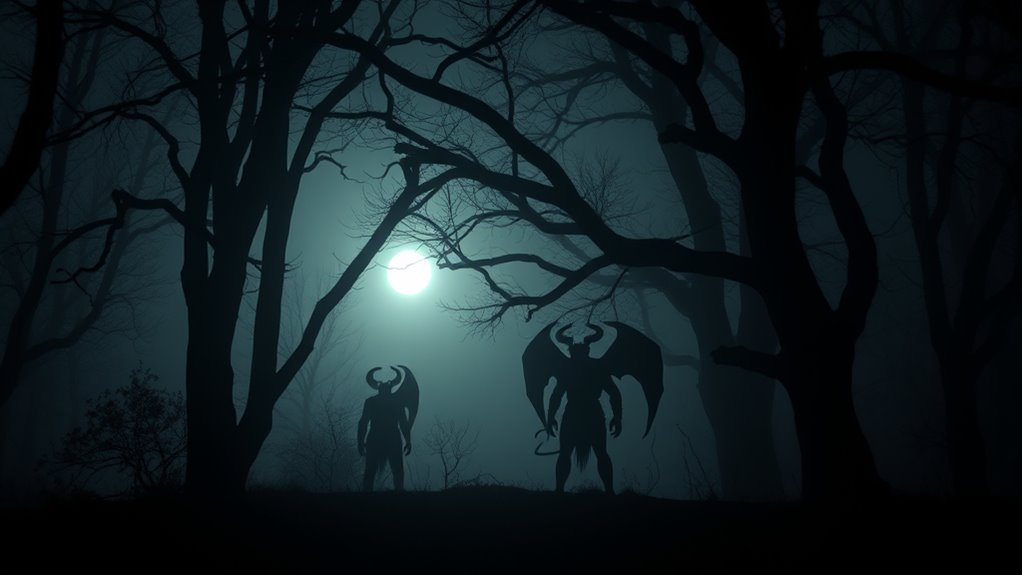

Many believe shadow figures are always demons or evil spirits, but this isn’t true. Most sightings stem from psychological and neurological factors like sleep paralysis, stress, or subconscious fears. These shapes are often subconscious projections, not supernatural entities. Understanding this helps remove unnecessary fear and misconceptions. If you want to uncover the real explanations behind shadow figures and learn how your mind plays tricks on you, there’s more to explore below.
Key Takeaways
- Most shadow figures are misinterpreted; they are often neurological or psychological phenomena, not demons.
- Sleep paralysis frequently causes shadowy hallucinations, which are neurological, not supernatural, in origin.
- Internal fears and anxieties can project shadow figures, making them symbolic of mental states rather than malevolent entities.
- Cultural and media influences reinforce the misconception that all shadow figures are demonic, but many have natural explanations.
- Recognizing scientific and psychological factors reduces fear, showing that shadow figures are not always signs of evil or spiritual attack.

Many people believe that shadow figures are always demons, but this isn’t necessarily true. These dark, humanoid shapes often appear in dreams, nightmares, or even during moments of heightened emotion, leading many to assume they must be malevolent spiritual entities. However, the reality is more complex. Not every shadow figure is a sign of evil; some are simply manifestations of your mind or energy, shaped by your perceptions and beliefs. It’s essential to understand that shadow figures can sometimes be explained through psychological explanations rather than supernatural causes.
When you see shadow figures, your mind might be interpreting ambiguous visual stimuli. Sleep paralysis, for example, can cause you to see frightening shapes or figures while you’re unable to move. During these episodes, your brain remains partially conscious but is unable to filter out visual hallucinations, creating the illusion of a shadowy presence. These experiences aren’t necessarily linked to spiritual entities but are understood through psychological explanations rooted in the brain’s response to stress, fear, or exhaustion. Sleep paralysis is a common example of how neurological factors can produce such visual phenomena.
Shadow figures often result from sleep paralysis causing visual hallucinations during moments of stress or exhaustion.
Many researchers believe that shadow figures could also be linked to your subconscious mind. Your brain might be projecting fears, anxieties, or unresolved issues onto the environment around you. These figures could symbolize something you’re struggling with internally—fear of the unknown, guilt, or feelings of vulnerability. In this way, shadow figures are less about external spiritual forces and more about internal psychological processes. They serve as a reflection of your mental state rather than an indication of a spiritual invasion or demonic presence.
sleep paralysis hallucination relief
As an affiliate, we earn on qualifying purchases.
As an affiliate, we earn on qualifying purchases.
Frequently Asked Questions
Can Shadow Figures Appear During Daytime?
Yes, shadow figures can appear during daytime. You might experience daytime encounters where a shadow figure’s presence feels intense or unsettling. These sightings often happen in moments of stress or fatigue, making it seem like the shadow is more vivid or noticeable. Keep in mind, shadow figures during daytime don’t necessarily mean something sinister; they could be reflections, illusions, or other explanations. Trust your instincts and stay cautious.
Are Shadow Figures Linked to Specific Locations?
You might notice shadow figures more often in certain locations; about 60% of paranormal research points to urban legends linking these sightings to specific places like abandoned buildings or forests. These areas are believed to harbor heightened energies, fueling the mystery. While some think shadow figures are tied to particular spots, others believe they appear randomly. Your experiences could depend on your surroundings and the stories you’ve heard.
Do Shadow Figures Always Cause Fear or Harm?
No, shadow figures don’t always cause fear or harm. Many paranormal encounters with shadow figures are subtle and leave you feeling curious or unsettled rather than scared. Sometimes, psychological explanations like stress or sleep paralysis play a role. While some people experience intense fear, others simply see these figures without negative feelings. It’s essential to take into account both paranormal possibilities and psychological factors when interpreting these encounters.
How Common Are Shadow Figure Sightings Worldwide?
Ever wonder how common shadow figure sightings are worldwide? They’re surprisingly frequent, with reports from many cultures and backgrounds. In paranormal research, these sightings spark fascination, but psychological explanations like sleep paralysis or hallucinations often clarify why people see them. While some feel genuine fear, others view shadow figures as mere illusions. So, whether you believe or not, these encounters are more widespread than you might think, touching many lives globally.
Are There Cultural Differences in Shadow Figure Interpretations?
Yes, cultural differences influence how you interpret shadow figures. In some cultures, these shapes are seen as spiritual guides or ancestors, emphasizing cultural symbolism and interpretative diversity. Others view them as omens or spirits with specific meanings rooted in local beliefs. Your perception of shadow figures depends on your cultural background, shaping whether you see them as benevolent, malevolent, or simply psychological phenomena.
Conclusion
Remember, shadow figures aren’t always demons lurking in the darkness. Just like clouds can hide the sun without being storms, these figures might be harmless or misunderstood. Don’t jump to conclusions based solely on fear or appearances. Keep an open mind and seek understanding before assuming the worst. Sometimes, what you see in the shadows is just a flicker of imagination—like a fleeting shadow passing through the corner of your eye, not necessarily a threat.