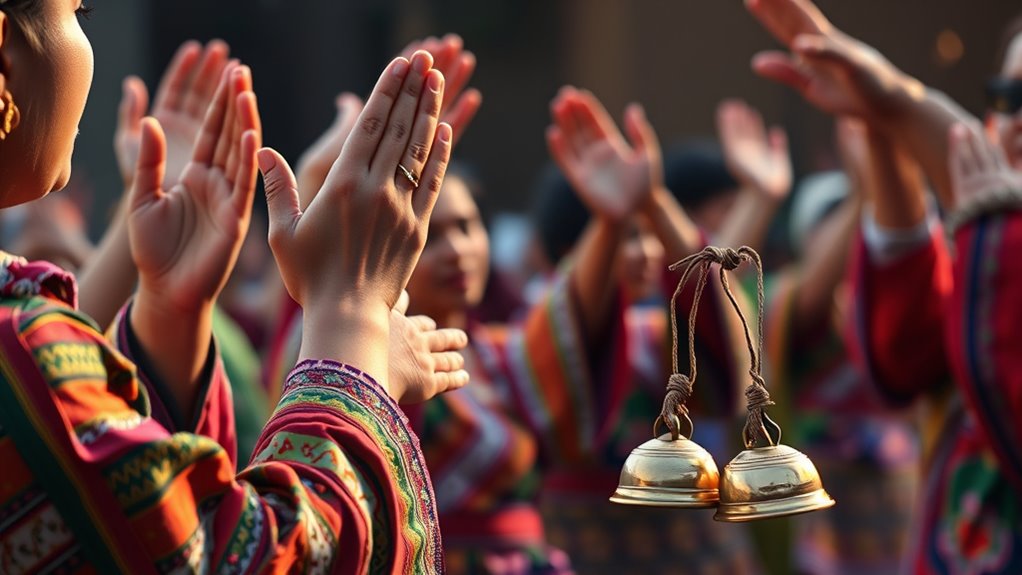

Clapping and hand-bell methods involve simple hand movements that promote group coordination and rhythmic accuracy. When you participate, you listen carefully to cues, adjust your timing, and work with others to create a unified musical effort. These activities build teamwork, trust, and a shared sense of achievement through synchronized actions. As you practice, you’ll enhance your rhythmic skills and learn how collaboration transforms individual efforts into lively, enthralling performances—keep exploring to discover more about these effective techniques.
Key Takeaways
- Clapping and hand-bell methods utilize simple hand movements to create rhythmic, coordinated musical effects.
- These activities emphasize rhythm synchronization and listening skills to maintain steady timing.
- Group participation enhances unity, teamwork, and mutual responsiveness through synchronized movements.
- Regular practice improves coordination, confidence, and the ability to anticipate musical cues.
- These methods highlight the importance of collaborative effort, fostering shared musical experiences and collective achievement.
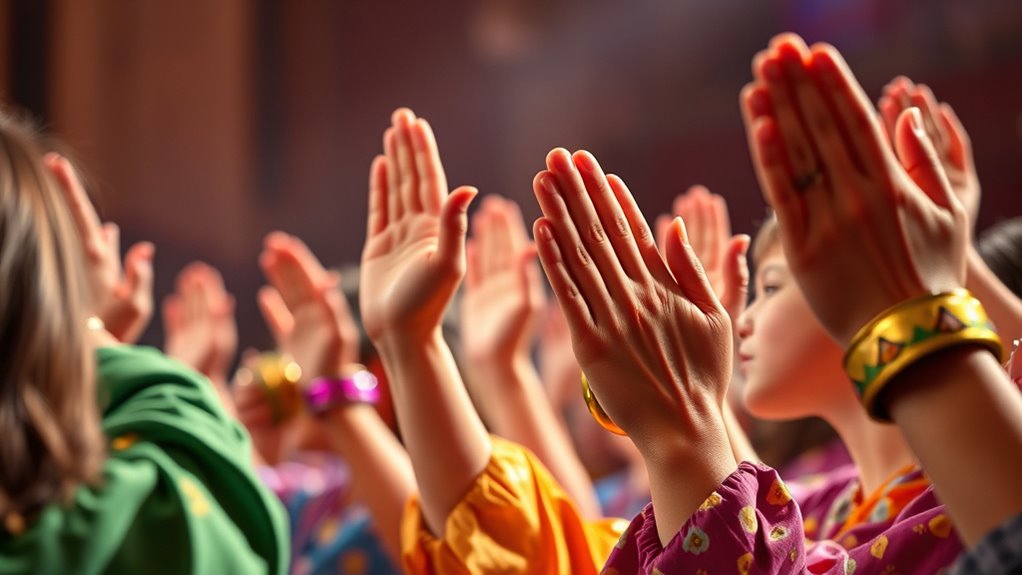
Have you ever wondered how simple hand movements can create powerful musical effects? When you participate in clapping or hand-bell methods, you’re engaging in a form of musical communication that relies heavily on rhythm coordination and group synchronization. These activities might seem straightforward, but they demand a remarkable level of focus and cooperation. As you clap or strike hand bells in unison with others, you’re not just producing sound; you’re building a shared musical experience that hinges on your ability to stay in sync with the group. This collective effort transforms individual actions into a cohesive, dynamic performance.
Engaging in hand-clapping and hand-bell activities fosters teamwork through rhythm and synchronization.
Rhythm coordination is at the core of what makes these methods effective. You need to listen carefully to the beats, internalize the timing, and adjust your movements accordingly. Whether you’re clapping along to a song or playing hand bells in an ensemble, maintaining a steady rhythm requires concentration and a good sense of timing. When everyone in the group contributes their part, the combined rhythm becomes more compelling and vibrant. Your ability to stay aligned with the beat influences the overall sound, making the performance more lively and engaging. It’s a skill that improves with practice, as you learn to feel the pulse of the music and anticipate the group’s movements.
Group synchronization is equally essential. When you work with others, your hand movements must match theirs precisely, creating a seamless flow of sound. This synchronization fosters a sense of unity and teamwork, as each person’s contribution is essential to the collective output. As you learn to listen for cues and adjust your timing, you develop a heightened awareness of your fellow performers. This mutual responsiveness cultivates trust and cooperation, which are indispensable for executing complex patterns or rhythms smoothly. The more synchronized you become, the more impressive the musical effect, turning simple clapping or hand-bell ringing into a captivating performance.
Through consistent practice, you’ll notice how your coordination improves, and with it, your confidence in group settings. You’ll learn to read cues, anticipate the group’s rhythm, and adjust your movements accordingly—all of which strengthen group synchronization. The shared experience of creating music with others fosters a sense of community and achievement. Ultimately, these methods teach you that music is not just about individual skill but about working together harmoniously. When you master rhythm coordination and group synchronization, you harness a powerful way to express yourself and connect with others through rhythm and sound. Recognizing the importance of group dynamics can further enhance collaborative musical efforts.
Frequently Asked Questions
What Are the Origins of Clapping and Hand-Bell Traditions?
You might find that clapping and hand-bell traditions have rich history origins rooted in ancient rituals and communal celebrations. These practices hold cultural significance, often used to show appreciation, unity, or spiritual connection across various societies. Over time, they’ve evolved into modern expressions of joy and collective participation. Understanding their history helps you appreciate their role in fostering community bonds and honoring cultural heritage worldwide.
How Do Different Cultures Incorporate Clapping in Their Rituals?
You see that different cultures incorporate clapping into their rituals as a way to express cultural expressions and strengthen social bonding. In African ceremonies, you might clap rhythmically to celebrate community unity, while in Asian traditions, clapping signifies respect and reverence during religious events. Indigenous groups often use clapping to communicate and connect during storytelling or dances. This universal act fosters a sense of belonging and shared identity across diverse cultural contexts.
Are There Health Benefits Associated With Hand-Bell Practices?
You might find that hand-bell practices gently nurture your mental health and physical fitness. The rhythmic movements and focused attention can reduce stress, boost mood, and improve coordination. While they don’t serve as a miracle cure, incorporating hand-bell routines into your day offers a calming, engaging activity that supports overall well-being. Embracing this gentle practice can deepen your connection to yourself, fostering balance and resilience in everyday life.
What Materials Are Best for Making Durable Hand-Bells?
You should choose durable hand-bells made from high-quality metal alloys like bronze or brass, which resist corrosion and produce clear, resonant sounds. For handles and parts that need a softer touch, select strong, smooth wood such as oak or maple. Combining these materials guarantees your hand-bells are both sturdy and functional, lasting through regular use while maintaining excellent sound quality.
How Can Beginners Improve Their Rhythm With Clapping Techniques?
To improve your rhythm with clapping techniques, focus on consistent practice drills and rhythm exercises. Start with simple patterns and gradually increase complexity as you gain confidence. Use a metronome or tap along with music to develop steady timing. Regularly practicing these drills helps internalize beats, making your clapping more precise and natural. Keep patient and persistent, and you’ll notice steady progress in your rhythm skills.
Conclusion
By now, you see how clapping and hand-bell methods can energize any group activity. These simple techniques boost engagement, foster teamwork, and make moments memorable. Isn’t it worth trying something so easy yet so effective? With just a little practice, you can transform ordinary gatherings into lively, harmonious experiences. So why not give these methods a shot and see how they can bring your events to life? After all, the power’s in your hands.