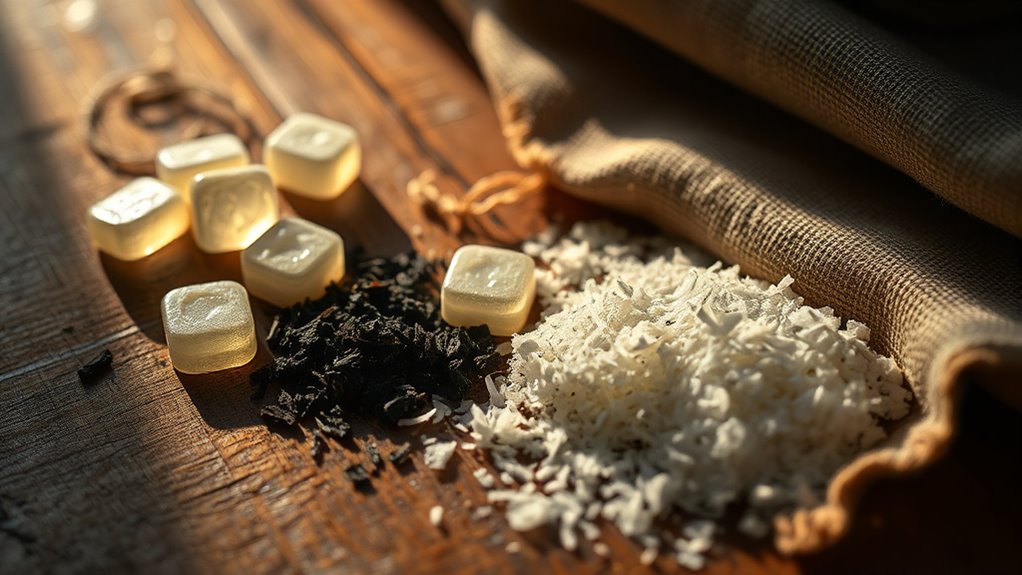

In folklore, camphor and naphthalene are seen as powerful symbols of protection. People burn camphor during rituals to clear negative energies and ward off evil spirits, while naphthalene is believed to act as a barrier against pests and harmful influences. Both substances are revered for their mystical qualities, representing safety and spiritual cleansing in many cultures. Exploring their cultural significance reveals a rich tradition of seeking divine protection and warding off misfortune—there’s much more to uncover.
Key Takeaways
- Camphor and naphthalene are traditionally believed to ward off evil spirits and negative energies in various cultures.
- Burning camphor during rituals symbolizes spiritual cleansing and the destruction of malevolent forces.
- Naphthalene is regarded as a protective agent against pests and unseen harmful spirits in folklore.
- Both substances serve as symbols of safety, purification, and divine protection in cultural practices.
- Their long-standing use reflects a universal desire for spiritual well-being and safeguarding against unseen threats.
Camphor and naphthalene have long played essential roles in folklore across many cultures, believed to ward off evil spirits, pests, and negative energies. These substances are more than just household items; they carry deep symbolic and mythological significance that has persisted through generations. When you think of traditional uses, you might imagine burning camphor during religious rituals or placing naphthalene balls in wardrobes and drawers. These practices aren’t random—they stem from centuries of cultural beliefs that these substances possess protective powers.
Camphor and naphthalene symbolize protection, spiritual cleansing, and warding off negative energies across cultures.
In many traditions, camphor is considered a sacred purifier. Its strong aroma is thought to clear negative energies and invite divine blessings. For instance, in Indian culture, lighting a camphor flame during spiritual ceremonies isn’t just about fragrance; it symbolizes the destruction of evil and the awakening of spiritual consciousness. The mythological significance of camphor ties back to stories of divine purifiers who use its fire to dispel darkness and evil. It’s believed that the smoke of burning camphor can dissolve malevolent spirits and cleanse the environment, making it a common element in rituals meant to protect homes and sacred spaces. Additionally, modern practices incorporate the use of processed substances like merchant account credit processing to facilitate transactions for religious offerings and traditional products.
Naphthalene, on the other hand, has a more practical role rooted in folklore. Its use as a pest repellent is well-known, but it also bears mythic weight as a guardian against unseen threats. In some cultures, placing naphthalene balls in storage areas isn’t just about keeping moths away; it’s about creating a protective barrier against spirits that might cause misfortune or illness. The strong smell is thought to act as a barrier that prevents negative energies from entering a space, making it a symbol of warding and protection. Historically, people believed that these substances could trap or dispel evil influences, ensuring safety and peace within the household.
Both camphor and naphthalene have permeated cultural stories and traditional practices, reinforcing their mythological significance. They serve as tangible symbols of protection, cleansing, and spiritual safeguarding. While modern science recognizes their practical uses, their folklore roots reveal a deeper cultural narrative—one where these substances act as mystical shields against unseen harms. Whether burned during rituals or placed in storage, their enduring presence in folklore underscores the universal human desire for safety, purity, and divine favor. So, the next time you see camphor or naphthalene in a traditional setting, remember that their roles go far beyond the physical—they’re woven into the mythic fabric of cultural beliefs about protection and spiritual well-being.

TRUMIRI Camphor & Frankincense Incense Sticks & Holder Bundle Variety Pack From Hem Trumiri Insense Inscents Insencents Insence
This bundle includes 3 packs of and 3 packs of Camphor insense stick and Trumiri incense stick holder.
As an affiliate, we earn on qualifying purchases.
As an affiliate, we earn on qualifying purchases.
Frequently Asked Questions
Are There Modern Scientific Studies Supporting Folklore Claims About These Substances?
Modern research has explored the scientific validation of folklore claims about camphor and naphthalene, but results are mixed. You’ll find studies confirming camphor’s antimicrobial and medicinal properties, supporting traditional uses. However, research on naphthalene’s effectiveness is limited, and safety concerns often overshadow potential benefits. Overall, while some modern studies support certain folklore claims, it’s essential to rely on scientific validation and not just traditional beliefs.
How Do Different Cultures Uniquely Interpret Camphor and Naphthalene Uses?
You’ll notice that different cultures uniquely interpret camphor and naphthalene through cultural symbolism and ritual applications. For example, in India, camphor symbolizes purity and is used in religious ceremonies, while in Western traditions, naphthalene often serves as a moth repellent. These substances carry distinct meanings and functions, reflecting each culture’s beliefs and practices, which shape how people incorporate them into rituals and daily life.
Can Folklore Beliefs About These Substances Influence Their Legal Regulation?
Imagine folklore as a guardian at the gate, shaping how society views substances like camphor and naphthalene. Your cultural perceptions act as keys, influencing regulatory decisions. When folklore paints these substances as sacred or dangerous, it sways lawmakers, either tightening or loosening regulations. So, yes, cultural stories and beliefs can profoundly influence regulatory influence, turning ancient tales into modern policies, and affecting how you access and use these substances today.
Are There Health Risks Linked to Traditional Uses in Folklore Practices?
You should know that traditional uses of camphor and naphthalene can pose health risks, despite cultural perceptions that view them as harmless or even beneficial. Health implications include respiratory issues, skin irritation, or toxicity if ingested or misused. Cultural perceptions often downplay these dangers, but it is crucial to recognize the potential harm and handle these substances with caution, especially when used in folklore practices.
How Have Folklore Perceptions of These Substances Changed Over Time?
You’ve seen how historical beliefs once regarded camphor and naphthalene as powerful protectors against evil spirits, but cultural shifts have changed that view. Today, you understand these substances mainly as household items with potential health risks rather than mystical safeguards. Modern science’s insights have led you to be more cautious, recognizing that traditional perceptions often overlooked safety concerns, and now, you approach these substances with a more informed, health-conscious perspective.

50 Cedar Balls for Clothes – Fresh Smell for Closets and Drawers – Protection for Garments – Cedarwood Closet Freshener & Protects from Moths – Wood Block for Drawer & Storage
Protect your clothes from damage with our premium quality cedar blocks for clothes storage, made from 100% aromatic…
As an affiliate, we earn on qualifying purchases.
As an affiliate, we earn on qualifying purchases.
Conclusion
So, next time you come across camphor or naphthalene in your home, remember their rich folklore and traditional uses. Imagine a family using camphor to ward off evil spirits or naphthalene to keep moths at bay—these stories show how deeply rooted they are in our culture. Their historical significance reminds you that even everyday items carry fascinating tales, blending myth and practicality in ways you might never have realized.

CART PRO – Panchmukhi Aarti Diya I Pancharti Diya Oil Lamp I Panch Mukhi Aarti Deepak Oil Lamp Jyoti Puja Diya Stand Aarti Diya Temple
This is a traditional diya oil lamp made of brass metal. It looks very pretty and culturally ethnic.
As an affiliate, we earn on qualifying purchases.
As an affiliate, we earn on qualifying purchases.

Rodent Mouse Repellent 24 Pack, Peppermint Oil Rat & Mice Repellent, Natural Moth Balls for Rodents Deterrent, Safe for Pets & Humans, Indoor & Outdoor Use, Keep Rodents Away from Garden & Home
Powerful and Efficient Mouse Repellent: Formulated with a high concentration of essential oils like peppermint, each pouch delivers…
As an affiliate, we earn on qualifying purchases.
As an affiliate, we earn on qualifying purchases.