
Solar storms happen when the sun suddenly releases magnetic energy, sending charged particles and intense radiation toward Earth. These bursts can disrupt your communication systems, power grids, and navigation signals, while also creating beautiful auroras in the sky. Sometimes, the effects are immediate, while at other times they cause long-term electronic damage. To understand how these processes influence anomalous reports and Earth’s environment, explore what causes these powerful solar phenomena and their impact on our technology.
Key Takeaways
- Solar storms result from sudden releases of magnetic energy on the sun’s surface, producing intense electromagnetic radiation and charged particles.
- These charged particles and electromagnetic emissions can disrupt Earth’s communication, navigation systems, and power grids.
- Coronal Mass Ejections (CMEs) can amplify geomagnetic disturbances when directed toward Earth, causing widespread technological effects.
- Anomalous reports, such as unexplained lights or electronic disturbances, may be linked to solar storm activity affecting Earth’s environment.
- Monitoring solar activity helps scientists predict storm impacts, improving preparedness for disruptions and unusual phenomena.
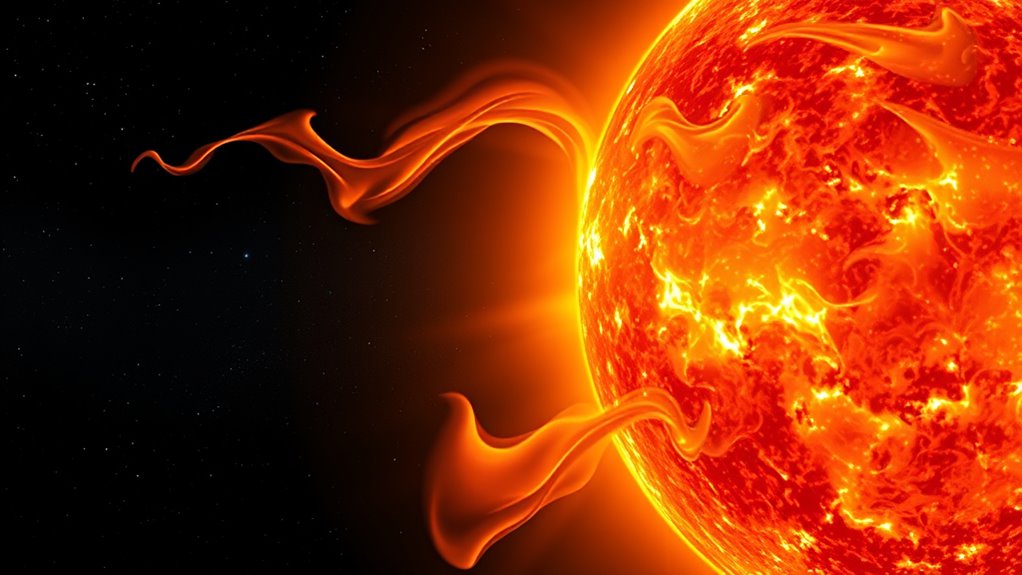
Solar storms, also known as solar eruptions, occur when bursts of magnetic energy from the sun’s surface suddenly release and send charged particles hurtling through space. These powerful events can have a profound impact on Earth’s magnetic environment, leading to a variety of effects you might notice or experience. When a solar storm occurs, it often produces intense solar flares—bright bursts of radiation that can influence solar flare impacts on Earth. These flares release electromagnetic energy across the spectrum, including X-rays and ultraviolet radiation, which can impact communication systems and navigation signals almost instantly.
Solar storms release magnetic energy and radiation, affecting communication and navigation systems almost instantly.
The real concern, however, lies in the charged particles and their interaction with Earth’s magnetic field. When these particles reach our planet, they can cause geomagnetic disturbances—disturbances in Earth’s magnetic field that can disrupt satellite operations, power grids, and radio communications. During significant solar storms, you might observe increased auroras, as charged particles collide with molecules in Earth’s atmosphere, creating stunning displays of the northern and southern lights. But these geomagnetic disturbances aren’t just visual; they can also induce currents in long conductors, affecting pipelines and electrical infrastructure, sometimes leading to power outages or damage to sensitive electronic equipment.
Understanding the science behind these impacts helps you grasp why solar storm activity is closely monitored. Space agencies and scientists track solar flares and coronal mass ejections (CMEs), which are massive bursts of solar wind and magnetic fields rising above the solar corona. When these CMEs are directed toward Earth, they can intensify geomagnetic disturbances. The timing and strength of these events determine how severe their impact will be. For example, a strong CME hitting Earth can cause widespread disruptions, while smaller ones might only produce minor effects or enhanced auroras.
Your awareness of solar flare impacts and the resulting geomagnetic disturbances can help you prepare for potential disruptions. For instance, if a significant solar storm is forecasted, power companies might take steps to safeguard infrastructure, and airlines may reroute flights to avoid communication blackouts at high altitudes. Ultimately, these phenomena highlight the Sun’s dynamic nature and its influence on your daily life, especially as technology becomes more interconnected and vulnerable to space weather. By understanding the science behind solar storms, you gain insight into how our planet interacts with these powerful solar events and why scientists continue to monitor and study them closely.

HULPPRE Solar Outdoor Motion Sensor Alarm-129db Loud Siren Lamp Noise Maker, 4 Working Modes Strobe Light with Remote,Say Goodbye to The Unwanted Explorers
- Enhanced Security for Your Home: Scares away intruders and unwanted explorers
- Multiple Operating Modes: Four customizable modes for different needs
- Dual Charging Options: Solar power with USB backup for continuous operation
As an affiliate, we earn on qualifying purchases.
As an affiliate, we earn on qualifying purchases.
Frequently Asked Questions
Can Solar Storms Affect Satellite Communications Globally?
Yes, solar storms can affect satellite communications globally. Solar flare impacts often lead to satellite disruption by causing increased electromagnetic activity, which interferes with signals. When a solar storm hits, you might experience degraded or lost satellite connections, affecting navigation, broadcasting, and data transmission worldwide. It is crucial to monitor space weather forecasts because these solar events can have widespread effects, disrupting essential communications and technology systems you rely on daily.
How Do Solar Storms Influence Earth’s Magnetic Field?
Solar flare impacts cause the magnetosphere dynamics to shift, as they release charged particles that interact with Earth’s magnetic field. You’ll notice this influence through magnetic disturbances, such as auroras or compass errors. When solar storms occur, they temporarily weaken the Earth’s magnetic field, making it more vulnerable to space weather effects. This interaction can also trigger geomagnetic storms, affecting satellites, power grids, and communication systems worldwide.
Are There Long-Term Climate Effects From Solar Storms?
You might wonder if solar storms have long-term climate effects. While solar radiation from these storms can cause short-term atmospheric disruptions, their impact on long-term climate is minimal. The Earth’s atmosphere and magnetic field effectively shield us from sustained changes. However, intense solar activity can temporarily influence weather patterns, but these effects don’t last decades or alter the planet’s overall climate trajectory.
What Are the Signs of an Impending Solar Storm?
Like a warning bell ringing in your ears, signs of an impending solar storm become clear through solar flare indicators and increased sunspot activity. You should watch for sudden bright flashes on the sun’s surface and a rise in sunspot numbers, signaling that a storm might be brewing. Keep an eye on space weather reports, as these clues help you prepare for potential disruptions caused by powerful solar events.
How Do Scientists Predict the Occurrence of Solar Storms?
Scientists predict solar storms by monitoring solar activity with solar flare forecasting tools that detect early signs of intense eruptions. They analyze data on sunspots and magnetic fields to anticipate potential geomagnetic activity. Using satellites and ground-based instruments, they track changes and forecast the timing and strength of upcoming storms. This proactive approach helps protect technology and infrastructure from the impacts of solar storms.
Conclusion
As you now see, solar storms are like cosmic tempests shaping our world in ways we barely understand. Just as Icarus soared too close to the sun, pushing the limits of knowledge can reveal both brilliance and danger. By unraveling these celestial mysteries, you’re stepping into a domain where science meets the unknown. Embrace the wonder, for in understanding the sun’s fury, you hold the key to safeguarding our future against nature’s fiery whims.