Quantum entanglement is a real scientific phenomenon where particles become interconnected instantly over any distance. However, claims linking it to paranormal abilities or consciousness are unsupported by solid evidence. Most supposed connections are based on misunderstandings and misinterpretations from media, lacking reproducibility and scientific validation. While fascinating, these ideas remain speculative and outside the domain of established science. Keep exploring, and you’ll uncover what current research truly says about entanglement and its limitations.
Key Takeaways
- Quantum entanglement involves particles interconnected regardless of distance but does not enable communication or influence at a macroscopic or human level.
- Claims linking entanglement to paranormal phenomena lack scientific validation and are based on misinterpretations of laboratory physics.
- No credible experiments have demonstrated that quantum entanglement can explain or support psychic abilities or supernatural claims.
- Scientific research emphasizes skepticism, requiring rigorous, reproducible evidence before accepting any connection between entanglement and paranormal effects.
- Media misrepresentation often distorts entanglement’s scientific role, fueling misconceptions about its relevance to the paranormal.
Quantum entanglement, a phenomenon where particles become interconnected regardless of distance, has fascinated scientists and enthusiasts alike. Some proponents of the paranormal claim that this bizarre property explains psychic abilities, remote viewing, or other supernatural phenomena. However, as someone interested in the science behind these ideas, you should approach these claims with a healthy dose of skepticism. Paranormal skepticism emphasizes that extraordinary claims require extraordinary evidence, and current scientific validation for these supposed connections is lacking. While quantum entanglement is real and well-documented in physics experiments, applying it to explain or justify paranormal phenomena is a significant leap that isn’t supported by mainstream science.
Quantum entanglement is real but doesn’t explain paranormal or psychic phenomena.
The core issue lies in how quantum entanglement is misunderstood outside of laboratory settings. In physics, entangled particles are correlated in specific ways that violate classical expectations, but this correlation doesn’t allow for faster-than-light communication or consciousness transfer. It’s a purely physical phenomenon observed under controlled conditions involving subatomic particles. When people link this to paranormal claims, they often ignore the essential distinction that quantum effects don’t translate directly to macroscopic, everyday experiences. The leap from microscopic particles to human consciousness or psychic events is not supported by scientific validation. Researchers have yet to find credible, replicable evidence that quantum entanglement can influence or explain psychic abilities or other supernatural claims.
Moreover, the scientific community remains cautious about these connections. Many experiments claiming to demonstrate paranormal effects involving quantum phenomena have been met with skepticism due to methodological flaws, lack of reproducibility, or misinterpretation of data. Peer-reviewed studies that attempt to link quantum entanglement directly to paranormal activities have not produced conclusive results. Without rigorous testing and replication, it’s difficult to consider these claims scientifically valid. This ongoing skepticism isn’t dismissive of the mysteries of the universe but underscores the importance of evidence-based reasoning. When you examine these claims critically, you find that they often rely on misunderstandings of quantum physics or on anecdotal reports rather than solid scientific validation.
Additionally, the popularization of quantum physics in the media often leads to misinterpretations, which further fuels misconceptions about its relevance to the paranormal.
In the end, while quantum entanglement remains one of the most intriguing discoveries in physics, it doesn’t serve as proof of paranormal phenomena. The scientific method demands that extraordinary claims be backed by reproducible, peer-reviewed evidence. Until then, it’s prudent to maintain a skeptical perspective, recognizing the difference between legitimate scientific findings and speculative interpretations. If you’re curious about the potential links between quantum physics and the paranormal, it’s best to follow reputable research and remain open to new discoveries, but always with a discerning eye. That way, you respect the marvels of science without falling prey to unfounded claims that lack credible validation.
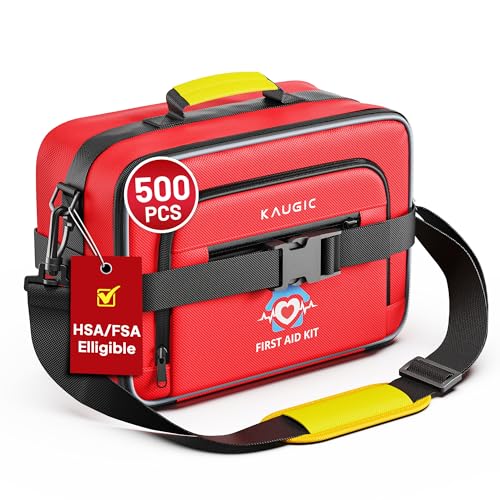
500 PCS First Aid Kit for Travel Camping Car Home Businesses, Well-Organized Emergency Kit, Survival Trauma First Aid Kits for Home College Dorm Essential Supplies
Large First Aid Kit for Home: KAUGIC first aid kit includes 500pcs essential medical supplies, from wound care...
As an affiliate, we earn on qualifying purchases.
Frequently Asked Questions
Can Quantum Entanglement Prove the Existence of Psychic Phenomena?
Quantum entanglement alone doesn’t prove psychic phenomena, even if you hear about quantum consciousness or entanglement myths. While entanglement shows particles can be connected over distances, applying this to mind or psychic abilities is a stretch. You need solid scientific evidence, and right now, quantum entanglement remains a fascinating physics concept, not a proof of psychic powers. Don’t confuse scientific facts with overhyped claims.
How Does Entanglement Relate to Consciousness and the Mind?
Imagine you’re a modern-day Galileo, questioning the universe—quantum entanglement might relate to consciousness and the mind. You see a consciousness connection where your thoughts are linked through mind entanglement, suggesting that your awareness isn’t separate from physical processes. While science hasn’t confirmed this, some theorists propose that entanglement could underpin psychic phenomena, making your mind a network of interconnected particles, blurring the line between mind and matter.
Are There Any Experiments Linking Quantum Physics to Paranormal Events?
Yes, some experiments suggest links between quantum physics and paranormal events, often involving quantum illusions or the particle conspiracy theory. You might find studies claiming that quantum entanglement explains phenomena like telepathy or precognition. However, skeptics argue these ideas are speculative, lacking rigorous scientific backing. While intriguing, you should approach such claims critically, understanding that many so-called experiments are often influenced by misinterpretations or wishful thinking rather than solid evidence.
What Are the Limitations of Applying Quantum Mechanics to the Paranormal?
You should recognize that applying quantum mechanics to the paranormal faces measurement limitations, making it difficult to prove such links definitively. Classical physics explains everyday phenomena well, but quantum effects occur at tiny scales, which don’t translate easily to macroscopic paranormal events. This gap highlights the challenge of bridging classical vs quantum physics, meaning claims about paranormal phenomena based on quantum mechanics often lack rigorous scientific support.
Could Future Discoveries Bridge Quantum Entanglement and Supernatural Claims?
Future discoveries might bridge quantum entanglement and supernatural claims through advancements in quantum communication, which could demonstrate how entangled particles transmit information instantly. However, you’ll find entanglement skepticism remains high because current science can’t reliably link it to supernatural phenomena. While exciting, these breakthroughs won’t definitively prove paranormal abilities, so stay cautious and follow ongoing research for potential connections.

Care Science First Aid Kit, 110 Pieces | Professional Use for Travel, Work, School, Home, Car, Emergency, Survival, Camping, Hiking, and More
PHYSICIAN-RECOMMENDED SUPPLIES. Contains 110 physician-recommended supplies including organized pouches for easy access and refill
As an affiliate, we earn on qualifying purchases.
Conclusion
So, as you ponder the mysteries of quantum entanglement and the paranormal, remember that even in today’s age of smartphones and space travel, some phenomena remain elusive—like chasing a ghost in the machine. While science hasn’t confirmed these claims, embracing curiosity keeps you ahead of the curve, like an early explorer in an uncharted digital age. Keep questioning, because someday, perhaps, the universe will reveal its secrets—just don’t expect a flux capacitor to help.

TLIEAO 400 Pieces All-Purpose First Aid Kit - Organized Dual-Layer Wall - Professional Medical Kit for Home, Car, Camping, Travel, Office, Outdoor, Business & Sports
ESSENTIALS FOR EMERGENCY - Be prepared for any minor emergency with 400 pieces of premium medical supplies. This...
As an affiliate, we earn on qualifying purchases.

EVERLIT 400 Pcs OSHA/ANSI Compliant First Aid Kit Type III Class A Medical Kit Professional Med Kit Supplies for Contractors, Warehouse, Office, School, Home, Disaster, Car, Business, Restaurant
✅Comprehensive First Aid Coverage: Designed to address cuts, scrapes, sprains, burns, and multiple injuries. Includes multi-purpose ointment, med...
As an affiliate, we earn on qualifying purchases.