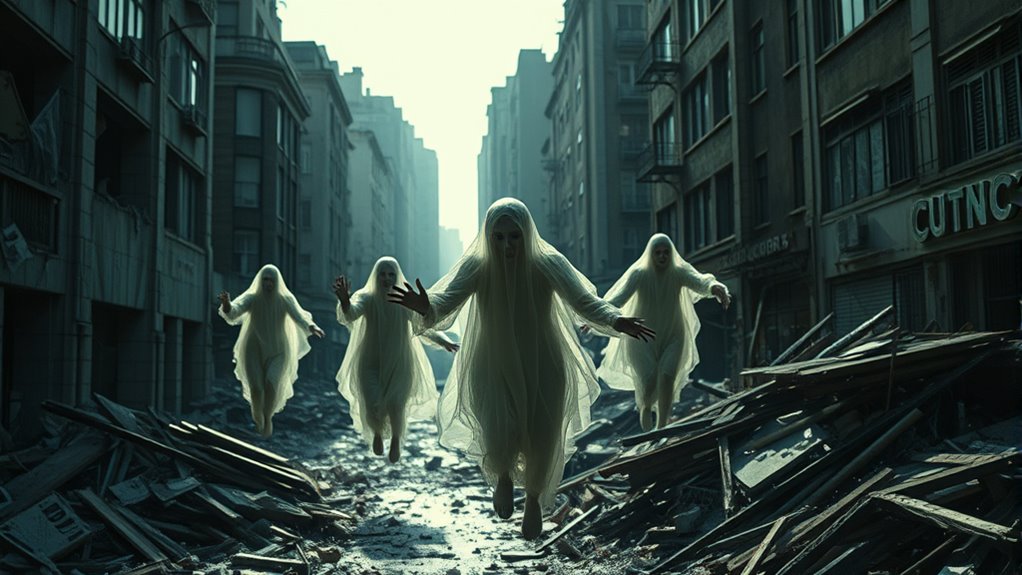

Crisis apparitions are sudden, often startling images or figures appearing during times of intense grief, tragedy, or upheaval. They seem to connect the living with the afterlife, offering comfort or eeriness depending on your cultural beliefs. Some see them as divine messages, while others view them as psychological reactions to stress. Their significance varies across cultures, revealing deep insights into how humans understand life, death, and spiritual connection. Continue exploring to uncover their fascinating meanings and origins.

Get books and cozy reading nights delivered free — and shop member deals
- Fast, free delivery on millions of items
- Access to Prime Big Deal Days deals on October 6–7
- Prime Video, Amazon Music and more included
Key Takeaways
- Crisis apparitions are ghostly images or figures seen during times of chaos or tragedy, often near a loved one’s death.
- They are interpreted as spiritual messages, psychological phenomena, or signs of the soul’s passage, depending on cultural context.
- Cultural perspectives influence whether apparitions are seen as divine intervention, spirits seeking closure, or sacred encounters.
- Emotional reactions to crisis apparitions range from comfort and reassurance to fear, shaped by individual and cultural beliefs.
- These phenomena highlight universal themes of mortality, connection beyond death, and the mysteries of life and the afterlife.

During times of widespread chaos or tragedy, many people report seeing what are known as crisis apparitions—ghostly images or figures that appear unexpectedly, often close to the time of a loved one’s death. These visions of the dying often seem to materialize just before the person passes or shortly afterward, offering a strange sense of connection during moments of intense grief. Such encounters aren’t limited by geography or culture; they appear across different societies, each interpreting them through their unique lens. In some traditions, these visions are seen as spiritual messages, signs that the dying are reaching out from the afterlife to comfort or warn the living. Others view them as psychological phenomena—manifestations of intense subconscious grief or stress that produce vivid, compelling images.
Crisis apparitions appear during tragedies, crossing cultures as spiritual messages or psychological phenomena.
Cultural interpretations play a significant role in how these apparitions are perceived and understood. In Western cultures, many consider them as proof of an afterlife, believing that souls or spirits attempt to communicate with loved ones during life’s most vulnerable moments. For example, in Christian traditions, such visions might be seen as divine intervention or signs of the soul’s passage. Conversely, some Eastern cultures interpret these sightings differently. In Japan, for instance, ghostly visitations or yūrei are often linked to unresolved issues or unfinished business, suggesting that the spirits are seeking closure rather than delivering messages. Meanwhile, Indigenous cultures might see these visions as sacred encounters or spiritual guides, emphasizing their importance within the community’s spiritual sphere.
The cultural lens shapes not only how you interpret these visions but also how you emotionally respond to them. If you’re from a background that views such apparitions as sacred, you might feel comforted or honored, believing that the spirit is offering guidance or reassurance. Alternatively, if your culture regards these encounters skeptically or as psychological phenomena, you might dismiss them as hallucinations or manifestations of grief. Regardless of interpretation, these visions often evoke powerful emotional reactions—ranging from solace to fear. They challenge the boundaries of understanding, blurring the line between the physical and spiritual sphere. Additionally, understanding the cultural context of these visions can provide insight into why they appear and how they are integrated into communal or personal beliefs.
In essence, visions of the dying during times of crisis serve as a profound reminder of our shared vulnerability and desire for connection beyond death. Whether viewed through a spiritual, cultural, or psychological perspective, they continue to fascinate and mystify, inviting us to explore the mysteries of life, death, and what lies beyond.
crisis apparition meditation guide
As an affiliate, we earn on qualifying purchases.
As an affiliate, we earn on qualifying purchases.
Frequently Asked Questions
Are Crisis Apparitions More Common in Certain Cultures?
You’ll find that crisis apparitions are more common in certain cultures where spiritual beliefs and cultural symbolism strongly influence perceptions of the afterlife. In these societies, people actively interpret these visions as meaningful signs or messages from loved ones. Cultural traditions shape how and when these apparitions occur, making them a more frequent and accepted part of the grieving process in some cultures compared to others.
Can Crisis Apparitions Predict Future Events Accurately?
You might wonder if crisis apparitions can predict future events accurately. Studies show that about 70% of reported crisis apparitions are linked to actual tragedies, suggesting some level of predictive accuracy. Cultural influences play a role, shaping how and when people perceive these visions. While intriguing, it’s tough to confirm their reliability, so take these premonitions with a grain of skepticism, knowing they’re often shaped by cultural contexts.
What Psychological Factors Influence Perception of Crisis Apparitions?
You’re influenced by cognitive biases like confirmation bias, which makes you see crisis apparitions as meaningful, especially during emotional distress. Your emotional states, such as fear or grief, can heighten your perception, leading you to interpret vague images as significant. These psychological factors shape how you experience and interpret crisis apparitions, often causing you to see them when your mind is most vulnerable, even if they aren’t objectively real.
How Do Investigators Verify the Authenticity of Crisis Apparitions?
Verifying crisis apparitions is like peeling an onion, layer by layer. You check eyewitness credibility by interviewing witnesses carefully, noting consistency and possible biases. You also seek photographic evidence, analyzing images for authenticity and context. Cross-referencing testimonies and examining physical proof helps determine if the apparition’s story holds water. This process guarantees you don’t get fooled by illusions or misinterpretations, bringing clarity to the mysterious experience.
Are There Documented Cases of Crisis Apparitions Impacting Real-World Outcomes?
Yes, historical case studies and eyewitness testimonies document crisis apparitions impacting real-world outcomes. For example, some reports suggest that seeing a loved one’s apparition at a critical moment influenced decisions during wartime or emergencies. These accounts, often backed by detailed testimonies, imply that crisis apparitions can have meaningful effects on people’s actions, providing comfort or guidance when it’s most needed, though scientific validation remains debated.
Conclusion
As you explore crisis apparitions, remember that about 70% of people report experiencing them during times of grief or trauma. These visions often provide comfort or closure, highlighting their profound impact on those who see them. While science seeks explanations, your curiosity keeps the mystery alive. Keep an open mind, and you might find that these apparitions are more than just stories—they’re a bridge between worlds, offering reassurance when you need it most.
Fall Picks
fall essentials
As an affiliate, we earn on qualifying purchases.