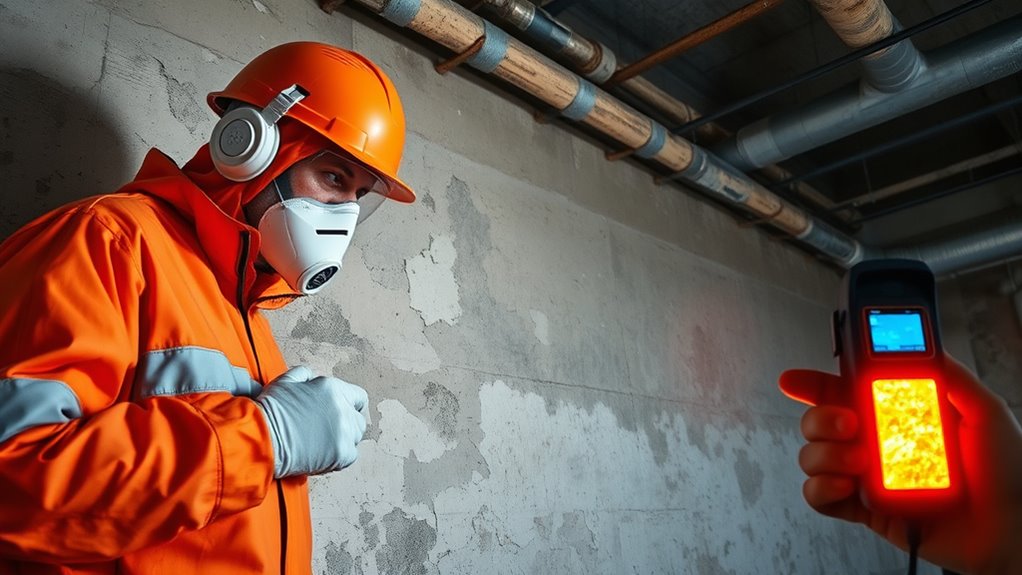

Hazard assessment involves inspecting your indoor space to identify dangers like asbestos, mold, and chemical pollutants. You’ll start with visual checks for obvious signs, such as water damage or deteriorating materials, then use specialized equipment to measure airborne contaminants and environmental factors like humidity. This process helps determine the severity and likelihood of health risks. If you want to understand how professionals pinpoint these hazards and plan safety measures, keep exploring the details ahead.
Key Takeaways
- We conduct visual inspections and use specialized equipment to identify visible hazards like mold and deteriorating materials.
- Air quality testing measures airborne contaminants, such as asbestos fibers and mold spores, for accurate hazard detection.
- We assess environmental factors like ventilation and humidity to evaluate their impact on hazard presence and risk levels.
- Hazards are prioritized based on severity and potential health impact, guiding targeted mitigation strategies.
- Our comprehensive approach ensures safe indoor environments by identifying, evaluating, and addressing hazards effectively.

What exactly is hazard assessment, and why is it essential for safety? At its core, hazard assessment is the process of identifying potential dangers in a given environment, evaluating the associated risks, and determining the best way to mitigate them. When you’re dealing with indoor air quality, this process becomes especially important because it directly impacts the health and well-being of everyone inside a building. Poor indoor air quality can harbor hazards like asbestos fibers, mold spores, or chemical pollutants, all of which can cause serious health issues over time. By conducting a thorough risk evaluation, you get a clear picture of what hazards are present and how they might affect occupants.
Hazard assessment identifies indoor risks like mold and asbestos to protect health and safety.
Risk evaluation involves more than just spotting visible problems. It requires a systematic approach, analyzing how hazards like mold growth or asbestos fibers are distributed throughout indoor spaces. You’ll need to consider factors such as ventilation, humidity levels, and the presence of building materials known to contain hazardous substances. This step is essential because it helps prioritize hazards based on their severity and likelihood of causing harm. For instance, a small patch of mold in a seldom-used closet may pose less risk than extensive asbestos contamination in the main living areas. By understanding these differences, you can focus your efforts on addressing the most pressing issues first.
In hazard assessment, understanding indoor air quality is key. You’ll often start with visual inspections to identify obvious signs of mold or deteriorating materials. But visual cues alone aren’t enough. You’ll also need to use specialized equipment to measure airborne contaminants, humidity, and other environmental parameters. This data allows you to perform a detailed risk evaluation, revealing hidden hazards that might not be immediately visible. Once you identify potential threats, you can determine the level of exposure and how it might impact health over time. For example, prolonged exposure to certain molds can trigger allergic reactions or respiratory problems, especially in vulnerable populations. Additionally, staying informed about emerging AI security vulnerabilities can help prevent potential safety breaches related to hazard management systems.
Ultimately, hazard assessment isn’t just about finding problems; it’s about understanding them thoroughly. When you do a proper risk evaluation, you’re equipped to develop effective strategies for mitigation. Whether it’s removing asbestos-containing materials, improving ventilation to reduce mold growth, or installing air purifiers, your goal is to create a safer indoor environment. Recognizing the importance of indoor air quality and applying a methodical approach to hazard assessment ensures you’re proactive in protecting health, preventing future issues, and maintaining a healthy, safe space for everyone.
Top picks for "hazard assessment asbesto"
Open Amazon search results for this keyword.
As an affiliate, we earn on qualifying purchases.
Frequently Asked Questions
How Long Does a Typical Hazard Assessment Take?
A typical hazard assessment usually takes between one to three days, depending on the inspection timeline and the property’s size. You’ll find that the assessment duration varies based on the complexity of the site and the types of hazards involved. During this period, inspectors thoroughly evaluate potential risks like asbestos, mold, or other hazards, ensuring a detailed report that helps you make informed safety decisions efficiently.
Are There Specific Certifications Required for Hazard Assessors?
You should know that certification requirements for hazard assessors vary by state and industry, but generally, you need specific assessor credentials. These often include certified training in asbestos, mold, or other hazards, along with a valid license or certification issued by recognized organizations like OSHA or state agencies. Having the right credentials guarantees you’re qualified to conduct thorough hazard assessments and comply with legal standards, giving clients confidence in your expertise.
Can Hazard Assessments Be Performed Remotely?
Sure, remote inspections sound perfect—until you realize you’re virtually peering through a screen, trying to spot asbestos or mold. You can perform virtual evaluations, but they’re limited in scope. While some assessments can be conducted remotely with high-quality images and data, others demand on-site visits for accuracy. So, yes, you can do some hazard assessments remotely, but don’t expect to replace the detailed insights of an in-person inspection.
What Is the Cost Range for Comprehensive Hazard Assessments?
The cost overview for thorough hazard assessments typically ranges from $1,000 to $5,000, depending on several pricing factors. These factors include the size and complexity of the property, the types of hazards being evaluated, and the scope of testing required. You can expect higher costs for extensive inspections or specialized testing. To get an accurate estimate, it’s best to consult with a professional who can tailor the assessment to your specific needs.
How Often Should Hazard Assessments Be Updated?
You should update hazard assessments at least annually or whenever there’s a significant change in your environment, such as renovations or new materials. Regular inspection frequency guarantees you stay compliant and safe. Keep in mind, assessment updates might be needed more frequently if new hazards are identified or if regulations change. Staying proactive helps you maintain a safe space and catch potential issues early.
Conclusion
Now that you know how we assess hazards like asbestos and mold, you’re better equipped to protect yourself and your loved ones. Our thorough process guarantees no danger goes unnoticed, catching risks that could otherwise lurk unseen for years. Think of hazard assessment as your ultimate shield—more powerful than a fortress—keeping you safe from invisible threats. Trust in our expertise to navigate the complex world of hazards and bring peace of mind to your home or workspace.