
To track temperature and humidity accurately, start by calibrating your sensors to match trusted standards for precise readings. Position sensors away from direct sunlight and drafts, and regularly clean and check connections to maintain reliability. Use visualization tools like graphs or heat maps to spot trends and anomalies quickly. Keep detailed records of calibrations and data to monitor sensor performance over time. If you want to learn more about optimizing your monitoring system, continue exploring these essential steps.
Key Takeaways
- Select appropriate temperature and humidity sensors, ensuring they are properly calibrated according to manufacturer instructions.
- Position sensors away from direct sunlight, vents, and drafts for accurate environmental readings.
- Regularly clean sensors and check connections to maintain measurement reliability.
- Use data visualization software to monitor real-time readings and identify trends or anomalies.
- Keep detailed records of calibration, maintenance, and data logs to track sensor performance over time.

Monitoring temperature and humidity is vital for maintaining ideal conditions in homes, workplaces, and outdoor environments. To do this effectively, you’ll need reliable sensors that measure these parameters accurately. However, sensors can drift over time, leading to inaccurate readings. That’s where sensor calibration comes into play. Calibration involves adjusting your sensors so their readings match a known standard, ensuring precision over the long term. Start by referencing a trusted calibration device or standard, then compare your sensor’s readings against it. If discrepancies arise, follow the manufacturer’s instructions to fine-tune your sensor, guaranteeing it provides accurate data consistently. This step is fundamental because inaccurate data can lead to improper adjustments of your environment, defeating the purpose of tracking.
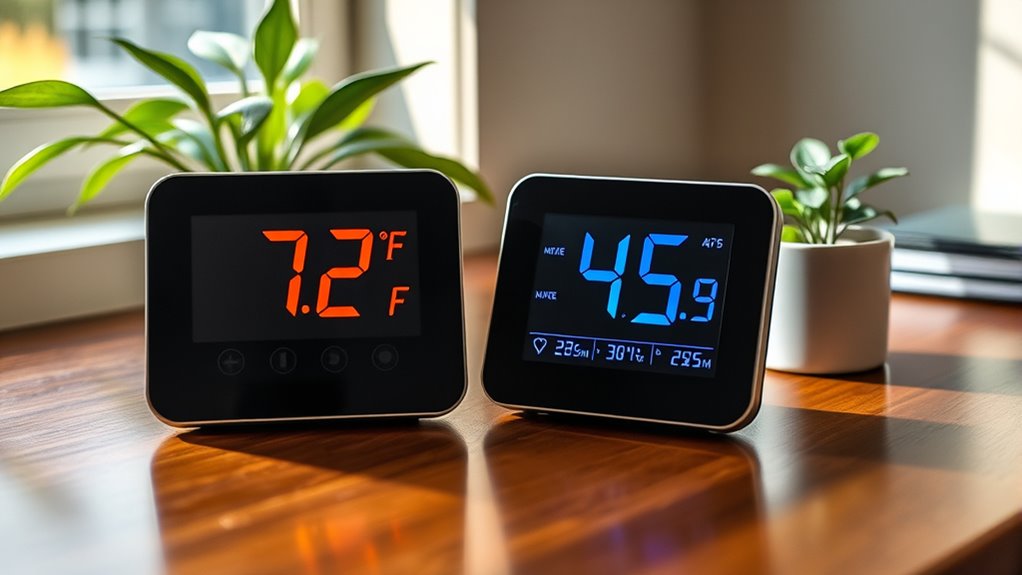
Proper sensor calibration ensures accurate temperature and humidity readings for a stable environment.
Once your sensors are calibrated, the next step is to collect the data. As you gather temperature and humidity information, it’s helpful to visualize this data clearly. Data visualization transforms raw numbers into easy-to-understand graphs and charts, allowing you to quickly interpret trends and anomalies. Use software or apps compatible with your sensors to generate real-time visualizations like line graphs, bar charts, or heat maps. These visual tools help you identify patterns, such as temperature fluctuations during different times of day or humidity spikes caused by weather changes. By regularly reviewing these visualizations, you can make informed decisions about adjusting heating, cooling, or ventilation systems to maintain ideal conditions. Regular data review is also important for catching sensor drift early and ensuring ongoing accuracy.
In addition to calibration and visualization, consider the placement of your sensors. Position them away from direct sunlight, heating vents, or drafts, which can skew readings. Proper placement guarantees your data accurately reflects the environment you’re monitoring. Also, keep an eye on the sensor’s maintenance needs—cleaning the sensor surface and checking connections regularly will keep your measurements dependable. When setting up your environment, take note of external factors like seasonal changes or weather patterns that could influence your readings. Understanding these influences allows you to interpret your data more precisely and make better adjustments.
Finally, keep a record of your calibration procedures and data visualizations. Maintaining a log helps track sensor performance over time and can guide future calibration efforts. Regularly revisiting your calibration process and updating your visualization tools ensures you stay on top of environmental conditions. This ongoing process maximizes your ability to create a stable, comfortable, and safe environment, whether at home, work, or outdoors. In essence, proper sensor calibration combined with effective data visualization forms the backbone of accurate temperature and humidity tracking, empowering you to make smarter environmental decisions.
Frequently Asked Questions
What Are the Best Devices for Remote Temperature Monitoring?
You should consider devices like the TempStick or Sensaphone for remote temperature monitoring. These sensors offer reliable data logging and easy sensor placement, ensuring consistent readings. They connect wirelessly to your system, allowing you to monitor conditions in real-time from anywhere. Look for features like automatic alerts and durable design to match your specific needs. These devices help you stay informed and maintain ideal conditions effortlessly.
How Can I Calibrate My Humidity Sensors Accurately?
To calibrate your humidity sensors accurately, start by using a salt test to check humidity accuracy. Place the sensor in a sealed container with a salt solution at a known humidity level, like 75%. Allow it to stabilize, then compare the reading to the expected value. Adjust the sensor based on the manufacturer’s calibration instructions, ensuring consistent sensor calibration for reliable humidity measurements.
What Are Common Causes of Sensor Data Discrepancies?
Imagine trusting your sensor, only to find inconsistent data disrupting your work. Common causes of discrepancies include improper sensor calibration, environmental interference, or aging components. You should regularly perform data validation and calibration to maintain accuracy. Dust, temperature fluctuations, or humidity spikes can throw readings off. By diligently calibrating your sensors and validating data, you guarantee reliable measurements, avoiding frustration and costly errors in your tracking process.
How Often Should I Update My Tracking System?
You should update your tracking system regularly, ideally daily or weekly, depending on your data logging frequency needs. Consistent sensor maintenance guarantees accurate readings, so check and calibrate sensors as needed. Frequent updates help catch discrepancies early and improve data reliability. By maintaining sensors properly and updating your system on a set schedule, you ensure the most accurate temperature and humidity data for your needs.
Can Temperature and Humidity Data Predict Environmental Risks?
Think of your environment as a living, breathing creature; temperature and humidity data act like its essential signs. Yes, they can predict risks like mold growth or indoor air quality issues, which are often linked to climate change. By monitoring these factors, you stay one step ahead, catching warning signs early. This proactive approach helps protect your space, ensuring it remains safe and healthy amidst changing environmental conditions.
Conclusion
By tracking temperature and humidity accurately, you can better understand your environment and improve your comfort and safety. Some believe monitoring these factors can even influence health and energy efficiency more than we realize. Science suggests that small, consistent measurements can reveal patterns you might otherwise miss, potentially debunking or confirming long-held theories. So, keep observing, stay curious, and use your data to uncover hidden truths about your surroundings. Your environment might hold more secrets than you think.