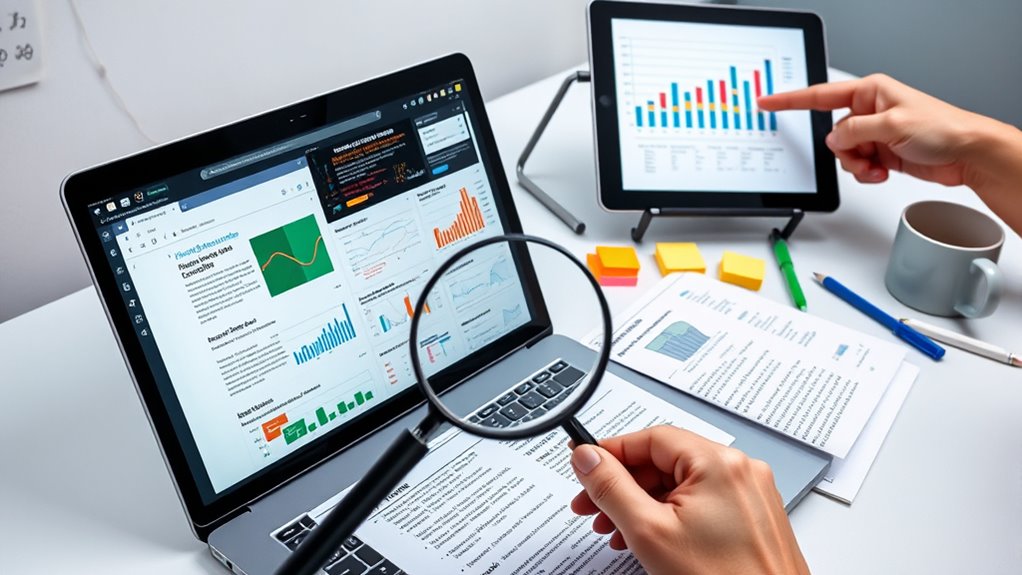

To corroborate claims across sources, you cross-check information from multiple reputable outlets to confirm consistency and accuracy. Look for common facts and data points, and pay attention to differences that may need further investigation. Assess the credibility of each source by considering their origins, credentials, and potential biases. Always verify evidence and supporting data, especially if it’s recent and relevant. Keep exploring different perspectives to build a well-rounded understanding that’s hard to challenge.
Listen free for 30 days with Audible
Thousands of audiobooks and originals — cancel anytime.
As an affiliate, we earn on qualifying purchases.
Key Takeaways
- Cross-check information from multiple independent and credible sources to identify consistent facts.
- Evaluate the credibility, expertise, and potential biases of each source before trusting their claims.
- Look for discrepancies or conflicting data, then investigate further to determine accuracy.
- Verify evidence and supporting data, such as official reports or peer-reviewed studies, for bold claims.
- Consider the timeliness and context of sources to ensure information remains relevant and accurate.
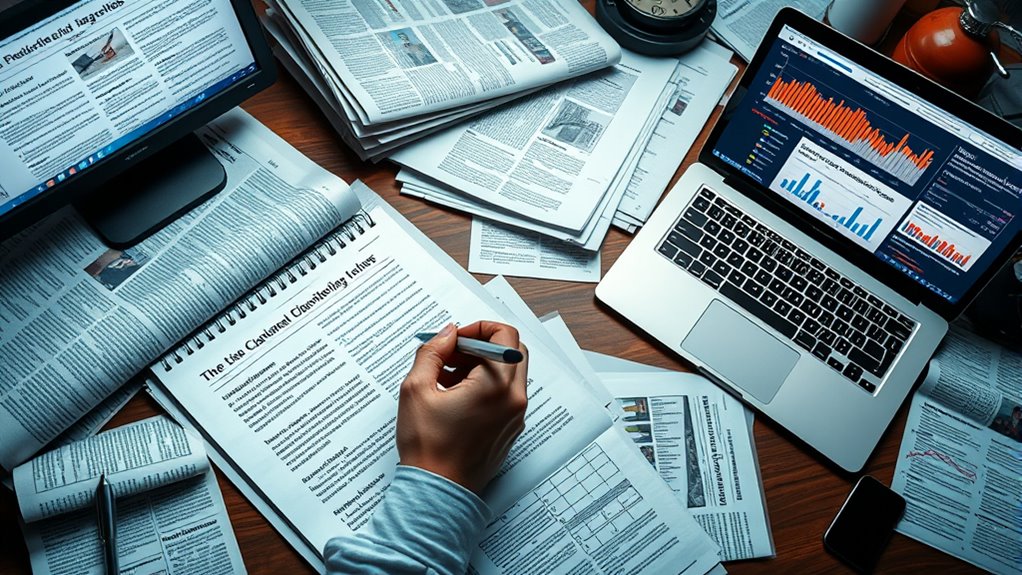
When evaluating information, it’s crucial to verify claims by cross-checking multiple sources. This process, known as source comparison, helps you distinguish between accurate facts and misleading assertions. You need to look at various perspectives and data points to see if they align or reveal inconsistencies. By doing so, you strengthen your confidence in the validity of the information you’re considering. Source comparison isn’t just about confirming what you already believe; it’s a vital step in evidence validation, ensuring that your conclusions are based on reliable and well-rounded data.
To effectively compare sources, you should start by examining where each piece of information originates. Ask yourself who produced it, what their credentials are, and whether they have any biases or conflicts of interest that could influence their reporting. Reliable sources typically have transparent origins, are backed by expertise, and follow journalistic or academic standards. When you compare these sources, look for common facts that appear consistently across different outlets. If multiple independent sources report the same data, it increases the likelihood that the information is accurate. Conversely, if claims differ considerably, you should dig deeper to understand why. Differences might stem from outdated data, different interpretations, or potential misinformation, and recognizing these discrepancies is key to evidence validation.
Start by examining the source, its credentials, biases, and consistency across multiple outlets for accurate validation.
In the process of source comparison, you also need to evaluate the evidence each source provides. Does the source cite credible studies, official reports, or firsthand accounts? Are the data and statistics presented with context and supporting documentation? The strength of your evidence validation depends on how well you can verify the underlying proof. If a source makes a bold claim, check whether it links to verifiable evidence, and cross-reference that evidence with other reputable sources. This helps you build a layered understanding, filtering out unreliable or exaggerated information. Additionally, understanding that electric dirt bikes can produce 10 to 20 horsepower and reach speeds of up to 50 mph allows you to contextualize the claims about performance and safety.
Another important aspect is considering the date and relevance of each source. Information can change over time, so a recent report might carry more weight than an older one, especially in fast-evolving fields like science or technology. By continuously comparing sources and validating evidence, you create a resilient framework for decision-making. This approach minimizes the risk of being misled by false claims or partial truths. Ultimately, thorough source comparison and evidence validation empower you to trust the information you rely on and make informed judgments based on the most broad-based and accurate picture available.
credible source verification tools
As an affiliate, we earn on qualifying purchases.
As an affiliate, we earn on qualifying purchases.
Frequently Asked Questions
How Do You Handle Conflicting Information From Different Sources?
When you encounter conflicting information from different sources, you should perform source cross checking to verify facts and identify discrepancies. To handle this effectively, consider each source’s potential bias and work on bias mitigation by evaluating their credibility, context, and supporting evidence. Cross-referencing multiple reputable sources helps you determine the most accurate information and minimize the influence of biased or unreliable data.
What Tools Are Used to Verify the Credibility of Sources?
You wield powerful tools like fact-checking software and citation management to verify source credibility, making your research nearly foolproof. Fact-checking software instantly spots inaccuracies and falsehoods, while citation management helps you trace origins and assess reliability. Imagine these tools as your trusty detective squad, sweeping through mountains of data, exposing unreliable sources and ensuring your information stands on solid, trustworthy ground. This combo keeps your work accurate and credible every time.
How Do You Prioritize Sources When Information Varies?
When source evaluation varies, you prioritize sources by checking their credibility, relevance, and timeliness. You look for signs of bias detection to identify potential skewed perspectives. Trust reputable, well-established sources first, then compare information across multiple outlets. If discrepancies arise, you analyze the motives behind each source and seek additional evidence. This approach guarantees you depend on accurate, balanced information, minimizing the influence of bias or misinformation.
What Role Does Expert Opinion Play in Corroboration?
Expert opinion plays a vital role in corroboration by providing validation of claims based on specialized knowledge. You rely on expert validation to confirm or challenge information, recognizing that their opinion influence can strengthen the credibility of your sources. When expert insights align with other evidence, you gain confidence in the accuracy. Conversely, if they dissent, you reevaluate the reliability of your sources to guarantee your conclusions are well-founded.
How Often Do Sources Need to Be Updated for Accuracy?
Imagine your sources as a garden; to keep it thriving, you water it regularly. You should update sources based on their update frequency—some daily, others weekly or monthly. This source freshness guarantees accuracy and reliability. When information changes quickly, more frequent updates are needed. By staying attentive to update frequency, you help maintain the garden’s health, ensuring your facts remain current and trustworthy.
Conclusion
By mastering how you corroborate claims across sources, you open the power to cut through misinformation like a hot knife through butter. With every piece of evidence you verify, you become an unstoppable force, turning chaos into clarity. Trust me, once you get the hang of it, you’ll be blowing through falsehoods faster than lightning strikes, transforming your ability to find the truth into an unstoppable tidal wave that reshapes understanding itself.
Back to school Picks
back to school
As an affiliate, we earn on qualifying purchases.