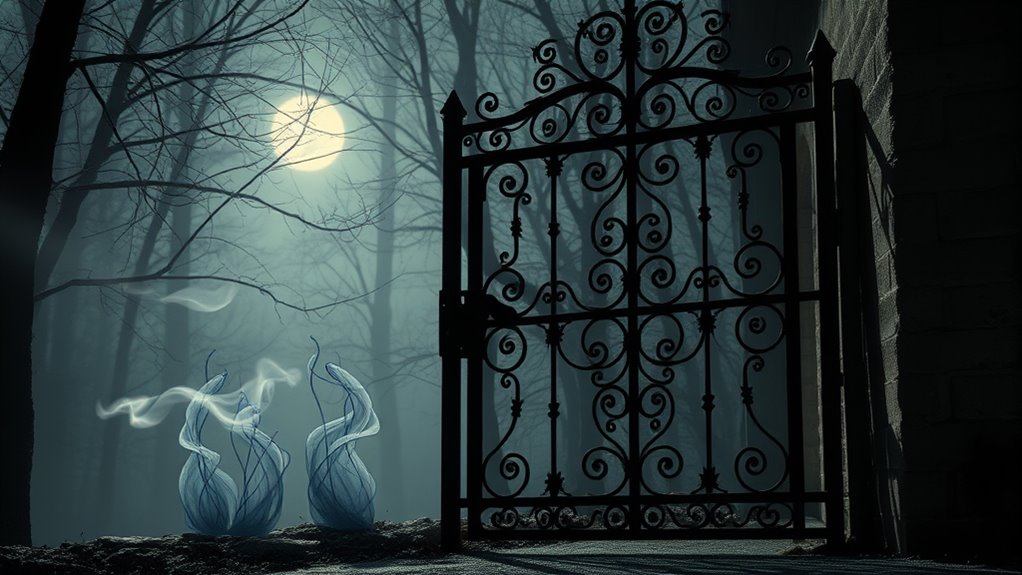

The idea that iron always repels spirits is a common myth rooted in cultural folklore, not scientific fact. Historically, people believed iron had supernatural powers to ward off evil and protect homes. However, modern science shows no evidence supporting this. Iron’s reputation as a protector is mainly symbolic, providing psychological comfort rather than actual spiritual defense. If you look further, you’ll discover how myths shape perceptions and why these beliefs persist today.
Key Takeaways
- The belief that iron always repels spirits is a cultural myth with no scientific evidence.
- Iron’s protective reputation is rooted in symbolism and folklore, not supernatural properties.
- Historically, iron was used in rituals for psychological comfort, not actual spiritual defense.
- Modern science confirms iron does not have any supernatural ability to ward off spirits.
- Recognizing the myth helps distinguish cultural symbolism from factual, scientific understanding.
Throughout history, iron has been believed to possess the power to repel spirits and ward off supernatural entities. This idea isn’t just a modern myth; it’s deeply rooted in various cultural and spiritual beliefs that have persisted for centuries. Many societies regarded iron as a protective material, often using it to craft tools, weapons, and amulets believed to keep malevolent spirits at bay. The historical significance of iron in these contexts is substantial—people thought that iron’s unique properties could disrupt spiritual energies or block evil influences. As a result, many traditions incorporated iron objects into protective rituals or kept them close to their homes, believing they created a barrier against unseen threats.
Your understanding of this belief might lead you to think that carrying iron charms or placing iron objects around your house guarantees safety from spirits. However, it’s essential to recognize that these practices stem from spiritual beliefs rather than scientific evidence. The notion that iron always repels spirits is more symbolic than factual. Over time, the idea became ingrained in folklore, reinforced by stories and cultural practices, which helped maintain the perception of iron as a supernatural safeguard. Yet, from a historical perspective, while iron’s significance as a protective material is undeniable, it doesn’t possess any inherent supernatural power. Instead, it reflects a collective human attempt to find physical objects that provide comfort or a sense of control over the unknown.
When you consider the myth versus reality, it’s clear that the spiritual beliefs surrounding iron’s protective qualities are rooted in cultural symbolism. These beliefs provided psychological reassurance in uncertain times, especially when scientific understanding of the natural world was limited. Today, many still associate iron with protection because of its historical significance and cultural symbolism. But scientifically, iron’s protective reputation doesn’t hold up. No concrete evidence proves that iron repels spirits or supernatural entities. Instead, its reputation is a testament to how humans have historically sought tangible objects to represent safety and security. Additionally, understanding the psychological comfort provided by these beliefs can explain why such traditions persist even without scientific validation.
In essence, while the legend that iron always repels spirits persists in popular culture and tradition, the reality is quite different. Iron’s spiritual significance lies in its role as a symbol of protection within many belief systems, rather than a supernatural force. Recognizing this distinction helps you appreciate the cultural importance of iron and understand why these beliefs endured for so long. Ultimately, it’s a fascinating example of how myth and symbolism intertwine with history and spiritual beliefs, shaping perceptions that influence behavior even today.

Lucky Iron Life ® Natural Protection Oil, 4oz – Apply to Your Lucky Iron Fish or Leaf to Maintain, Protect and Prevent Rust – Vegan, Made with Pure Coconut & Lemon Oils
- Rust Prevention: Prevents rust and prolongs lifespan
- Easy Application: Apply a drop after each use
- Natural Ingredients: Made with coconut and lemon oils
As an affiliate, we earn on qualifying purchases.
As an affiliate, we earn on qualifying purchases.
Frequently Asked Questions
Are There Specific Types of Iron More Effective Against Spirits?
You might find that certain types of iron, like wrought iron or cast iron, are more effective against spirits due to their magnetic properties and historical uses. Wrought iron, with its low carbon content, is believed to be more spiritually protective, while cast iron’s density enhances its ability to repel negative energies. Historically, these variations have been used in talismans and tools, making them more potent for spiritual protection.
Can Iron Objects Attract Spirits Instead of Repelling Them?
You might think iron objects attract spirits, but in the superstitions debate, material effectiveness varies. While some believe iron can draw spirits in certain situations, most traditions hold that iron repels them. It’s not the material alone but the intent and context that matter. So, if you’re worried, focus on your beliefs and rituals rather than relying solely on iron objects, which may or may not attract spirits.
Is There Scientific Evidence Supporting Iron’s Spiritual Properties?
When it comes to scientific studies supporting iron’s spiritual properties, the answer is no—there’s little scientific evidence backing these claims. You might think it’s a slam dunk, but most spiritual beliefs are rooted in tradition rather than science. While iron has practical uses, its reputation for spiritual power remains more of a cultural belief than a proven fact. Trust your intuition, but remember science has yet to confirm these mystical claims.
Do Cultural Beliefs Influence Perceptions of Iron and Spirits?
You might find that cultural beliefs deeply influence your perceptions of iron and spirits. In many cultures, superstitious practices link iron to protection and spiritual symbolism, shaping how you view its power. These beliefs can make you see iron as a barrier to spirits or a protective talisman, even without scientific proof. Your cultural background influences how you interpret iron’s spiritual significance, blending tradition and personal experience into your understanding.
Are Modern Iron Tools Used in Spiritual Protection Practices?
You might notice modern iron tools like nails or knives used in spiritual protection practices, echoing their historical uses. It’s a coincidence that these everyday objects, once valued for their strength, now serve as symbols in rituals. Today, many adapt these tools for spiritual purposes, blending tradition with modernity. So, yes, modern iron tools are still actively used, carrying the same protective significance that ancient cultures once attributed to them.
Conclusion
So, next time you see an iron object, imagine it as a quiet guardian, shimmering softly in the moonlight, not a magical barrier. While the myth paints iron as a spirit repellent, reality shows it’s just a sturdy metal—not a supernatural shield. Whether you believe in spirits or not, let the gentle glow of iron remind you that sometimes, myths are just stories, and the real world is full of wonder and mystery waiting to be explored.




![A Better Way To Tie Your Gym Shorts. (Or Any Drawstring) [Video]](https://moleopedia.com/wp-content/uploads/2026/07/a-better-way-to-tie-your-gym-shorts-or-any-drawstring-video-featured-260x140.jpg)