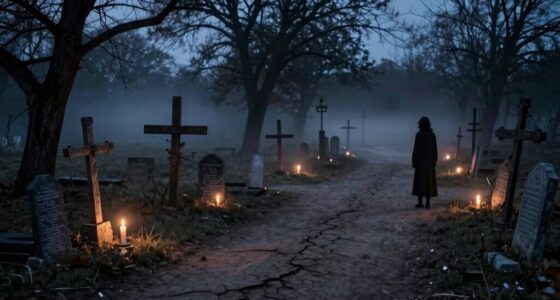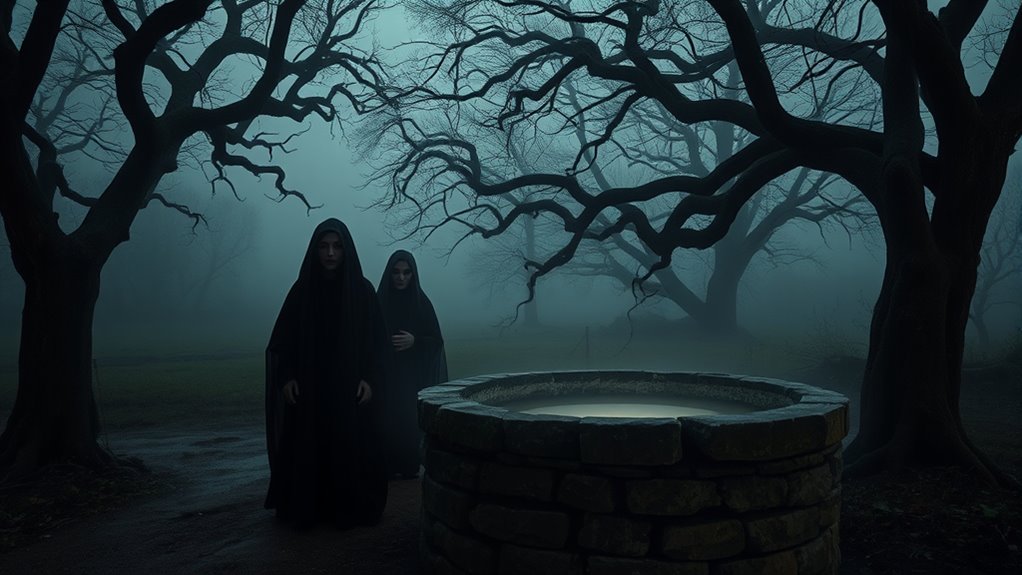

Vampire panics in New England stem from medieval European folklore, colonial superstitions, and fears of death and disease, which fueled community efforts to control the unknown through supernatural beliefs. People believed the dead could become vampires, leading them to dig up bodies or burn them to stop the undead. These fears reflected attempts to make sense of mortality and disease. To understand how these fears shaped society, explore further into their roots and meanings.
Open a free Amazon Business account
Business pricing, bulk buying and tax-exempt orders.
As an affiliate, we earn on qualifying purchases.
Key Takeaways
- Vampire panics in New England originated from European folklore and colonial superstitions linked to disease, death, and fears of the undead.
- These fears intensified during outbreaks of sickness, prompting communities to dig up graves for signs of vampirism.
- Measures like staking or burning bodies were practical responses rooted in superstitions to prevent the dead from rising.
- Popular culture and limited scientific knowledge reinforced beliefs in vampires as real threats, fueling community hysteria.
- Vampire panics served as societal mechanisms to control fears of death and disease during uncertain times.
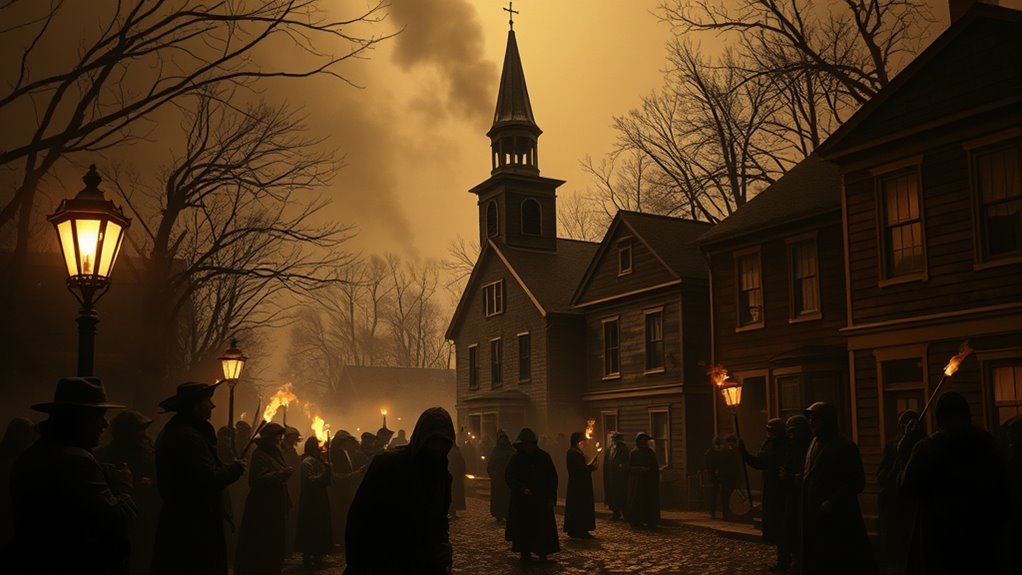
In the late 18th and early 19th centuries, fear of vampires swept through New England, leading communities to take drastic measures to protect themselves. This panic didn’t develop overnight; it rooted itself in deep-seated beliefs that stretched back to medieval folklore and colonial superstitions. During the medieval period, stories of blood-drinking monsters emerged across Europe, shaping the idea that such creatures could harm the living by draining their life force. These tales, passed down through generations, evolved into a cultural framework that defined what a vampire was—an undead being that returned from the grave to feed on the living. When European immigrants settled in New England, they carried these fears with them, blending them with local superstitions inherited from colonial times. Colonial superstitions, often rooted in Puritan beliefs, emphasized the presence of evil spirits and demonic influences that could infiltrate communities, especially in times of sickness or death.
As death rates fluctuated and disease outbreaks ravaged towns, these superstitions intensified. People believed that the dead might not be resting peacefully, and the idea that a corpse could turn into a vampire gained traction. You might find that communities began to dig up bodies, searching for signs of vampirism—such as blood at the mouth or a corpse that appeared unnaturally fresh. These signs, often misinterpreted due to a lack of scientific understanding, fueled the paranoia. In some cases, families would burn the heart or stake the body, believing it would prevent the vampire from rising again. Such measures were direct responses to the fears rooted in the long-standing European folklore of the undead, adapted to fit the context of colonial New England. The influence of popular culture in later periods helped perpetuate these fears, even as scientific explanations for death and disease advanced.
These superstitions weren’t just about superstition; they became practical measures driven by desperation and fear. The community’s collective anxiety, reinforced by stories passed down from generation to generation, created a cultural atmosphere where extreme actions seemed justified. You could say that these early vampire panics were a response to the uncertainty surrounding death and disease, amplified by the lingering influence of medieval legends and colonial superstitions. They served as a way for communities to exert control over the terrifying unknown, giving them a sense of agency in times of helplessness. Ultimately, the vampire panics reflect how folklore and superstition can shape societal reactions, especially when fear of the unseen and unexplained takes hold.
As an affiliate, we earn on qualifying purchases.
Frequently Asked Questions
How Did Vampire Fears Influence Local Laws and Policies?
Vampire fears directly shaped local laws and policies by prompting authorities to implement vampire law measures. You’d see policies like exhumation and post-mortem tests to confirm suspected vampire activity, reflecting a policy response rooted in superstition. These laws aimed to prevent the spread of disease and address community fears. In effect, the vampire panic led to legal actions that prioritized superstition over scientific understanding, influencing local governance considerably.
Were There Any Cultural or Religious Factors Shaping the Panics?
You see, religious symbolism and cultural rituals deeply shaped the vampire panics. People believed that death and the afterlife involved spiritual dangers, leading to fears of vampires as malevolent spirits. Rituals like exhumations and protective symbols reflected these beliefs. These cultural and religious factors fueled fears, making the panics a reflection of broader societal anxieties about morality, death, and the supernatural rooted in their religious worldview.
Did Vampire Hysteria Impact Medical Practices of the Time?
Vampire hysteria did influence medical practices by prompting more medical experimentation and scrutiny of health practices. You might notice that during these panics, people sought doctors’ help to diagnose mysterious illnesses, believing vampires caused them. This led to attempts at bloodletting and other treatments. The fear pushed physicians to explore new methods, shaping early understandings of disease and encouraging more scientific approaches in medical experimentation.
How Did Folklore Differ Between New England Towns During Panics?
During vampire panics, you’ll notice that local folklore and regional beliefs varied between towns. Some communities believed vampires caused illnesses, leading to specific rituals, while others focused on supernatural threats or spiritual explanations. These differences shaped how towns responded, with some performing exhumations or rituals, reflecting their unique cultural narratives. Your understanding of these regional beliefs helps explain why responses to vampire fears differed across New England communities.
Were Any Individuals Falsely Accused or Harmed Due to Vampire Fears?
During the vampire panics, you should know that false accusations and victim persecution ran rampant, turning innocent people into targets. Like a snowball rolling downhill, hysteria grew, leading to individuals being falsely accused of vampirism. Many suffered dire consequences, with some even harmed or killed without solid evidence. The fear-driven frenzy caused real victims, highlighting how superstition can turn communities against their own in moments of panic.
Conclusion
As you step back from these vampire panics, you see them as storms in a teacup, swirling fears that reveal more about us than the monsters themselves. They’re ancient echoes, like whispers from the past, warning us of our own mortality and mistrust. Understanding these panics helps you realize that sometimes, our darkest fears are just shadows cast by our own uncertainty—illusions that fade when we shine a little knowledge into the night.
Labor Day sales Picks
labor day deals
As an affiliate, we earn on qualifying purchases.