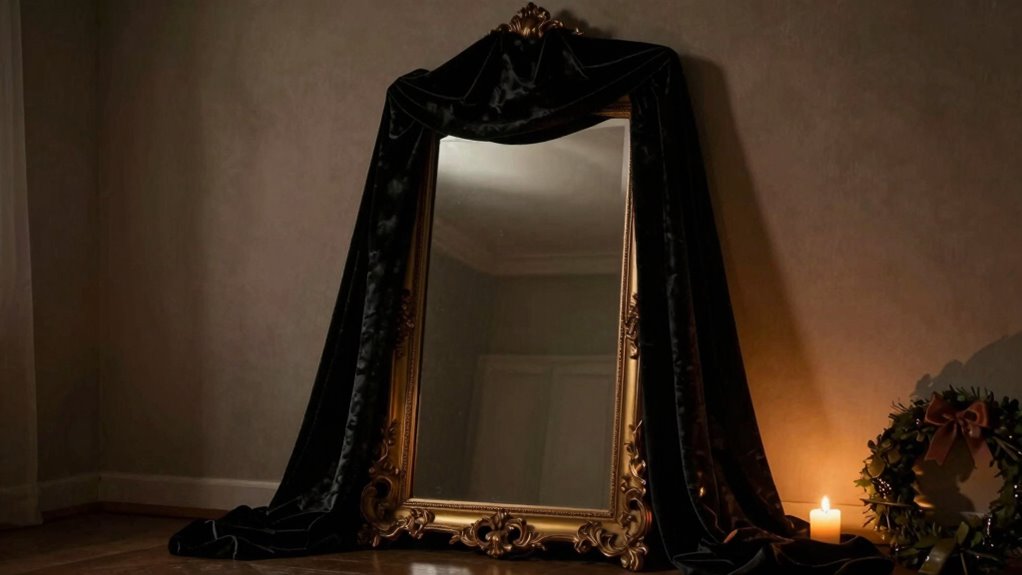

You may notice mirrors are covered after a death because it’s a tradition with deep roots in history and culture. People believed mirrors could act as portals to other worlds or trap spirits, which might interfere with the soul’s journey into the afterlife. Covering them helps protect the spirits and keeps the environment peaceful for mourning. This practice reflects respect for the boundary between life and death. If you keep exploring, you’ll discover even more interesting reasons behind this tradition.
Key Takeaways
- Mirrors were covered to prevent spirits from becoming trapped or confused during mourning.
- They were believed to act as portals to the spirit world, risking negative energies or spirits entering the home.
- Covering mirrors protected the deceased’s journey into the afterlife by maintaining spiritual boundaries.
- The practice helped maintain a peaceful environment and avoided disturbing spirits or the living.
- It was a cultural tradition rooted in superstitions and respect for the spiritual realm.
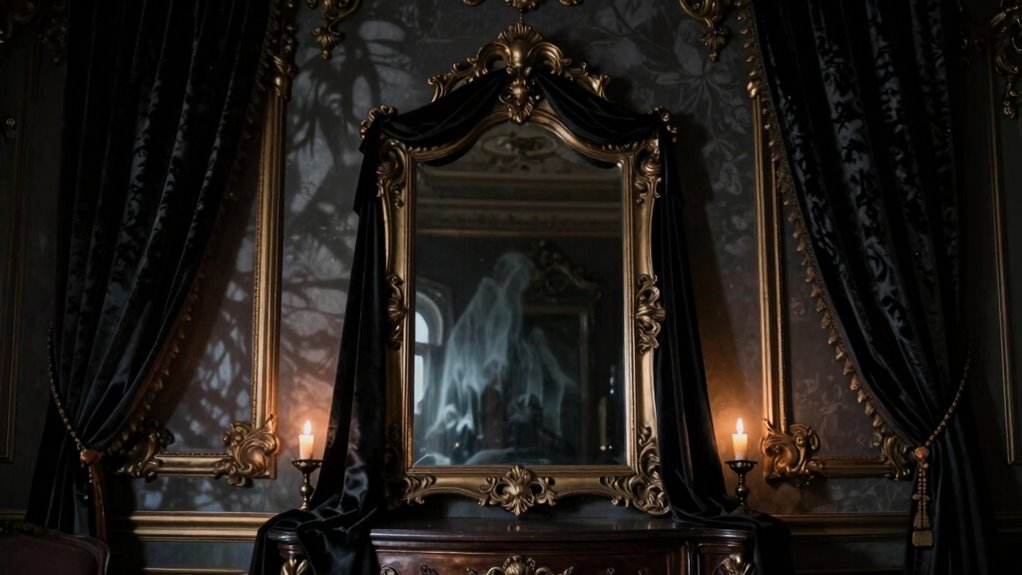
When someone passes away, covering mirrors becomes a common tradition in many cultures, rooted in the belief that it prevents the spirit from becoming trapped or disturbed. This practice isn’t random; it’s deeply tied to cultural superstitions and historical practices that have been passed down through generations. You might wonder why mirrors, objects designed to reflect and reveal, are seen as portals to the spiritual realm—especially during a time of mourning. Historically, many societies believed that mirrors could trap or contain a person’s soul, making it vulnerable to spirits or malevolent forces. Covering them was a way to safeguard the deceased’s spirit and protect the living from unwanted spiritual interference.
Covering mirrors after death protects the soul from spirits and preserves spiritual harmony during mourning.
The origins of this custom trace back centuries, when people believed that the soul left the body during death but could sometimes be caught or linger if the mirror remained uncovered. During the Victorian era, for example, it was common for families to cover all reflective surfaces in the house after a death. They thought that uncovered mirrors might attract the spirit’s attention, causing it to become confused or trapped. This was considered dangerous, as it could lead to restless spirits or hauntings. Over time, these ideas became part of a broader set of cultural superstitions that emphasized respecting the dead and maintaining spiritual harmony. Additionally, some cultures believed that mirrors could hold the essence of the deceased, reinforcing the importance of covering them during mourning periods.
Many ancient cultures also saw mirrors as more than just reflective surfaces—they saw them as gateways to other worlds. In some traditions, it was believed that the spirit might attempt to escape through a mirror, or that the mirror could hold the essence of the deceased. Covering the mirrors was a way to prevent this from happening, ensuring the soul’s safe passage into the afterlife. These practices often had practical roots as well, since covering reflective surfaces kept the room from becoming overly bright or unsettling during a period of mourning. Moreover, the belief in spirits and supernatural forces helped sustain these customs, even as scientific understanding evolved over time. It is also worth noting that some cultures believed that uncovered mirrors could reflect the energies of the living and the dead, which further reinforced their concealment during mourning.
Today, while many people no longer believe in spirits or supernatural forces, the tradition persists out of respect and cultural continuity. You might find that covering mirrors remains a sign of reverence for the deceased, a way to honor their memory and ensure a peaceful transition. The practice reflects a deep-seated human tendency to respect the boundaries between life and death, rooted in centuries of cultural superstitions and historical practices. Whether viewed as symbolic or spiritual, covering mirrors after death continues to serve as a meaningful ritual for many communities around the world.

AmeriCan Goods Dental Mirror Cover Color Code Autoclavable up to 375F 12 Pcs Assorted Dental Color-Code Mirror Covers
- Brand: AmeriCan Goods
- Product Type: Dental Mirror Covers
- Quantity: 12 Assorted Color Covers
As an affiliate, we earn on qualifying purchases.
As an affiliate, we earn on qualifying purchases.
Frequently Asked Questions
Do All Cultures Cover Mirrors After a Death?
Not all cultures cover mirrors after a death, but many do due to superstitions and cultural variations. In some traditions, covering mirrors prevents spirits from being trapped or disturbed, while others believe it helps the soul’s journey. You might notice differences based on regional customs or religious beliefs. These practices often reflect deep-rooted superstitions and respect for the deceased, showing how varied cultural responses to death can be around the world.
How Long Are Mirrors Typically Covered During Mourning?
During mourning, mirrors are typically covered for a few days to weeks, depending on cultural variations. Think of it as closing a chapter in a book; you cover the mirror to prevent the reflection of grief from lingering too long. Mirror symbolism varies across cultures—some see it as a portal to the soul, so covering it honors the deceased. Usually, families uncover mirrors once mourning rites conclude, symbolizing acceptance and moving forward.
Are There Specific Rituals Involved in Covering Mirrors?
You might wonder if there are specific rituals involved in covering mirrors. In many traditions, superstitious beliefs and cultural variations influence these practices. You’re likely to find that coverings are placed over mirrors to prevent spirits from becoming trapped or to avoid the reflection of death. Some cultures also see it as a way to protect the living from evil spirits or negative energy, making these rituals meaningful and culturally significant.
Can Uncovered Mirrors Affect the Spirit of the Deceased?
Uncovered mirrors might seem harmless, but superstitious beliefs suggest they could disrupt the spirit of the deceased. You might think it’s just a reflection, yet psychologically, seeing an uncovered mirror can evoke anxiety or disturb the mourning process. While there’s no scientific proof, culturally, people believe uncovered mirrors could trap or offend spirits, affecting their peaceful passage. So, covering mirrors helps preserve spiritual harmony and mental calm during grief.
Are There Modern Practices That Avoid Covering Mirrors Today?
Today, many cultures avoid covering mirrors, embracing their symbolism instead. You might see reflective surfaces left uncovered during mourning, highlighting their role in spiritual beliefs, like representing the soul or connection to the afterlife. Cultural variations influence this practice; for example, some traditions see uncovered mirrors as a way to honor the deceased. Understanding mirror symbolism helps you appreciate how different societies view reflection, life, and death in their rituals.
Conclusion
As you step into the quiet room, the mirrors are shrouded in dark cloth, hiding their reflective gaze. The stillness feels thicker here, like a hush over a sleeping lake at dawn. Covering the mirrors isn’t just about respect—it’s about giving the soul space to rest without staring into its own reflection. In this quiet darkness, you sense a gentle pause, a moment of reverence as the world softly turns, waiting for dawn.