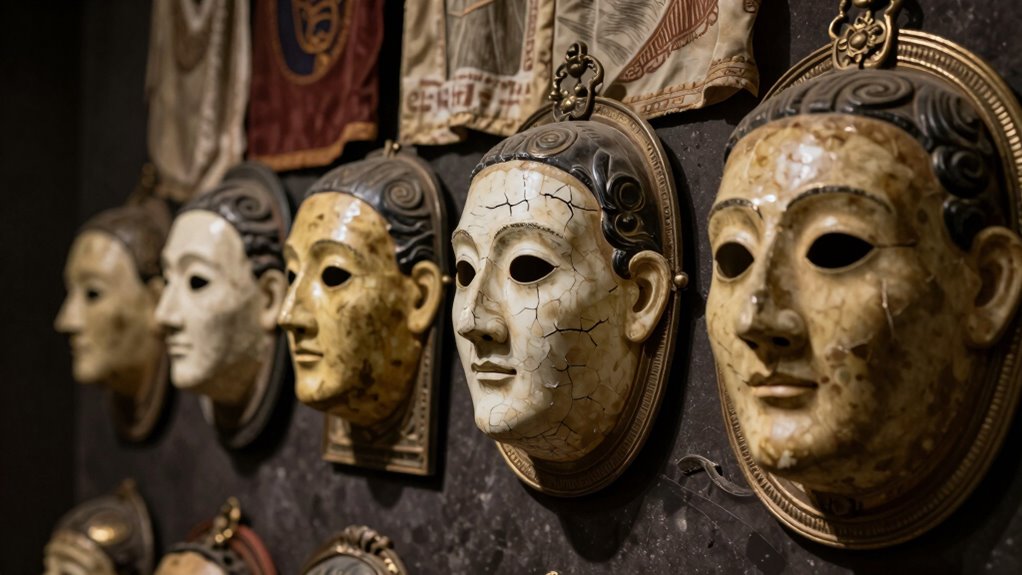

Throughout history, death masks serve as a way to preserve the likeness of notable figures, reflecting their cultural beliefs and funeral traditions. Crafted from materials like wax, plaster, or metal, these masks showcase the craftsmanship and symbolism valued by societies. They often embody spiritual significance, linking physical appearance with cultural identity and afterlife concepts. If you explore further, you’ll uncover how these masks influenced art, culture, and our understanding of mortality across different civilizations.
Listen free for 30 days with Audible
Thousands of audiobooks and originals — cancel anytime.
As an affiliate, we earn on qualifying purchases.
Key Takeaways
- Death masks preserve the likeness of notable individuals for remembrance, often reflecting cultural funeral practices.
- Crafted from materials like wax or plaster, emphasizing artistic skill and societal values.
- They symbolize spiritual beliefs, linking the physical image to the afterlife or divine status.
- Historically, masks honored rulers, philosophers, and artists, influencing art and cultural legacy.
- They serve as enduring historical artifacts offering insight into mortality, identity, and cultural symbolism.
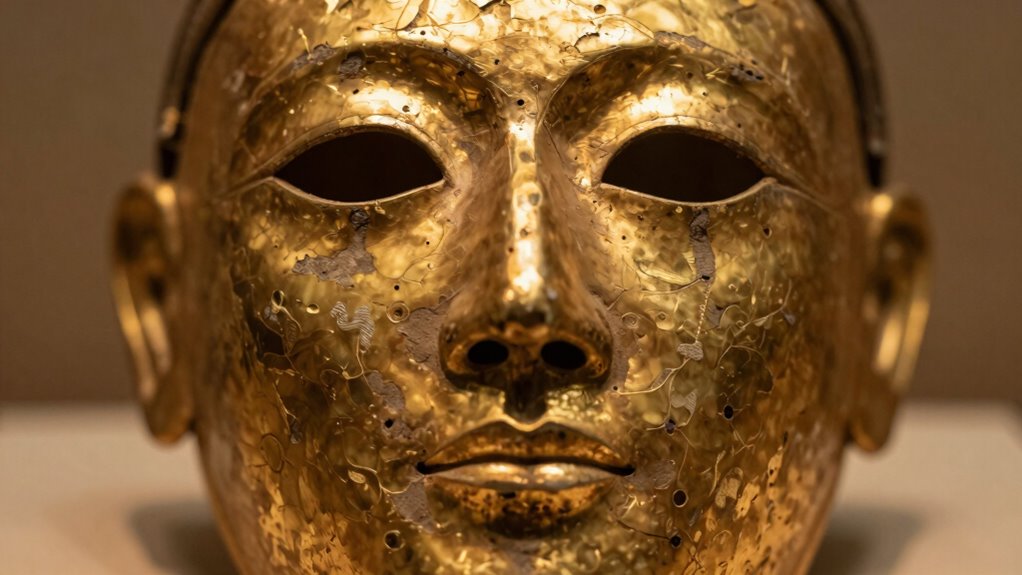
Throughout history, death masks have served as powerful tools for preserving the visage of notable figures, offering a tangible connection to the past. These masks, crafted from materials like wax, plaster, or metal, capture the features of someone at the moment of death, allowing future generations to remember and honor them. You might think of death masks as mere relics, but they also reveal much about funeral traditions across different cultures. In many societies, creating a death mask was part of a broader ritual to honor the deceased, often emphasizing reverence and remembrance. These masks provided a means to preserve not just the physical likeness but also the cultural identity of the individual, tying into larger funeral practices that celebrated life and prepared the spirit for the afterlife.
Death masks reveal cultural funeral practices and preserve both likeness and identity across history.
When you look at a death mask, you’re also witnessing an artistic representation rooted in craftsmanship and cultural symbolism. Artists and craftsmen meticulously molded these masks to capture every detail—every line, wrinkle, and contour—making them more than simple molds. Instead, they became highly detailed artistic representations that reflected the society’s aesthetic values and spiritual beliefs. The process itself was often elaborate, involving detailed measurements and careful modeling to ensure the mask’s accuracy. For some, these masks served as a kind of idealized image, emphasizing virtues or status, while for others, they aimed to provide a realistic likeness to preserve the individual’s identity forever. The artistic techniques utilized in creating these masks showcase the mastery of the artists and their ability to blend craftsmanship with cultural symbolism. Additionally, the symbolism behind death masks often conveyed societal views on mortality and the afterlife, adding a deeper layer of meaning to their creation. In some cultures, the materials used in crafting these masks also held symbolic significance, enhancing their spiritual or cultural meaning.
Additionally, the craftsmanship involved in creating death masks reflected the technological and artistic skills of the cultures that produced them, showcasing their mastery in sculpture and modeling techniques. The creation of these masks often involved complex procedures, which varied across different societies and time periods. In history, notable figures like kings, philosophers, and artists had their death masks made, serving as enduring images of their legacy. These masks often played a role beyond mere remembrance; they influenced art, sculpture, and even political iconography. For example, the death masks of ancient Egyptian pharaohs contributed to mummies and funerary art, intertwining religious beliefs with artistic expression. In Europe, during the Renaissance, death masks helped artists understand human anatomy more precisely, inspiring realistic sculptures and paintings. You can see how these masks, beyond their funerary purpose, became sources of inspiration for visual arts, offering an intimate glimpse into the features of influential individuals.
Ultimately, death masks are more than relics; they are windows into the cultural and artistic values of different eras. They serve as a bridge connecting the physical and spiritual worlds, embodying funeral traditions that honor the dead and preserving artistic representations that continue to inspire. Through these masks, you gain insight into how societies across history approached mortality, remembrance, and the enduring power of human likeness.

Hqroidd Death Cosplay Eater Mask 3D Scary Skull Mask Masquerade Party Halloween Costume Horror Resin Props Holiday Gifts
- Material: Durable hard plastic or resin
- Design: Handmade with detailed finishing
- Safety: Non-toxic, odorless materials
As an affiliate, we earn on qualifying purchases.
As an affiliate, we earn on qualifying purchases.
Frequently Asked Questions
How Were Death Masks Traditionally Created Across Different Cultures?
You see, death masks were traditionally created by taking a mold of the deceased’s face during funeral rituals, using wax, plaster, or other materials. Across cultures, these masks held cultural symbolism, honoring the dead and preserving their memory. You’ll find that in some societies, they served spiritual purposes, while in others, they symbolized status or protected against evil. These masks connect the living to their ancestors through meaningful funeral practices.
What Materials Were Commonly Used for Making Death Masks?
You see, death masks were traditionally made using materials like plaster, wax, or metal, chosen for their ability to capture intricate facial details. In funeral rituals, these masks held deep cultural symbolism, representing the deceased’s identity and honor. By creating a lasting likeness, communities preserved memory and respected traditions, turning a simple mask into a meaningful cultural artifact that connects the living with their ancestors.
Are Any Ancient Death Masks Still on Display Today?
Yes, many ancient death masks still captivate visitors today. Like silent guardians of funeral rituals, these masks serve as artistic representations of the departed, offering a glimpse into past civilizations’ beliefs and customs. Museums display iconic masks, such as Tutankhamun’s, allowing you to connect with history’s mysteries. They preserve the artistry and reverence of rituals, making you feel part of a timeless tradition that honors those who’ve passed beyond the veil.
How Accurate Are Death Masks in Representing a Person’s Appearance?
Death masks can be quite accurate in representing a person’s appearance, especially when created shortly after death. They capture facial features in detail, which often align closely with the individual’s real look. However, funeral rituals and artistic interpretations can influence their precision. Over time, masks may also deteriorate or be artistically stylized, so their accuracy varies depending on the craftsmanship and context in which they were made.
Did All Societies Use Death Masks, or Were They Exclusive to Certain Regions?
Not all societies used death masks; instead, they were specific to certain regions and cultures. You see, funeral rituals and artistic interpretations shaped who adopted masks—like ancient Egyptians and some Asian civilizations—while others focused on different traditions. These masks served as a bridge to the afterlife or as memorials, highlighting a society’s unique beliefs. So, their use wasn’t universal but deeply rooted in cultural practices.
Conclusion
As you peel back the layers of history, death masks become more than just cold plaster—they transform into silent storytellers whispering secrets of the past. These masks serve as haunting mirrors, reflecting the final moments of lives once vibrant. They’re timeless echoes etched in time, reminding you that even in death, stories linger like shadows, waiting for you to listen. In their stillness, they reveal the enduring power of memory and the human desire to leave a lasting mark.
Baby shower & registry season Picks
baby registry must-haves
As an affiliate, we earn on qualifying purchases.