You might find it intriguing that table-turning mania began in the 19th century, rooted in Victorian spiritualism and the desire to contact the dead. People gathered in dim rooms, believing spirits influenced table movements to communicate. But skeptics argued that tricks and subconscious muscle movements explained the phenomena. Despite doubts, the craze grew, blending belief, entertainment, and deception. If you’re curious, there’s much more to uncover about how this mesmerizing phenomenon evolved and left a lasting mark.

Get books and cozy reading nights delivered free with Prime
- Fast, free delivery on millions of items
- Prime Video, Amazon Music and more included
- Member-only deals all year
Key Takeaways
- Originated in 19th-century spiritualism, especially Victorian séances, as a way to contact spirits through table movements.
- Involved groups sitting around a table, placing hands on it to induce and interpret movements as spirits’ messages.
- Believed to be spirits influencing physical objects, making tables tilt or move for communication.
- Critics argued table movements were caused by subconscious muscle contractions or tricks, exposing deception techniques.
- The phenomenon reflects societal fascination with the afterlife, blending genuine belief with clever deception, influencing modern spiritual practices.
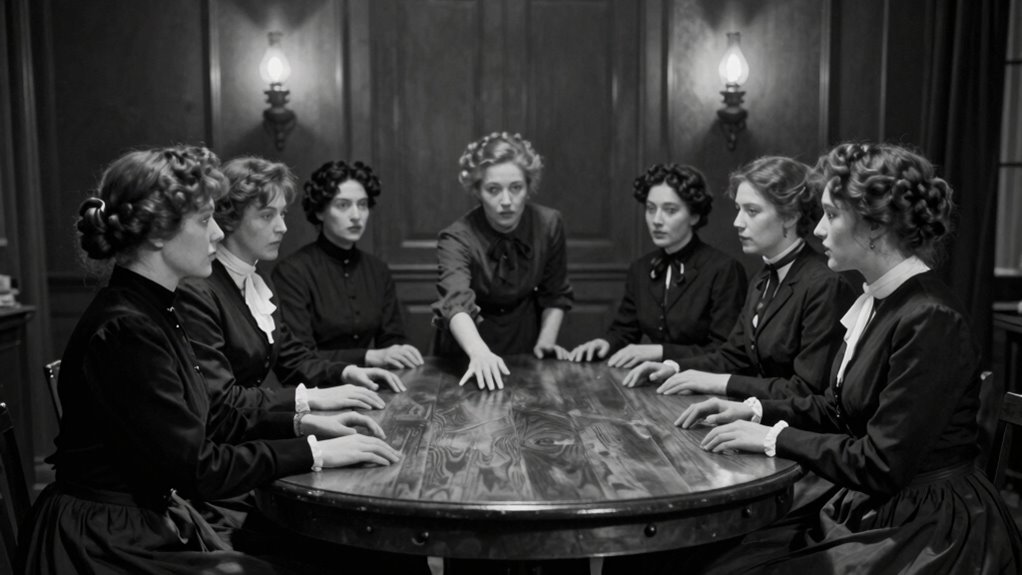
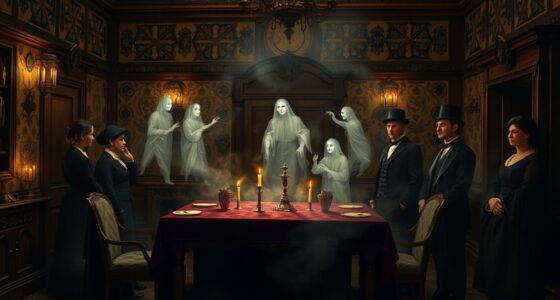
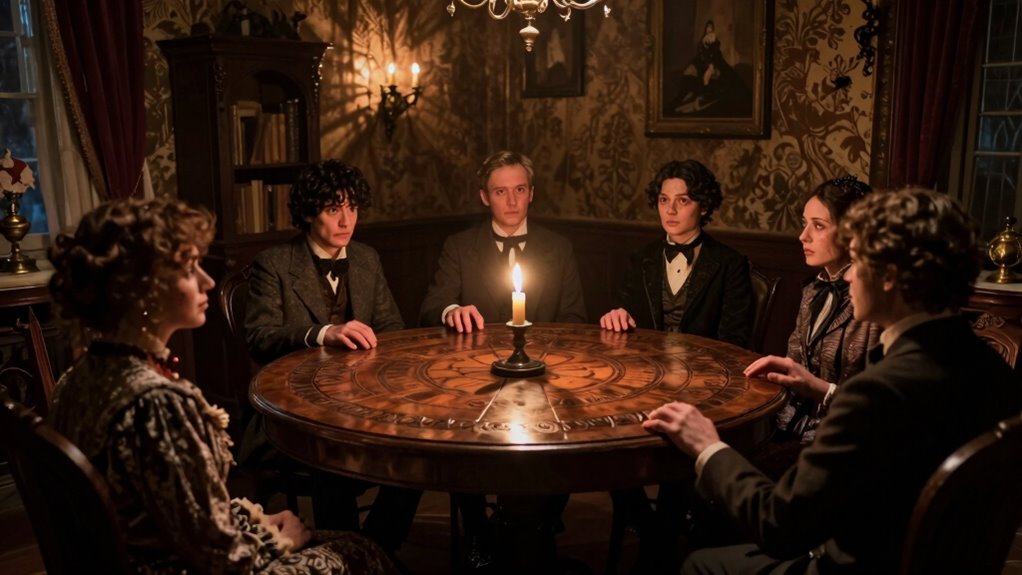
Many people have been fascinated by the idea of communicating with spirits through table-turning, a craze that swept across the 19th century. This phenomenon is rooted in the spiritualism origins that gained popularity during that era, especially within Victorian séances. Back then, many believed that spirits of the dead could be contacted through specific rituals, and table-turning became one of the most accessible methods. You might imagine Victorian society gathering in dimly lit rooms, where a small group would sit around a table, placing their hands on its surface, hoping to receive messages from beyond. The movement grew quickly, fueled by curiosity and the desire to bridge the gap between the living and the dead. During these Victorian séances, table-turning was seen as a natural extension of spiritualism’s core beliefs. It was believed that spirits could influence physical objects, causing the table to move or tilt in response to their commands. Participants often thought these movements were signs of spirits trying to communicate messages, answer questions, or offer guidance. To make the experience more convincing, hosts would sometimes incorporate other elements like spirit voices or automatic writing. Yet, despite the mystical allure, many skeptics argued that physical movements could be explained by subconscious muscle contractions or deliberate tricks. Still, the popularity persisted, and séances became social events for the curious and the desperate alike.
Furthermore, the practice often relied on mediumship techniques, which played a crucial role in how these séances were conducted and perceived. You should know that the origins of spiritualism, including table-turning, trace back to the mid-19th century, though similar practices have existed in various cultures throughout history. What made Victorian séances unique was how organized and widespread they became. They often took place in private homes or dedicated séance rooms, with mediums guiding the sessions. These mediums claimed to have special abilities to communicate with spirits, and their performances often involved simple tools like tables, trumpets, or automatic writing devices. The practice became a cultural phenomenon, blending entertainment, religion, and the desire for comfort in the face of mortality. As the craze grew, so did the scrutiny. Scientific investigations questioned whether these movements were genuine or tricks, especially considering the methods used to produce the movements. Researchers and skeptics sometimes uncovered elaborate deception techniques used by mediums to simulate spirit activity, which further fueled debates about authenticity. Many of these techniques relied on hidden mechanisms, which skeptics could often detect under close examination. Interestingly, the development of new tools and devices helped both skeptics and believers better understand the mechanics behind these phenomena. Nevertheless, table-turning remained a central part of Victorian spiritualism, reflecting society’s fascination with the afterlife and the possibility of contact beyond death. Whether viewed as sincere spiritual communication or clever parlor trickery, the table-turning mania captured the imagination of a generation *enthusiastic* to believe in something beyond the tangible world. Its legacy endures today, reminding us of a time when the veil between life and death seemed just a table’s shift away.
Victorian séance table-turning kit
As an affiliate, we earn on qualifying purchases.
As an affiliate, we earn on qualifying purchases.
Frequently Asked Questions
How Did Table-Turning Originate Historically?
You might find that table-turning originated in the 19th century as part of spiritualist practices, with its roots in earlier attempts to communicate with spirits. Its cultural significance grew as people believed it could reveal hidden truths or contact the supernatural. During séances, participants would place their hands on a table, which would supposedly move or spell out messages, symbolizing a connection between the physical and spiritual worlds.
Were There Any Famous Figures Associated With Table-Turning?
Think of famous figures as lighthouse beams guiding the ghostly phenomena of spiritual communication. Marie Antoinette and Benjamin Franklin are notable for their interest in table-turning, believing it could connect them with spirits. These figures helped turn the practice into a mesmerizing pursuit, fueling curiosity about the supernatural. Their involvement lent credibility and mystique, making table-turning a fascinating blend of social curiosity and spiritual exploration.
How Did Table-Turning Influence Other Spiritual Practices?
Table-turning profoundly influenced spiritual communication by popularizing séance techniques that sought contact with spirits. You might notice that it encouraged the development of new methods for spiritualists to connect with the unseen, emphasizing physical cues like table movements to interpret messages. This practice laid the groundwork for modern séances, inspiring others to explore alternative ways of communicating beyond traditional prayer or meditation, shaping the evolution of spiritual practices.
What Materials Were Used for Tables in Early Table-Turning Sessions?
In early table-turning sessions, you typically used sturdy materials like wood or metal for the tables, which guaranteed material durability and stability. These materials helped create a solid foundation, enhancing the psychological effects by making participants feel more secure and focused. The durability of the tables contributed to consistent sessions, allowing the spiritual phenomena to seem more credible and helping to deepen the collective belief in the practice.
Are There Modern Equivalents of Table-Turning Today?
Yes, today you can find modern equivalents of table-turning in psychic phenomena and séance traditions. People still gather to communicate with spirits or explore supernatural domains, often using table-rapping, Ouija boards, or other tools. These practices aim to connect with the unseen, just like in historical table-turning sessions. Modern séances continue to evoke curiosity, blending ancient traditions with contemporary interest in spiritual communication.
Conclusion
As you’ve seen, table-turning mania swept through history like a wildfire, igniting curiosity and fear alike. It’s a dance between the unknown and human desire to connect with spirits beyond our grasp. Remember, just as a flame needs careful tending, so does our understanding of these mysterious phenomena. By exploring this past, you hold the key to understanding how our fascination with the supernatural continues to flicker in our collective imagination.
Halloween Picks
halloween
As an affiliate, we earn on qualifying purchases.