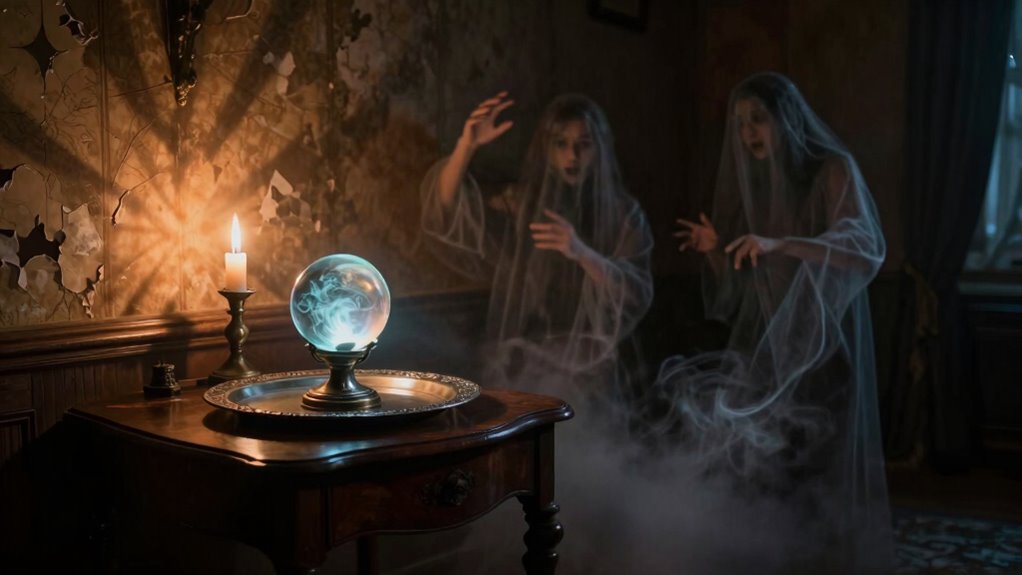

Media coverage has transformed local poltergeist incidents into legendary stories by sensationalizing reports of strange noises, flying objects, and ghostly appearances. Headlines often exaggerate or dramatize events, creating vivid images that stick in the public mind. Over time, these stories gain cultural significance and turn into folklore, driven by media’s focus on entertainment and curiosity. If you keep exploring, you’ll uncover how these headlines shaped perceptions and kept the stories alive for generations.

Get books and cozy reading nights delivered free with Prime
- Fast, free delivery on millions of items
- Prime Video, Amazon Music and more included
- Member-only deals all year
Key Takeaways
- Media sensationalism has historically transformed local poltergeist incidents into widely recognized legends.
- Headlines emphasizing dramatic phenomena create lasting public perceptions of ongoing supernatural threats.
- Coverage of cases like the Enfield poltergeist popularized media-driven narratives and folklore.
- Media amplification often exaggerates or fabricates details, shaping cultural views on poltergeist phenomena.
- Investigations influenced by media hype rarely provide conclusive evidence, fueling ongoing fascination and skepticism.
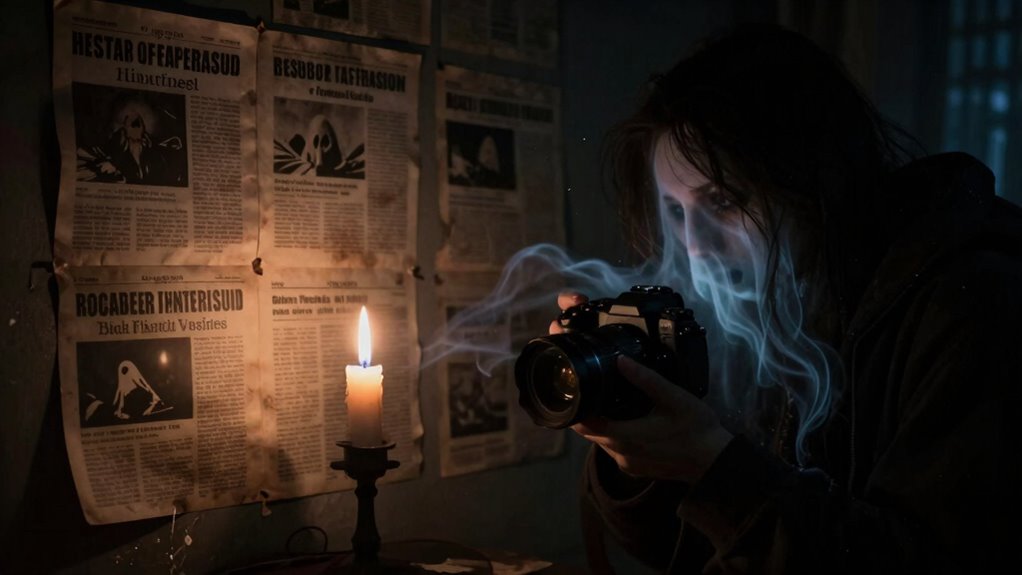
Throughout history, poltergeist headlines have captured public imagination and media attention, often highlighting mysterious and unsettling events. These stories tend to spread quickly, fueling curiosity and fear while shaping the way society perceives paranormal activity. Media outlets, enthusiastic for sensational stories, frequently amplify these accounts, sometimes blurring the line between fact and fiction. This media sensationalism transforms local anomalies into nationwide phenomena, making headlines that endure for decades. As a result, many of today’s most famous poltergeist stories are rooted in media-driven narratives rather than verified evidence.
Media sensationalism fuels fascination with poltergeists, turning local stories into enduring nationwide legends.
When a supposed poltergeist event occurs, it often prompts immediate media coverage. Journalists and reporters, driven by the desire to attract readership, tend to sensationalize details, emphasizing strange noises, objects moving on their own, or ghostly apparitions. This approach helps turn a simple event into a story that captivates audiences, but it also risks distorting the truth. Paranormal investigations often follow these headlines, seeking to verify claims through scientific methods or personal testimony. However, these investigations are rarely conclusive, and skeptics argue that many reported phenomena can be explained by natural causes or psychological factors. Still, the media’s focus on unexplained activity keeps the story alive, fueling public fascination with poltergeists. Additionally, the influence of media sensationalism can lead to a proliferation of exaggerated or fabricated accounts that persist in popular culture.
Over the years, certain cases have become legendary, partly because of the media’s role in amplifying their significance. Stories like the Enfield poltergeist in England or the Bell Witch in the United States gained widespread notoriety through newspapers, books, and television. These headlines often depict dramatic scenes—furniture flying, disembodied voices, and possessions—creating vivid mental images that stick with readers. The media’s portrayal of these events not only spreads fear but also cements the idea that poltergeists are a real and ongoing threat. Yet, many experts remain skeptical, pointing out that these stories often lack consistent evidence and are prone to exaggeration. The public perception of these stories is heavily influenced by how they are presented in the media, shaping cultural narratives around the supernatural. Furthermore, the historical context of media coverage has played a significant role in elevating some of these stories into folklore.
Ultimately, the history of famous poltergeist headlines reveals a cycle of curiosity, media sensationalism, and investigation. While some stories may have roots in genuine unexplained phenomena, many are shaped by the media’s desire to entertain and attract attention. As you look back on these headlines, remember that they reflect more about society’s fascination with the paranormal and the media’s role in storytelling than about definitive proof of supernatural activity. The allure of the unknown continues to inspire headlines, but critical thinking remains essential to separate fact from fiction. An understanding of media influence helps contextualize why these stories resonate so deeply with the public.
As an affiliate, we earn on qualifying purchases.
Frequently Asked Questions
What Are the Most Famous Poltergeist Headlines in History?
You’ve probably heard about the most famous poltergeist headlines involving spectral phenomena in haunted houses. Notable cases include the Enfield poltergeist in England, which made headlines worldwide due to its frightening activity. The Bell Witch haunting in America also gained fame for its chilling reports. These stories captured public imagination, showcasing the eerie and mysterious nature of spectral phenomena, and remain some of the most discussed haunted house cases in history.
How Did Media Coverage of Poltergeists Evolve Over Time?
You notice how media coverage of poltergeists has shifted from pure sensationalism to exploring psychological explanations. Initially, stories thrived on ghostly mysteries, but over time, journalists began questioning supernatural claims, blending skepticism with intrigue. Today, media often sensationalizes paranormal reports, yet also offers more nuanced perspectives, reflecting a broader cultural fascination with understanding human psychology behind these phenomena. This evolution reveals society’s changing approach to mysterious events and the media’s role in shaping perception.
Were Any of These Headlines Based on Verified Events?
Many of these headlines weren’t based on verified events. You’ll find media skepticism often surrounded claims, as journalists questioned the credibility of eyewitness testimonies. While some stories seemed convincing at first, further investigation frequently revealed exaggerations or falsehoods. It’s essential to remember that sensational headlines aimed to capture attention, but they don’t always reflect reality. So, you should approach such reports with a critical eye and look for solid evidence.
How Did Sensationalism Influence Public Perception of Poltergeists?
Sensationalism fuels the fire of public imagination, turning whispers into roaring tales. Through tabloid exaggerations and sensational reporting, people start to see poltergeists as more dangerous and mysterious than they truly are. This distorted storytelling creates a climate of fear and curiosity, making the supernatural seem inevitable and real. As a result, your perception becomes skewed, often believing in the paranormal based more on hype than on credible evidence.
What Role Did Cultural Beliefs Play in Shaping These Headlines?
You see, cultural beliefs deeply shape these headlines by blending supernatural myths with media exaggeration. When stories emerge, they often reflect local superstitions or fears, making the poltergeist tales more sensational. Media outlets amplify these beliefs through dramatic language, fueling public fascination. This interplay creates a cycle where cultural myths and media exaggeration reinforce each other, shaping how society perceives and fears these supernatural phenomena.
Conclusion
So, next time you see a dramatic poltergeist headline, remember the history behind it. These stories often blend fact with fiction, capturing our imagination and curiosity. While some headlines may seem exaggerated, they remind us of our fascination with the unknown. Think of it as a vibrant tapestry, woven with real events and creative storytelling, that keeps us intrigued. Embrace the mystery, knowing that behind every headline, there’s a story waiting to be uncovered.
Halloween Picks
halloween
As an affiliate, we earn on qualifying purchases.