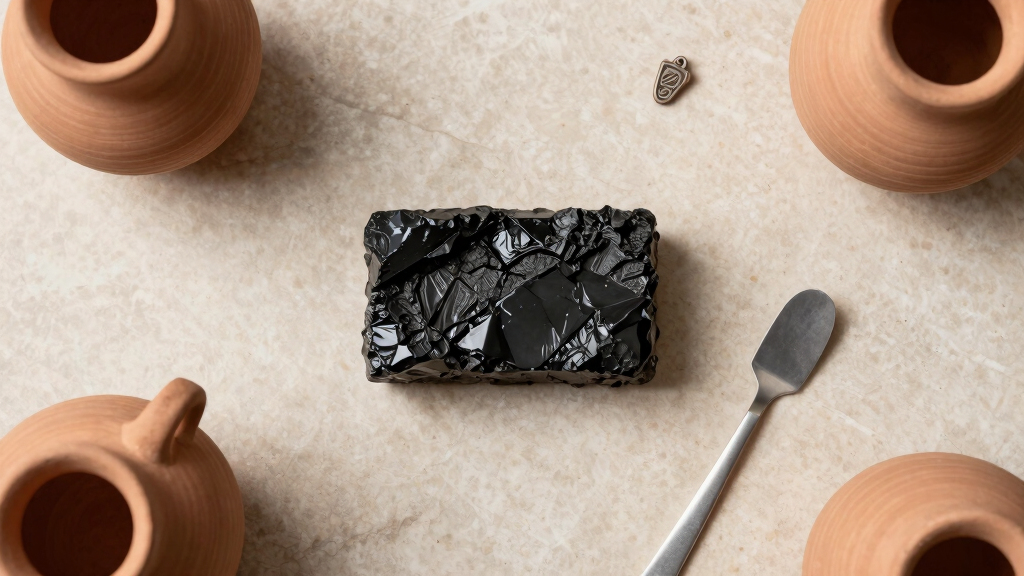

TL;DR
Researchers have identified standardized Sumerian bitumen formulations from 4,000 years ago that resemble modern asphalt. These recipes controlled strength, flexibility, and waterproofing, indicating sophisticated engineering. The findings shed light on ancient trade, technology, and construction practices.
New scientific analysis of ancient Sumerian artifacts confirms that 4,000-year-old Mesopotamian craftsmen used deliberate bitumen recipes resembling modern asphalt, demonstrating advanced engineering practices in early urban societies.
Researchers examined 59 archaeological samples of Sumerian bitumen composites from Abu Tbeirah, Iraq, employing digital microscopy and automated image processing. They identified distinct formulations tailored for specific functions, such as adhesives and standardized building blocks, indicating planned production and sophisticated material control.
Some composites were fiber-rich to improve toughness, while others were mineral-heavy for sealing and waterproofing. Evidence suggests that craftspeople reheated and reused bitumen, adjusting recipes with new fillers to maintain flexibility and performance, hinting at an early recycling economy. These findings challenge previous perceptions of Sumerian bitumen as simple waterproofing material and suggest it was part of a managed, engineered technology system.
Implications for Understanding Sumerian Engineering
The discovery of standardized bitumen recipes indicates that Sumerian craftsmen possessed a form of early materials engineering, akin to modern asphalt technology. This enhances understanding of their technological capabilities, trade networks, and urban infrastructure in a flood-prone landscape. Recognizing these recipes as deliberate formulations rather than random mixtures highlights the sophistication of Sumerian engineering and their ability to produce durable, reusable materials essential for city life and trade.

Bon 19-218 Tar Pot with Long Handle and Wheel 2 1/2 Gallon 14 Gauge Steel for Hot and Cold Crack Sealants
This tar pot features durable welded 14-gauge steel construction for long term jobsite use.
As an affiliate, we earn on qualifying purchases.
As an affiliate, we earn on qualifying purchases.
Sumerian Use of Bitumen in Urban Development
Bitumen was abundant in southern Iraq, notably along the Euphrates, and was crucial for waterproofing boats, bricks, and infrastructure in wet environments. Historically, Sumerians relied on natural seepages for their bitumen needs, but recent studies suggest they developed controlled, recipe-based formulations to optimize performance. This aligns with evidence of complex trade and craftsmanship in early Mesopotamian cities like Ur and Abu Tbeirah, where waterproofing and adhesion were vital for construction and transportation.
“The microscopic analysis reveals deliberate formulations that suggest planned production, not just accidental contamination.”
— an anonymous researcher
waterproofing bitumen membrane
As an affiliate, we earn on qualifying purchases.
As an affiliate, we earn on qualifying purchases.
Unanswered Questions About Sumerian Bitumen Recipes
While the study identifies distinct formulations, it remains unclear how widespread these recipes were across Sumer or whether similar practices existed in other regions. The exact methods of production, heating, and recycling processes employed by craftsmen are still under investigation. Additionally, the full extent of how these recipes influenced trade and construction practices is not yet fully understood.

Modified Bitumen Adhesive (Trowel Grade)
Grades Available: Brush, Trowel Grade
As an affiliate, we earn on qualifying purchases.
As an affiliate, we earn on qualifying purchases.
Future Research Directions on Ancient Material Technologies
Further archaeological excavations and chemical analyses are planned to determine the geographical distribution of these bitumen recipes and to explore their role in trade networks. Researchers aim to reconstruct the full manufacturing process, including heating techniques and filler selection, to better understand the technological evolution of early urban societies. Comparative studies with other ancient cultures’ materials are also expected to shed light on the development of early engineering practices.

FASTPATCH DPR Pourable Asphalt Repair 5-Gal Kit – Polymeric Asphalt Patch Black
Lasting Asphalt Repair – Excellent adhesion & absorbs impact
As an affiliate, we earn on qualifying purchases.
As an affiliate, we earn on qualifying purchases.
Key Questions
How did Sumerians produce these bitumen recipes?
While the exact methods are still being studied, evidence suggests they heated and mixed natural bitumen with plant fibers and minerals in controlled ways to produce specific, reusable composites.
Were these bitumen recipes used only for waterproofing?
No, the analysis indicates they also served as adhesives, decorative inlays, and standardized building blocks, reflecting a multifunctional material system.
What does this tell us about Sumerian technological knowledge?
It shows they possessed a form of early materials engineering, with planned, repeatable formulations that enhanced durability and functionality, akin to modern engineering principles.
Could this technology have influenced later civilizations?
Potentially, as the principles of controlled material formulations and recycling are fundamental to many later engineering traditions, though direct links require further research.
What are the next steps for archaeologists studying Sumerian materials?
Future work includes more extensive sampling, experimental reconstructions of recipes, and exploring trade routes to understand how these materials spread and evolved.
Source: Ancient Origins