
TL;DR

Get books and cozy reading nights delivered free — and shop member deals
- Fast, free delivery on millions of items
- Access to Prime Big Deal Days deals on October 6–7
- Prime Video, Amazon Music and more included
Paranormal investigation kits include devices like EMF meters, EVP recorders, and thermal cameras. Recent advances integrate smartphone tech and AI, but their effectiveness remains subjective. Use them responsibly for fun and documentation, not scientific proof.
Ever wonder what ghost hunters carry in their backpacks? It’s not just old flashlights and notebooks anymore. Today’s paranormal investigation kits are packed with tech that looks straight out of a sci-fi movie—EMF meters, infrared cameras, spirit boxes, and more.
If you’re curious about what these tools do, how they’ve evolved, and whether they’re worth your money, you’re in the right place. We’ll break down the essentials, recent innovations, and how to pick the right kit for your ghostly adventures.
Begin with a simple kit that includes a digital recorder, EMF meter, and camera for effective initial investigations.
Recent tech advances like smartphone integration and AI analysis are making ghost hunting more accessible and detailed.
Always interpret data cautiously; environmental factors often cause false positives, and conclusions should be skeptical.
Build your gear gradually, adding advanced tools as your experience and curiosity grow.
Respect privacy and legality—never investigate without permission and prioritize safety.
What’s Inside a Paranormal Investigation Kit and Why It Matters
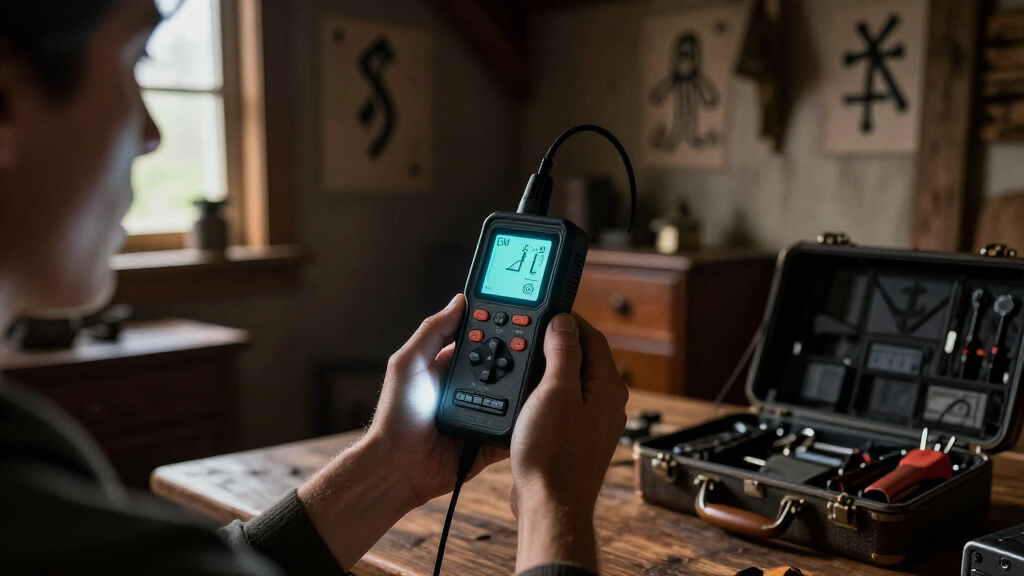
A paranormal investigation kit is a toolbox designed to catch the unseen. Think of it as a ghost-hunting Swiss Army knife. Key components include digital voice recorders for EVP sounds, EMF meters to detect electromagnetic fluctuations, and infrared/night vision cameras to film in pitch black.
These tools matter because they serve as the primary means of detecting phenomena that are invisible or inaudible to the naked eye. For example, EMF meters can reveal electromagnetic disturbances that some believe are linked to spirits, while thermal cameras can identify cold spots that might indicate unexplained energy shifts. The challenge is that each device measures a different aspect of the environment, and their readings can be influenced by normal factors—like electrical wiring or drafts—making interpretation complex.
For instance, a sudden spike on an EMF meter might be caused by a nearby appliance rather than a spirit. The importance of understanding this lies in balancing skepticism with curiosity—recognizing that these tools are guides, not definitive proof. Their true value is in collecting consistent data over time, which can be analyzed for patterns or anomalies that warrant further investigation.
As an affiliate, we earn on qualifying purchases.
How Modern Tech Is Changing Ghost Hunting Gear
In recent years, paranormal kits have gotten a high-tech makeover. Smartphones now act as hubs, connecting with specialized accessories. For instance, apps can turn your phone into a thermal or EMF detector, saving you money and space.
Wireless sensors and Bluetooth-enabled devices transmit data instantly, allowing investigators to monitor several parameters remotely. Imagine standing in a haunted hallway, watching live EMF spikes on your tablet while thermal images show cold spots behind you.
And then there’s AI. Some new tools analyze hours of audio and video, flagging anomalies for review. According to paranormal tech developer SpecterTech, AI can reduce false positives by 30%, helping investigators focus on genuine anomalies rather than environmental noise.
This tech evolution means more data and better chances of catching something unusual—if you interpret it with a skeptic’s eye.
However, this rapid integration of advanced technology introduces tradeoffs. While these tools can provide more data, they also increase the complexity of analysis. An abundance of information can lead to misinterpretation, especially for beginners who might not understand the nuances of environmental interference or device limitations. Therefore, embracing new tech requires not only understanding how to operate it but also developing critical thinking skills to differentiate between genuine anomalies and false alarms.
Choosing the Right Kit: What Beginners Should Look For
If you’re new to ghost hunting, don’t get overwhelmed by the options. Start simple. Look for a kit that includes a good digital voice recorder, an EMF meter, and a decent camera. These three cover most basic investigations.
For example, a beginner might pick up a kit like the GhostHunter Starter Pack, which bundles these essentials at a reasonable price. It’s like getting the Swiss Army knife of ghost hunting—versatile and easy to carry.
When shopping, check reviews. Does the device have clear instructions? Is it durable? Can it be used in low-light conditions? Remember, a complicated setup can scare off your focus when you’re in the field.
Building your kit gradually allows you to understand each tool’s strengths and limitations. As you gain experience, you’ll learn which devices genuinely help you detect anomalies and which are less effective. This process of trial and error is essential because it helps you develop a critical eye for interpreting data, avoiding the trap of relying solely on technology without context. Ultimately, choosing the right beginner gear means balancing affordability, ease of use, and the potential to expand your toolkit as your skills grow.
The Pros and Cons of Using Paranormal Investigation Kits
| Pros | Cons |
|---|---|
| Easy to gather data and record anomalies | High false-positive rate due to environmental factors |
| Affordable options available for all budgets | Limited scientific validation—results are subjective |
| Can be fun and engaging, especially in group settings | Interpretation depends heavily on user experience |
| Advances like AI can help analyze data | Technology can be complex and intimidating at first |
Using these kits can be thrilling, but they’re not foolproof. False readings happen all the time—like that chilly draft creating a thermal anomaly that turns out to be just a broken window. Still, they’re powerful tools for documentation and exploration, especially when used with a healthy dose of skepticism.
Understanding their limitations is crucial. Overreliance on technology without critical analysis can lead to chasing false signals, wasting time, or misinterpreting normal environmental factors as paranormal activity. The tradeoff is that, while these kits can provide compelling data, they require careful interpretation. Developing a skeptical mindset and corroborating findings with multiple tools or repeated investigations enhances credibility. In essence, these kits are most effective when viewed as part of a broader investigative process—one that values consistency, context, and critical thinking over mere gadgetry.
What’s Next? The Future of Ghost-Hunting Tech
Expect paranormal kits to keep evolving. Imagine augmented reality overlays showing potential ghost locations or real-time AI alerts on your smart device. As sensors become more sensitive, we might detect subtle environmental shifts that are currently invisible.
According to industry insiders, the next wave involves crowdsourcing data across platforms, creating a global database of paranormal sightings. This could help identify patterns or hotspots—if the data is interpreted carefully.
But remember: no matter how advanced the tools, the mystery remains. Ghostly encounters often boil down to personal perception, and technology is just a part of the story.
Future innovations will likely focus on integrating multiple data streams to provide a more comprehensive picture of paranormal activity. However, this also raises concerns about data privacy and the potential for misinformation. As technology becomes more embedded in ghost hunting, the importance of maintaining a skeptical, scientific mindset grows—recognizing that tools are aids, not definitive arbiters of truth. The next frontier will be balancing technological promise with critical analysis and ethical considerations.
Your Action Plan: How to Start Your Own Paranormal Adventure
- Identify your budget and research beginner kits online. Look for trusted brands with good reviews.
- Start with the basics: a digital recorder, EMF meter, and camera. Practice recording and note-taking.
- Join local or online ghost-hunting groups to learn from experienced investigators and share findings.
- Always get permission before investigating private property, and respect the space.
- Document everything—photos, audio, environmental readings—and review your data with a critical eye.
- Stay curious, patient, and safe. The paranormal isn’t a race—it’s a journey.
Starting small and learning as you go makes the experience fun and manageable. Over time, you’ll develop an intuitive sense for when something unusual occurs and how to interpret it responsibly. Remember, patience and persistence are key. Each investigation builds your understanding and confidence, turning curiosity into skill. With a thoughtful approach, your ghost-hunting adventures can be both exciting and enlightening—leading to stories worth sharing and insights worth pondering.
Conclusion
Paranormal investigation kits are more than just gadgets; they’re gateways to curiosity and storytelling. While they don’t prove spirits exist, they do create compelling evidence for those who seek it.
Remember, the real magic lies in the thrill of discovery and the stories you gather along the way. Equip yourself wisely, stay skeptical, and keep your eyes open—who knows what you might find in the shadows?
Fall Picks
fall essentials
As an affiliate, we earn on qualifying purchases.