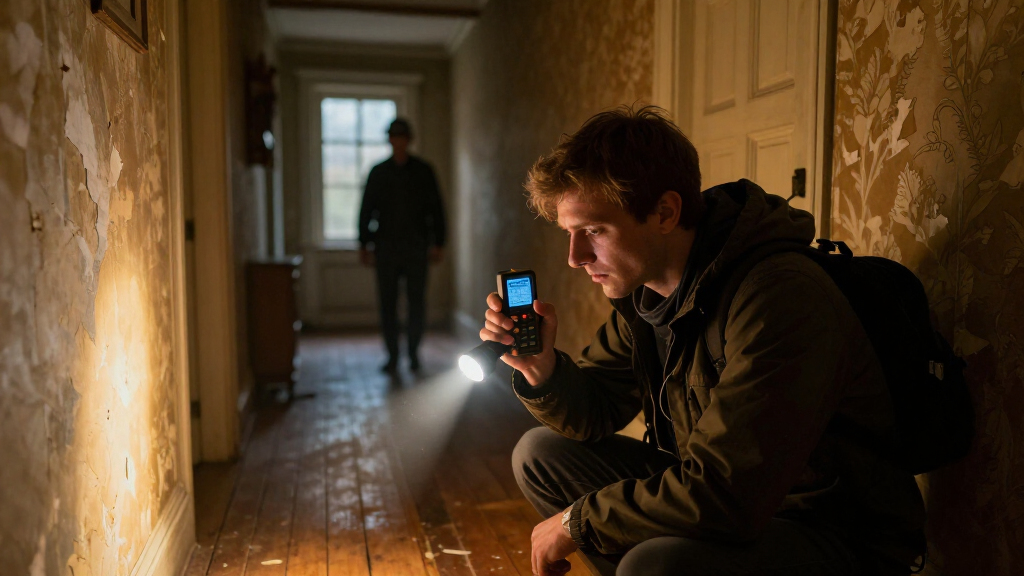

This checklist is for curious investigators building a practical ghost-hunting kit, whether you’re just getting started or adding tools to an existing setup. It covers options for checking electromagnetic fields, recording audio, capturing video, noticing movement, viewing thermal images, and communicating with a partner.

Get books and cozy reading nights delivered free with Prime
- Fast, free delivery on millions of items
- Prime Video, Amazon Music and more included
- Member-only deals all year
The sections are organized by tool type. Each one explains what the slot is meant to do, what to check before choosing equipment, and—where a pick is provided—what to keep in mind about that item. The full-spectrum camcorder and two-way radio sections offer selection advice rather than a named product.
Use this as a compatibility-first checklist, not a promise that any device can confirm paranormal activity. Check the product’s specifications and intended use, consider how you’ll carry and operate it, and test your setup in a familiar environment before an investigation. Keep notes so you can distinguish device behavior from other possible explanations.
Electromagnetic Field Meter
An EMF meter belongs on a checklist when you want to observe electromagnetic-field readings during an investigation. The named pick is the GQ EMF-390 Multi-Field Electromagnetic Radiation Meter. Before choosing any meter, review which fields it measures, how it displays readings, and whether the controls are manageable in the conditions where you expect to use it. A meter is a measuring tool; a reading by itself does not establish a paranormal cause.
A common mistake is treating a changing reading as a conclusion rather than a prompt to check the surroundings. Note the meter’s location and conditions, and look for ordinary sources of electromagnetic activity nearby. Think about readability, handling, and documentation: can you see the display, operate the controls, and record what happened at the same time? If you plan to compare readings across sessions, use a consistent procedure and make sure you understand the device’s stated measurement capabilities.
Also check the product listing for the exact model and included accessories, since the supplied name ends with “3-i” and may be truncated. Confirm that the device’s size and operating method suit your field kit, and read the instructions before relying on its readings. Repeatable observations are more useful than dramatic interpretations.
What to look for:
- The specific electromagnetic fields and measurements the device supports
- A display and controls you can use in your intended setting
- Clear instructions on interpreting and recording readings
- The exact model name and included accessories in the listing
- A consistent procedure for checking nearby environmental sources
EMF Meter, GQ EMF-390 Multi-Field Electromagnetic Radiation Meter, 3-in-1 RF, EL

This EMF meter detects electromagnetic radiation from sources like power lines, cell towers, microwaves, and Wi-Fi signals up to 10 GHz. It features multiple sensors, a data logger, and a spectrum analyzer for real-time RF monitoring, making it suitable for safety assessments and environmental monitoring.
Pros:
- Detects a wide range of electromagnetic signals up to 10 GHz
- Includes spectrum analyzer and data logger for detailed monitoring
- Portable and easy to use for safety assessments
Cons:
- Requires batteries (LR44) which may need frequent replacement
- Limited to 10 meters range, may not suit large areas
- Complex interface may require some technical knowledge
Best for: Investigators who want to monitor electromagnetic-field readings
Not ideal for: Anyone expecting a meter reading to prove a paranormal cause
Bottom line: Consider the GQ EMF-390 after confirming its exact model, measurement capabilities, and fit for your investigation routine.
Digital Voice Recorder
A digital voice recorder gives an investigation a dedicated way to capture audio for later review. The listed pick is the Digital Voice Recorder 16GB with Playback and USB Rechargeable. Its name identifies storage capacity, playback, and USB recharging, but you should check the full product information for recording formats, controls, and other operating details before deciding whether it fits your needs.
One frequent mistake is focusing on storage while overlooking usability. Consider whether you can start, stop, and monitor recordings without creating handling noise, and whether playback makes it practical to review clips on the device. For longer sessions, check the manufacturer’s information about battery operation and charging; the product name alone does not establish recording runtime. Plan how you’ll label files and note time, location, and context so an unexpected sound can be reviewed alongside what was happening in the room.
Think about how the recorder fits into your broader setup. If you’ll use headphones or transfer files to another device, confirm the relevant connection and file compatibility in the listing rather than assuming. Test the recorder in a quiet, familiar space first, including its playback and charging routine. Clear handling and careful notes help make recordings easier to assess without overinterpreting ambiguous sounds.
What to look for:
- Recording formats and file-transfer options stated in the listing
- Controls that are easy to operate quietly
- Playback functions suited to your review process
- Charging and battery details for the session length you expect
- A file-labeling method that preserves time and location context
Digital Voice Recorder 16GB with Playback and USB Rechargeable
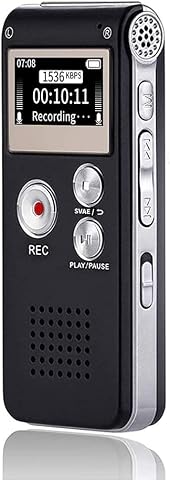
This compact 16GB digital voice recorder offers easy one-button operation, high-quality noise-reduced recordings, and voice activation. It functions as both a voice recorder and music player, with long battery life of over 30 hours of recording and 7 hours of playback, making it ideal for lectures, meetings, and interviews.
Pros:
- Easy one-button operation and user-friendly playback features
- High-quality noise reduction and clear voice recording
- Long battery life suitable for extended use
- Dual functionality as a music player and data storage device
Cons:
- Limited to mono microphone operation
- Small screen size may be less convenient for navigation
- No mention of waterproof or rugged design
Best for: Investigators who want a recorder with named playback and USB recharging
Not ideal for: Shoppers who need specifications not confirmed by the product listing
Bottom line: Check the full specifications and test recording, playback, and charging before bringing this recorder into the field.
Full-Spectrum Camcorder
A full-spectrum camcorder is an advice-only slot for investigators looking to capture video across a broader range of light than a standard setup may record. Since no product is named here, start with the camcorder’s documented spectral range and intended use rather than relying on a label alone. Confirm what accessories or modifications are required and whether they are included. Compatibility matters: a camera body, lens, filter, and recording workflow need to work together for the footage you intend to review.
A common buying mistake is assuming that “full spectrum” guarantees useful footage in every setting or that unusual-looking images have a paranormal explanation. Consider where you will record, how you will monitor the image, and whether the camera can be operated steadily in low-light conditions relevant to your plans. Check the stated recording resolution, storage approach, power arrangements, and file format against your existing equipment. If you plan to compare footage across sessions, keep camera position and settings as consistent as possible.
Before committing, ask how any required conversion or filter affects the camera’s operation and what the manufacturer says about focus and exposure. Try the setup in a familiar environment and review the results on the device you plan to use for analysis. Documenting settings and conditions helps separate camera effects and environmental changes from observations you may want to investigate further.
What to look for:
- A documented spectral range and intended camera configuration
- Clear information about required filters, modifications, and included parts
- Recording format, storage, and power details compatible with your setup
- Controls suited to the locations and lighting conditions you expect
- A way to record camera position, settings, and scene conditions
Motion-Activated Camera
This slot is meant for capturing activity when a sensor detects movement, but the supplied pick needs careful scrutiny: Motion Sensor Garage Light is described as a ceiling LED motion-activated light, not explicitly as a camera. Do not assume it records images or video. Before considering it for this checklist, confirm the actual product type and whether the listing includes a camera and recording capability. If it is a light rather than a camera, it does not fill a motion-activated camera role.
A common buying mistake is confusing motion-activated lighting with motion-triggered recording. Check for explicit information about image capture, recording storage, trigger behavior, power, and playback or file access. For any actual camera you evaluate, consider where its sensor points, what may trigger it, and whether the device can be positioned safely and consistently. Keep ordinary movement—people, pets, and changes in the environment—in mind when reviewing recorded events. A trigger is not an explanation; it only indicates that the device responded according to its design.
The product name also includes “20,000LM” and “Ceiling,” so verify that the intended installation and function match your needs rather than treating those details as camera features. If a camera is essential, choose a clearly identified camera product and confirm its specifications independently. Product identity comes first for this slot.
What to look for:
- Explicit confirmation that the product is a camera, not only a light
- Documented image or video recording and storage capabilities
- Motion-trigger behavior and sensor coverage details
- Power and installation requirements appropriate to the location
- A way to review recordings and note possible ordinary triggers
Motion Sensor Garage Light, 20,000LM Ceiling LED Motion Activated, Dusk to Dawn,

This upgraded garage light features a PIR motion sensor with a wide detection angle and adjustable modes, including always-on, off, and sensor mode. It automatically turns on at night when motion is detected and remains off during the day, providing bright illumination with energy-efficient LED technology.
Pros:
- High brightness with 20,000 lumens for excellent indoor lighting
- Wide detection angle and adjustable modes for versatile use
- Energy-efficient LED technology with long lifespan
- Easy and quick installation
Cons:
- Requires standard E26 socket, may not fit all fixtures
- Detection range may vary depending on environment
- Some users may find the sensor sensitivity adjustable settings complex
Best for: Shoppers checking whether a motion-activated listing records footage
Not ideal for: Anyone needing a confirmed camera without further product verification
Bottom line: The named item is described as a motion-activated garage light, so confirm camera and recording functions before treating it as a camera pick.
Thermal Imaging Monocular
A thermal imaging monocular can add a way to view thermal imagery during an investigation. The listed pick is the Pulsar Axion Compact Thermal Monocular. Before choosing it, consult the product information for its documented capabilities, controls, power needs, and intended operating conditions. The product name alone does not establish range, image detail, or suitability for a particular environment, so use the manufacturer’s specifications to judge fit.
One common mistake is reading a thermal image as a direct identification of a person, object, or paranormal presence. Thermal imagery needs context: surfaces, airflow, temperature differences, and changes in the surroundings may affect what you observe. Decide how you will record the device’s position and the scene, and compare observations with other information rather than relying on one image. Check whether the display and controls are practical for your planned use, especially if you need to operate the monocular while taking notes or coordinating with another person.
Confirm the exact model and included items in the listing, then review the operating instructions before field use. Check that the device’s form and power arrangements suit how you intend to carry and use it. A familiar-setting test can help you learn the display before an investigation. Context and consistent observation make thermal imagery easier to assess responsibly.
What to look for:
- Manufacturer-stated imaging capabilities and operating conditions
- Controls and display that suit your planned use
- Power requirements and included accessories confirmed in the listing
- A practical way to record location and scene context
- Instructions for interpreting the thermal display responsibly
Pulsar Axion Compact Thermal Monocular

The Pulsar Axion Compact Thermal Monocular features advanced thermal imaging with customizable color palettes, providing precise temperature detection. Its rugged magnesium alloy housing makes it durable and portable, suitable for outdoor activities.
Pros:
- High sensitivity thermal imaging for detailed temperature detection
- Durable and waterproof design suitable for outdoor use
- Portable and lightweight for easy carrying
Cons:
- Export restrictions may limit availability in some regions
- Potentially high cost due to advanced features
Best for: Investigators interested in viewing thermal imagery with a monocular
Not ideal for: Shoppers who need capabilities or included accessories left unspecified
Bottom line: Review the Pulsar Axion’s exact specifications and test its display before relying on it during an investigation.
Two-Way Radio Set
A two-way radio set can support coordination when investigators are working apart or need to communicate without gathering around one device. No product is named for this slot, so choose based on the group’s actual locations, operating conditions, and communication plan. Check the manufacturer’s stated range and remember that real-world communication depends on the environment and how the radios are used. Coverage claims need context, especially if walls, terrain, or distance may affect your route.
A common mistake is buying a set without checking whether it suits the whole group. Confirm how many radios are included, what power source they use, and whether charging or batteries fit your session plan. Review the controls and instructions so each person can operate the radios consistently. If privacy, channels, or accessories matter to your group, verify those details in the product specifications rather than assuming they are included. Agree on simple check-in times and a backup plan before separating.
Think about size, carrying method, and whether the radio can be used while handling other equipment. Test communication at your intended location before relying on it, and choose clear call signs or brief phrases to reduce confusion. Radios are for coordination, not evidence; log any relevant event separately from the conversation. A tested communication routine is more useful than an untested feature list.
What to look for:
- A stated range appropriate to your planned locations
- The number of radios included and their power requirements
- Controls and instructions the whole group can use
- Charging, batteries, and any needed accessories confirmed in the listing
- A check-in schedule and backup communication plan
When assembling a kit, prioritize the items that solve your most immediate needs: first establish a reliable way to record observations, then add measuring or imaging tools whose specifications you understand. Treat product identity and compatibility as must-checks—especially for the motion-activated light listing—and avoid buying accessories until you know they work with your chosen equipment.
You do not need every tool at once. Start with a manageable setup, practice using it in a familiar place, and keep a clear record of conditions and results. A careful, curious approach makes any investigation more organized and leaves room to evaluate what you observe thoughtfully.