TL;DR
The Great Crack is an approximately 8-mile fissure network in Hawaiʻi Volcanoes National Park, with related features extending about 10 miles farther. Scientists believe volcanic forces formed it, but its timing and precise origins are unknown; a 1823 eruption sent lava across the area and destroyed a coastal settlement.
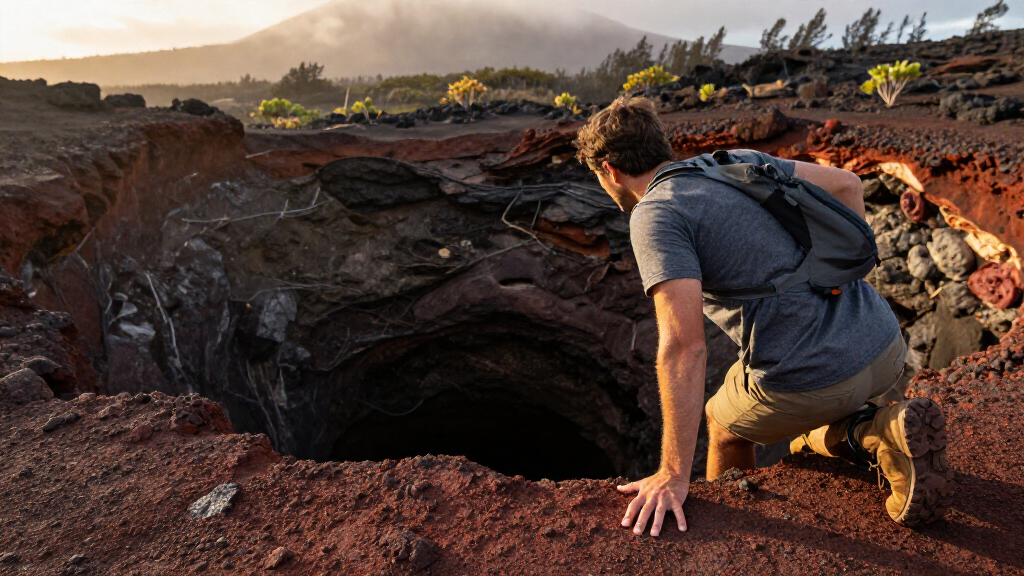
The Great Crack, an approximately 8-mile fissure in Hawaiʻi Volcanoes National Park, is a network of fractures, fissures and volcanic cones whose origin and formation date remain unknown, according to an SFGATE report. Scientists believe volcanic forces opened the ground in the park’s southwest rift zone, but the feature’s relationship to the lava flows of the 1823 Keaiwa eruption is not fully understood.

Get books and cozy reading nights delivered free with Prime
- Fast, free delivery on millions of items
- Prime Video, Amazon Music and more included
- Member-only deals all year
The Great Crack lies in a remote part of the Big Island park, within Kīlauea’s southwest rift zone and near a state highway. SFGATE reports that no established trail leads to it. A park webpage cited in the report says sections of the fissure reach 50 feet across and 66 feet deep. The mapped feature is not one continuous break: related cracks and volcanic features extend about 10 additional miles.
The report says scientists think magma moving into the rift zone caused the ground to pull apart. However, the evidence described does not establish when the Great Crack formed, what lies beneath it, or the precise sequence of events that created its sections. The report also links the area to the 1823 Keaiwa eruption, which sent lava across the landscape at an estimated 25 mph for about six miles to the ocean and destroyed a small coastal settlement at Mahuka Bay.
SFGATE’s account describes difficulty finding park staff familiar with the feature or able to advise visitors about reaching it. Former National Park Service employee Jay Robinson, who worked at the park and later led tours, offered to discuss access. He told the outlet: “It’s an outstanding, amazing place.” His experience does not establish that the site is suitable for unsupervised visits.
A Remote Rift and Its Volcanic History
The fissure is part of a landscape shaped by active volcanic processes and is associated with a historic eruption whose lava reportedly moved at a high rate. The 1823 flow destroyed a settlement, demonstrating the effects of volcanic activity on people living along the coast. The report says the cause of the flow’s speed is unknown, as is whether a similar event could happen again.
For visitors, the account highlights that a named feature on a map is not necessarily a maintained or well-documented destination. The report describes no established access trail and limited staff familiarity among those interviewed. It does not provide enough information to treat the fissure as a routine hike or to recommend entering it without current, reliable guidance.
Popular right now

Roborock Robot Vacuum and Mop with LiDAR Navigation and Self-Empty Dock

De'Longhi Classic Signature Espresso Machine with Adjustable Milk Frother

Breville Barista Express Espresso Machine with Grinder, Black Truffle
As an affiliate, we earn on qualifying purchases.
How the Great Crack Was Described
SFGATE’s report began with a visitor’s attempt to ask park staff about the Great Crack. A visitor-center volunteer said she was unfamiliar with the name, and another employee said he had seen photographs but had not visited. At the backcountry permit office, staff members also said they had not been there or were unsure of its location. These exchanges describe the reporter’s experience; they do not establish that all park employees lack knowledge of the site.
The report identifies the Great Crack as part of a broader volcanic landscape in Hawaiʻi Volcanoes National Park, which includes Kīlauea and other volcanic features. Former park employee Jay Robinson, who worked for the National Park Service for more than three decades and left the service in 2018, told SFGATE he had visited the area and later led tours through Kīlauea EcoGuides. The source material provided here ends before detailing his proposed route or giving a full account of the visit.
““None of us have been there.””
— A park employee at the backcountry permit office, as quoted by SFGATE
Origins and Eruption Links Unresolved
The report leaves several scientific questions open. It does not establish when the fissure formed, its full subsurface structure, or the processes that produced its different fractures and cones. The explanation that magma movement pulled the ground apart is presented as a scientific belief, not a complete account of every part of the feature.
The relationship between the Great Crack and the 1823 Keaiwa eruption also remains unclear in the available material. The report says the cause of the lava’s speed is unknown and that it is unclear whether a comparable event could occur again. It provides no forecast, risk assessment or current park warning specific to the fissure. The source excerpt also does not give a complete access plan or detailed safety guidance.
Visitor Guidance and Research
The source material does not announce a new study, park decision or scheduled scientific update. Further geological investigation could provide information about the Great Crack’s formation, but the report identifies no planned project or timetable. The formation date and the cause of the 1823 flow therefore remain open questions.
People considering a visit should seek current guidance from Hawaiʻi Volcanoes National Park before entering remote areas. The report describes no established trail and recounts staff uncertainty, but it does not provide the park’s current access rules. Robinson’s experience, as described in the article, should not be interpreted as official authorization or a recommendation to explore the fissure alone.
Key Questions
What is the Great Crack?
It is a network of fractures, fissures and volcanic cones in Hawaiʻi Volcanoes National Park. Its main fissure is about eight miles long, while related features extend roughly 10 miles farther, according to the SFGATE report.
How deep and wide is the fissure?
A park webpage cited by SFGATE says parts of the fissure are up to 50 feet wide and 66 feet deep. Those measurements describe the reported maximum dimensions, not every section.
Do scientists know how it formed?
Scientists believe magma moving into Kīlauea’s southwest rift zone pulled the ground apart. The report says the formation date and precise origin remain unknown.
What happened during the 1823 Keaiwa eruption?
The report says lava traveled about six miles to the ocean at an estimated 25 mph and destroyed a small coastal settlement at Mahuka Bay. It says the reason for the flow’s speed is not known.
Can visitors hike to the Great Crack?
The report says no established trail accesses the fissure and does not provide a complete route or current official safety guidance. Visitors should check directly with the park before attempting to enter remote areas.
Source: hn