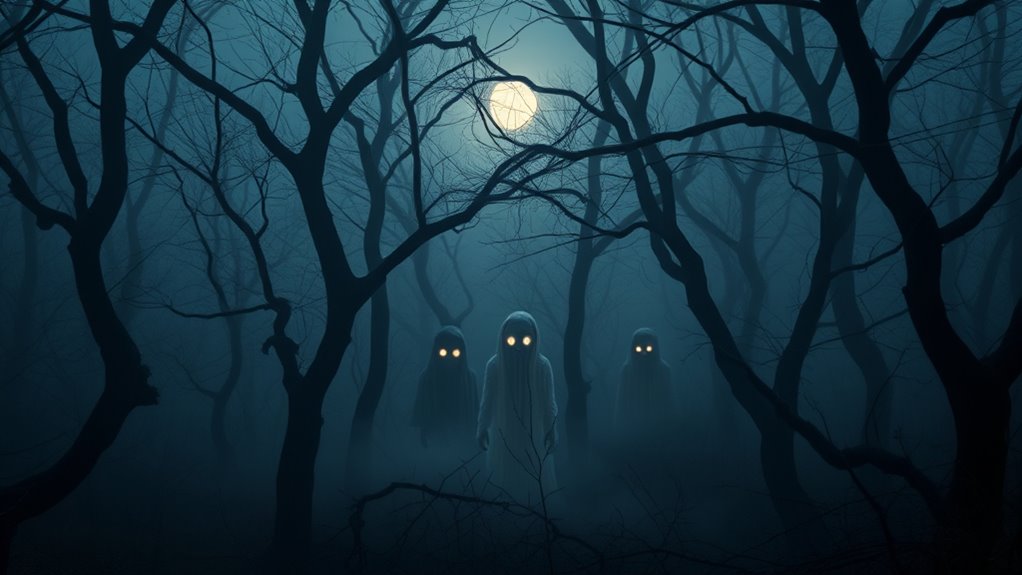

Ghosts are spirits or energies of those who have passed away, often seen as apparitions, shadows, or mysterious sensations. People have believed in them for centuries across cultures, linking them to ancestors, morality, or warnings. While some see ghosts as protectors or messengers, scientific explanations focus on natural causes like environmental factors or psychological perceptions. If you want to explore more about their history, types, and beliefs, keep exploring the fascinating world of spirits.
Key Takeaways
- Ghosts are believed to be spirits or energy remnants of deceased individuals, often appearing as apparitions or shadowy figures.
- Cultural beliefs see ghosts as messengers, protectors, or restless spirits needing closure, influenced by folklore and rituals.
- Manifestations include visual phenomena like orbs, mists, temperature drops, and electromagnetic disturbances.
- Scientific perspectives attribute ghost sightings to environmental factors, psychological effects, or technological illusions rather than actual spirits.
- People often experience or detect ghosts through unexplained noises, cold spots, fleeting shadows, or electronic device anomalies.

Tellegloww Ghost Hunting Equipment Paranormal Equipment for Ghost Hunting Digital EVP Voice Activated Recorder Rechargeable Recorder Device with Microphone, 8GB(Purple)
Compact and Portable Design: as a paranormal ghost hunting equipment, length approx. 3.5 inches/8.9 cm, this digital voice...
As an affiliate, we earn on qualifying purchases.
The History of Ghosts and Spirits
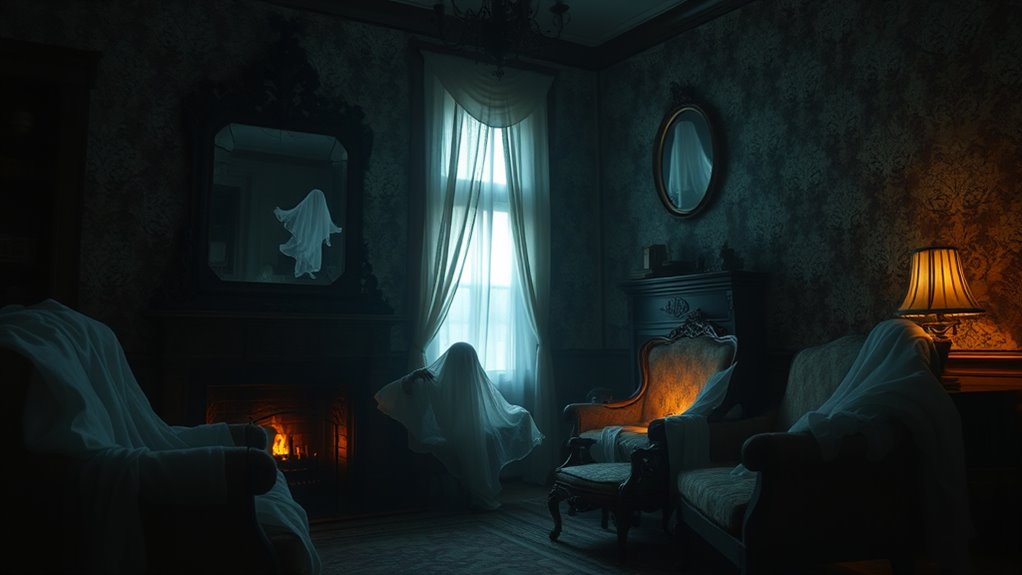
Have you ever wondered how the idea of ghosts and spirits has persisted across cultures and centuries? Throughout history, stories of historical hauntings reveal humans’ desire to connect with those who have passed. These tales often carry deep spiritual symbolism, representing concepts like remembrance, morality, or the afterlife. Ancient civilizations, from Egypt to China, documented spirits wandering among the living, emphasizing the importance of honoring ancestors. Religious beliefs shaped how societies perceived spirits, framing them as messengers, guardians, or warnings. Over time, these stories evolved, blending folklore, religion, and cultural values. The enduring presence of ghosts in history reflects our need to understand life, death, and what might lie beyond, making spirits a universal part of human experience. Additionally, the cultural significance of spirits varies widely, illustrating diverse interpretations and rituals associated with the afterlife. For many societies, spiritual beliefs have influenced funeral practices and rituals to ensure harmony between the living and the departed. The perception of spirits has also been shaped by evolving cultural and religious contexts, influencing how communities honor and remember their ancestors. Moreover, the development of AI Entertainment technologies, such as virtual and augmented reality, has begun to influence modern representations of spirits and hauntings in media and entertainment. Furthermore, the way modern media portrays spirits often reflects current societal attitudes towards death and the supernatural, shaping contemporary beliefs and fears.
MEIJIA Portable All Weather IP67 Waterproof Camera Case,hard case with Customizable Fit Foam,Fit Use of Drones,Camera,Equipments,10.62 x9.68x6.87inches(Green)
▶Outside Dimension: Length 10.62inches Width 9.68Inches Height 6.87 inches.Inside Dimensions:9.17x7x6.12inches.Lid Depth:1.19inch.Bottom Depth:4.96inch.Padlock Hole Diameter:0.19".Weight With Foam:3.30 lbs.The perfect...
As an affiliate, we earn on qualifying purchases.
Types of Spirits and Their Characteristics
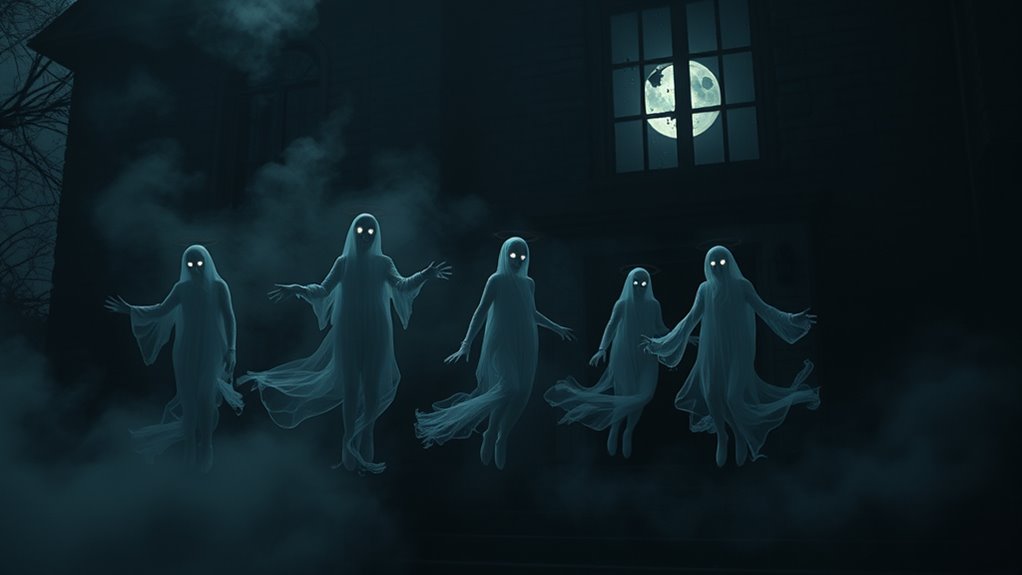
Spirits come in many forms, each with distinct traits and roles that shape their interactions with the living. You might encounter different apparition types that vary in appearance and behavior. Some spirits manifest as clear, full-body apparitions, while others appear as fleeting shadows or energy fluctuations. Spirit manifestations can be gentle or sudden, often influenced by their connection to the living or environment. Here are some common types:
- Full-body apparitions that look like living people
- Shadow figures seen out of the corner of your eye
- Light orbs that drift or flicker
- Mists or fog-like shapes
- Temperature changes or electromagnetic disturbances
- The way spirits communicate can also be affected by technologies, which may influence their visibility or the way they interact with our environment. Additionally, spiritual energy can play a significant role in how these entities manifest and are perceived by observers. Recent studies suggest that AI-driven analysis is increasingly used to better understand these phenomena and their underlying mechanisms. Recognizing these manifestation types can help in identifying and interpreting spirits more accurately, especially as advancements in payment processing technology continue to evolve, influencing how we perceive and interact with unseen energies.

Waterproof Storage Case, Outdoor Sports Survival Equipment Sealed Box Dustproof Pressure Proof Dry Boxes for EDC Tools, Phone, Keys(Clear)
WATERPROOF STORAGE CASE: The box is mainly made of ABS and stainless steel material, anti rust and wear...
As an affiliate, we earn on qualifying purchases.
Cultural Beliefs and Folklore Surrounding Ghosts
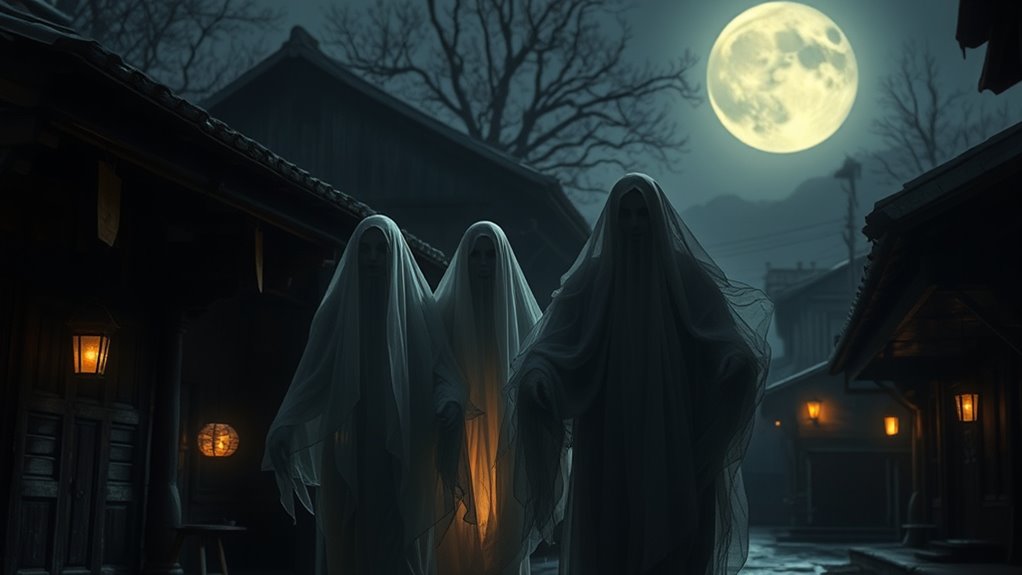
Across cultures worldwide, beliefs and folklore shape how you interpret and interact with ghosts. Many traditions emphasize ancestor worship, where spirits of loved ones are honored and kept close through rituals. These practices reflect a deep respect, often believing that ancestors can influence the living’s well-being. Folklore legends also contribute to these perceptions, depicting ghosts as protectors, warnings, or restless spirits needing closure. In some cultures, ghosts are seen as essential parts of spiritual cycles, while others view them as omens or messengers. These stories and customs influence daily life, guiding how communities remember the dead and address supernatural encounters. Additionally, understanding the traits of successful quality assurance engineers can help in systematically studying these beliefs and their significance. By understanding these cultural beliefs, you gain insight into the complex ways humans have historically related to spirits across the world, including the cultural significance of ghost stories that shape societal norms. Recognizing the role of traditional rituals in maintaining harmony between the living and spirits is also crucial in understanding these diverse perspectives. Furthermore, many cultures consider rituals and ceremonies essential for providing closure and ensuring peace for restless spirits. Moreover, some societies incorporate symbolic objects into their rituals to facilitate communication with spirits and honor their memory.

Plano 1312 Dry Storage Emergency Marine Box, Orange
Tested for durability
As an affiliate, we earn on qualifying purchases.
Scientific Perspectives on Paranormal Phenomena
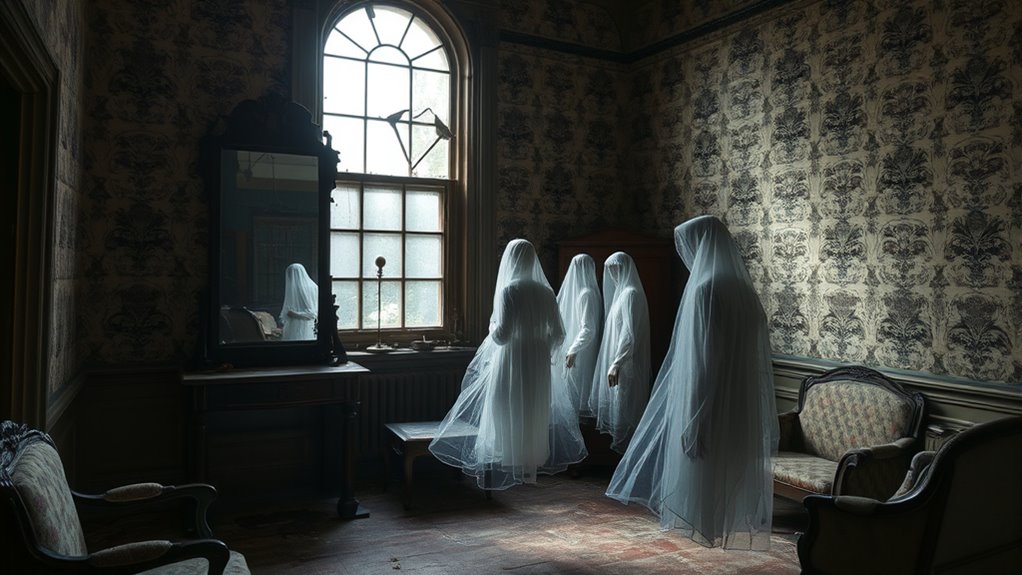
While many people believe in the existence of ghosts, scientific investigation approaches paranormal phenomena with skepticism and rigorous testing. Researchers explore possible explanations rooted in physics, such as quantum physics, which studies particles at tiny scales, and electromagnetic fields, which can influence the human brain. Some scientists suggest that unusual electromagnetic activity might cause sensations or perceptions linked to ghost encounters. Additionally, the development of advanced projection technology has contributed to more realistic visual illusions that can be mistaken for paranormal phenomena. However, there’s no conclusive evidence proving spirits or ghosts exist scientifically. Instead, investigations focus on natural causes like:
- Brain activity and perception
- Electromagnetic interference
- Environmental factors affecting senses
- Psychological influences
- Instrument limitations
These scientific perspectives aim to understand phenomena through testable hypotheses, rather than accepting supernatural explanations without proof.
How People Experience and Detect Ghosts
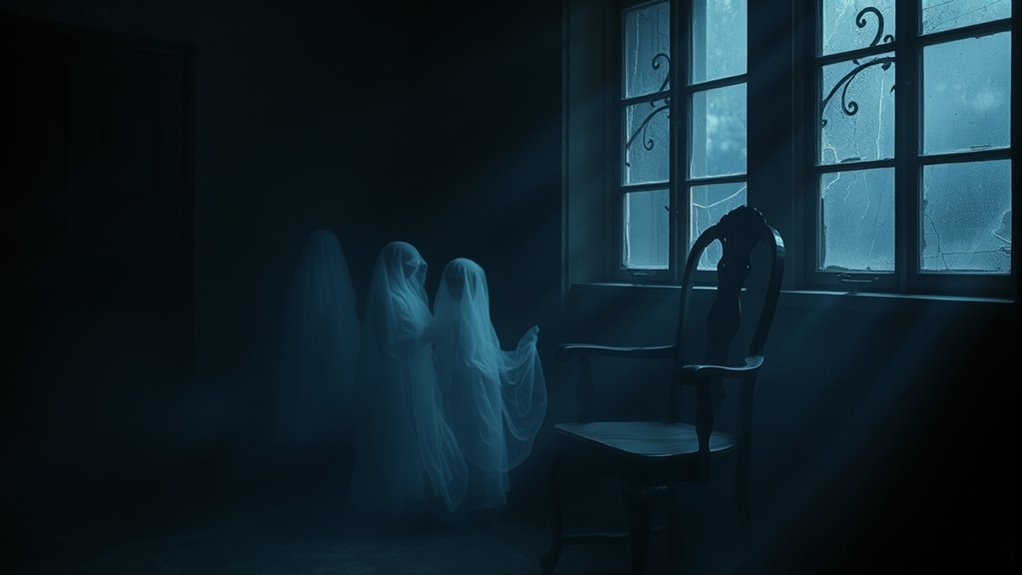
People often report experiencing ghostly encounters that seem to defy natural explanations. Many describe hearing electronic voice phenomena (EVP), where disembodied voices seem to communicate through electronic devices or recordings. Others witness poltergeist activity, such as objects moving unexpectedly or unexplained noises. These experiences are often spontaneous and vivid, leaving witnesses feeling confused or frightened. Some detect ghosts through cold spots or sudden temperature drops, while others feel unseen presences or see fleeting shadows. Many rely on tools like EVP recorders or infrared cameras to capture evidence, though interpretations vary. Whether these encounters are real or psychological, they remain a common way people experience and attempt to detect spirits, fueling ongoing curiosity and investigation into the paranormal.
Frequently Asked Questions
Can Ghosts Communicate With the Living Directly?
You might wonder if ghosts can communicate directly with you. In many cases, paranormal communication occurs through spirit manifestations like whispers, apparitions, or even electronic voice phenomena. While some believe spirits can reach out to send messages or signals, others think these encounters are coincidental or subconscious. Whether real or not, many find comfort or curiosity in the idea that spirits can communicate directly with the living.
Are There Specific Signs That Reveal a Haunting Presence?
You might notice signs that reveal a haunting presence, like unexplained noises, sudden temperature drops, or flickering lights. These are often linked to residual energy or paranormal activity lingering in a space. You may also see shadowy figures or feel an unusual presence. Trust your instincts, and observe if these signs happen repeatedly. Recognizing these clues can help you understand when a location might be haunted by residual energy or spirits.
Do All Cultures Believe in Spirits or Ghosts?
Many cultures hold unique perspectives on spirits and ghosts, shaped by rich historical beliefs and traditions. You’ll find that cultural variations influence how societies interpret unseen presences, with some viewing them as ancestors or guiding voices, while others see them as lingering energies. While not every culture believes in spirits in the same way, the idea of unseen forces has persisted worldwide, reflecting humanity’s universal fascination with what lies beyond the physical domain.
How Do Personal Beliefs Influence Ghost Experiences?
Your personal beliefs shape how you perceive ghost experiences, considerably impacting the psychological effect they have on you. Cultural influence plays a role in framing these encounters, making some see them as comforting or frightening. If you believe in spirits, you’re more likely to interpret strange events as supernatural, enhancing the psychological impact. Conversely, skepticism can diminish these experiences, showing how beliefs directly influence your perception and emotional response to ghostly phenomena.
Is There Scientific Proof That Ghosts Exist?
Did you know that over 45% of Americans believe in ghosts? Scientific proof remains elusive, as paranormal investigations often rely on ghost hunting equipment that detects anomalies rather than definitive evidence. While many report experiences, these aren’t confirmed scientifically. So, if you’re curious about ghosts, remember that their existence isn’t proven—yet. Your belief may influence what you experience during investigations, but science still seeks concrete answers.
Conclusion
Now that you’ve explored the history, types, and beliefs about ghosts, you’re better equipped to understand these mysterious spirits. Whether you see them as echoes of the past or scientific anomalies, ghosts remain a fascinating part of human culture. Like a flickering candle in the dark, they remind you that some mysteries are meant to stay intriguing. Keep an open mind and listen to your own experiences—you might just discover your own ghost story someday.