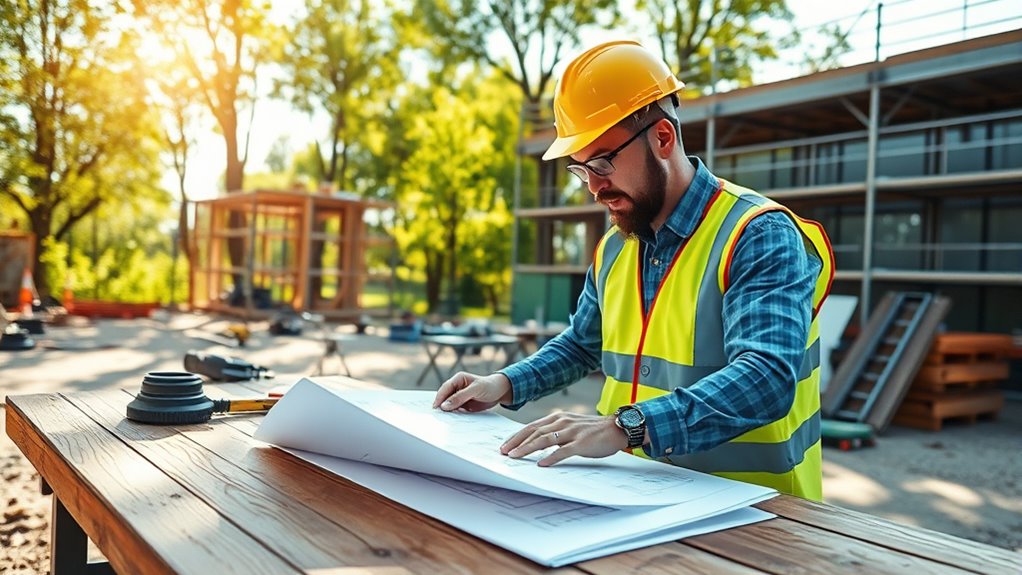

To prepare for a site visit, review all relevant plans, safety procedures, and past reports. Create a detailed checklist covering structural, safety, and operational aspects. Confirm visit logistics such as date, time, and access permits, and coordinate with team members. Make certain everyone understands safety protocols and roles. Schedule the visit during quieter hours and organize documentation. By planning thoroughly, you’ll achieve a smooth inspection—keep going to discover how to cover every detail effectively.
Key Takeaways
- Review site blueprints, safety procedures, and previous reports to identify potential issues beforehand.
- Develop a detailed inspection checklist covering structural, safety, environmental, and operational areas.
- Coordinate visit logistics, including scheduling, access permissions, and transportation arrangements.
- Brief the team on safety protocols, restricted zones, and roles to ensure smooth access and compliance.
- Schedule the visit during off-peak hours, and prepare all necessary documentation and communication materials.

A successful site visit begins long before you step on the property. The key is meticulous planning, especially when it comes to site inspection and visitor logistics. You want every aspect of your visit to run smoothly, which means preparing thoroughly beforehand. Start by reviewing all relevant information about the site—blueprints, safety procedures, and any previous inspection reports. This prep allows you to identify potential issues and questions in advance. When planning your site inspection, create a detailed checklist of what needs to be examined. Break it down into structural elements, safety features, environmental concerns, and operational systems. Having a systematic approach ensures you don’t overlook critical details during the inspection. Make sure your inspection team is clear on their roles and responsibilities, and coordinate schedules to keep everyone aligned.
Visitor logistics play an equally essential role in a successful site visit. Before arriving, confirm the date and time with all involved parties, including site managers and security personnel. It’s imperative to communicate your plans clearly—what areas you intend to visit, how long you’ll be there, and any safety requirements. Arrange for appropriate access—badges, keys, or permits—and double-check that your team has everything needed to enter restricted zones. You should also prepare a plan for transportation, parking, and any accommodations for visitors if they’re coming from out of town. Providing clear directions and contact information minimizes confusion and delays. If the site has specific safety protocols, such as PPE requirements or restricted zones, verify everyone on your team is briefed and compliant. Additionally, understanding the importance of project planning can help ensure all aspects of the visit are accounted for and executed effectively.
In addition, consider the timing of your visit. Avoid peak hours or times when the site might be busier, as this could disrupt operations or compromise safety. Scheduling during less busy times allows for more thorough inspections and a better overall experience. It’s also wise to notify nearby teams or departments about your visit so they’re aware and can coordinate their activities accordingly. During the planning phase, don’t forget to prepare necessary documentation—inspection forms, identification, and any permits or approvals required. A well-organized approach to visitor logistics not only streamlines access but also demonstrates professionalism and respect for the site’s operations.
Top picks for "prepar site visit"
Open Amazon search results for this keyword.
As an affiliate, we earn on qualifying purchases.
Frequently Asked Questions
How Early Should I Arrive for the Site Visit?
You should aim to arrive at least 15 to 30 minutes early for the site visit. This gives you enough time to handle any unexpected delays and demonstrates punctuality. Keep timing considerations in mind and plan your route ahead of time. Punctuality tips include setting reminders and leaving early during busy traffic hours. Being early shows professionalism and allows you to settle in before the visit begins.
What Should I Wear During the Site Visit?
You should wear appropriate attire that aligns with the company’s dress code, often business casual or professional. Investigating workplace norms shows that first impressions matter, so opt for neat, clean clothing that demonstrates respect and seriousness. Avoid overly casual or flashy outfits, and consider bringing layers in case the environment is cooler or warmer. Dressing appropriately guarantees you present yourself professionally and make a positive impression during the site visit.
Who Should I Contact if I Have Questions Beforehand?
If you have pre-visit questions, you should contact the designated contact points provided by the organization. Reach out to your main point of contact or the site coordinator to clarify any uncertainties before the visit. They’re there to help, so don’t hesitate to ask about schedules, safety protocols, or any other concerns. Getting your pre-visit questions addressed ensures you’re well-prepared and confident for the upcoming site visit.
Are There Any Specific Safety Protocols to Follow?
You should always follow safety protocols, including wearing personal protective equipment like helmets, gloves, and safety glasses. You’ll want to familiarize yourself with emergency procedures, such as evacuation routes and first aid locations. While safety might seem strict, it’s designed to keep you safe and comfortable during your visit. Just stay alert, follow posted signs, and ask questions if you’re unsure about any safety measures.
Can I Bring Additional Team Members to the Visit?
Yes, you can bring additional team members to the visit, but you should check the facility’s team member policies and visitor restrictions first. Some sites limit the number of visitors or require prior approval, so contacting the site coordinator is essential. Make sure your team members follow safety protocols and dress appropriately. Adhering to visitor restrictions helps maintain a smooth visit and shows respect for the site’s rules.
Conclusion
As you wrap up your preparations, remember that a successful site visit is like a well-tuned spaceship—every detail matters. Stay confident, adapt quickly, and treat every moment as if you’re crafting a masterpiece on the Renaissance canvas. Don’t forget, even in this fast-paced world, patience and thoroughness are your best allies. So, whether you’re steering today’s challenges or channeling your inner Leonardo, you’re ready to make this visit a true masterpiece.