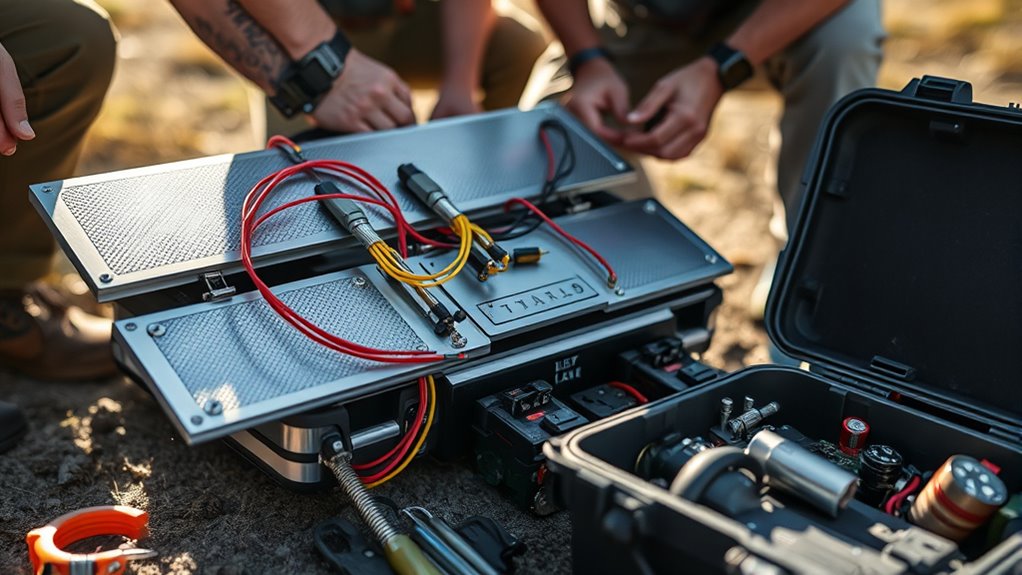

To build a portable field lab, select lightweight, durable equipment that’s easy to transport and set up quickly. Organize your tools in protective cases for fast access and create a stable, efficient setup. Manage power carefully by using high-capacity batteries, solar panels, or backup generators to keep everything running smoothly. Focusing on these steps helps you stay prepared for remote conditions—continue further to discover how to optimize your portable lab’s performance.
Key Takeaways
- Select lightweight, durable equipment tailored to specific tests, and organize tools for quick setup and access.
- Design a stable, portable system with protective cases to withstand field conditions and minimize assembly time.
- Utilize high-capacity batteries, solar panels, and backup generators for reliable, off-grid power management.
- Implement energy-efficient devices and surge protectors to safeguard equipment and extend operational time.
- Plan and prepare in advance to ensure seamless sample collection, data analysis, and testing in remote environments.
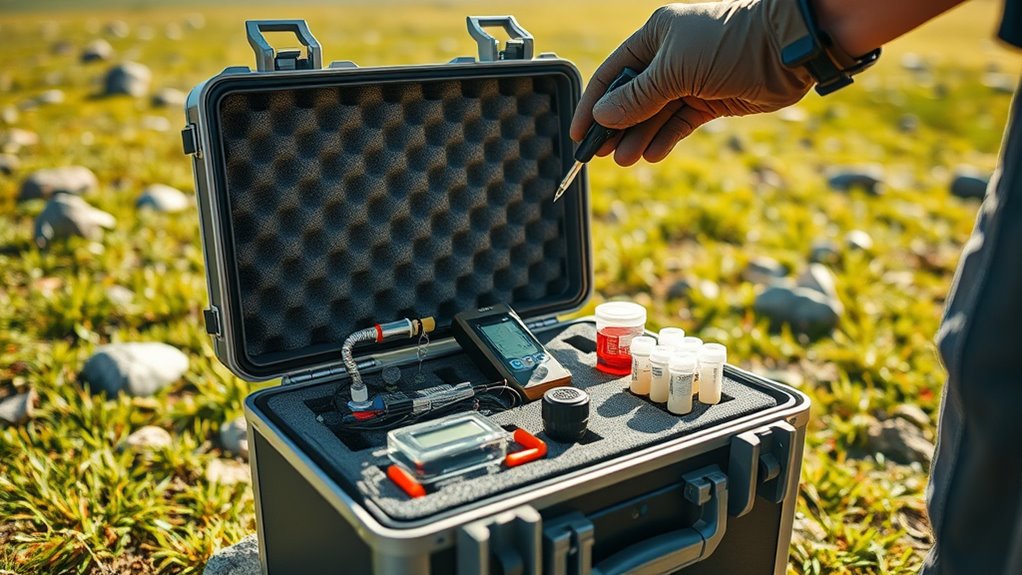
Have you ever needed to conduct scientific tests or gather data in remote locations? If so, you know how vital it is to have a portable field lab that’s both reliable and efficient. Setting up your equipment correctly is the first step to ensuring your work runs smoothly. You want to choose compact, lightweight instruments that are easy to transport but still capable of delivering accurate results. Think about what specific tests you’ll perform and select equipment accordingly—whether it’s microscopes, sensors, or sampling tools. Once you’ve gathered your gear, the next challenge is to establish an effective equipment setup that minimizes setup time and maximizes stability. Secure everything properly, use protective cases, and organize your tools so you can quickly access what you need without hassle. The goal is to create a system that’s both portable and durable, ready to withstand the rigors of fieldwork. Incorporating battery management strategies ensures your power sources remain reliable during extended field sessions. Power management becomes equally vital when building a portable lab. Unlike a traditional lab connected to a constant power source, your field setup relies on batteries, generators, or renewable energy sources. You need to plan ahead to guarantee your equipment stays powered throughout your work session. Invest in high-capacity batteries that can handle your equipment’s energy demands, and consider integrating solar panels for sustainable energy input, especially if you’re working in remote areas without grid access. It’s wise to have backup power options, like portable generators, in case your primary power source runs low. Keep track of your power consumption by regularly monitoring your batteries and generator fuel levels. Additionally, use energy-efficient devices whenever possible to extend your operational time. Proper power management also involves safeguarding your equipment against power surges and outages—use surge protectors and voltage regulators to protect sensitive instruments. Ultimately, building a portable field lab means carefully balancing equipment setup and power management. You want your tools ready to go without fuss, and your power sources dependable enough to sustain your work in the field. Planning ahead for these aspects saves you time, reduces frustration, and guarantees data integrity. With a well-thought-out setup, you can focus on your scientific tasks instead of worrying about technical issues. Whether you’re collecting samples, analyzing data, or running tests, the right equipment setup combined with smart power management makes your portable lab a powerful tool. It’s all about creating a flexible, dependable environment where science can happen anywhere, anytime.
Frequently Asked Questions
What Are the Most Essential Tools for a Portable Field Lab?
The most essential tools for a portable field lab include sampling techniques tools like sterilized containers and portable filtration devices. These allow you to collect and analyze samples efficiently on-site. A durable, compact microscope helps you examine specimens directly in the field. Additionally, you’ll need a reliable power source, basic measurement instruments, and safety gear. These tools guarantee accurate data collection and effective analysis during your fieldwork.
How Do We Ensure Lab Safety in the Field?
You can’t ignore safety safety protocols in the field—they’re your best defense. You guarantee lab safety by strictly following established procedures, wearing appropriate protective gear, and keeping emergency procedures accessible. Regularly training yourself on handling hazards, maintaining equipment, and knowing evacuation routes keeps risks minimal. By staying vigilant and prepared, you create a safe environment where you can focus on your work confidently and effectively, even in challenging outdoor conditions.
What Power Sources Are Used for Mobile Operations?
You rely on solar power and battery packs to power your mobile operations. Solar panels provide a renewable energy source during the day, reducing reliance on external power. Battery packs store excess energy, ensuring your lab stays operational even when sunlight isn’t available. This combination offers flexibility and sustainability, so you can work efficiently in the field without interruption.
How Is Data Secured During Fieldwork?
During fieldwork, you guarantee data stays secure by using data encryption to protect sensitive information and secure storage solutions like encrypted drives or cloud services. Always back up data regularly to prevent loss. When transferring files, use secure channels such as VPNs or encrypted email. By actively implementing these measures, you safeguard your data from unauthorized access and maintain its integrity throughout your field operations.
What Is the Maintenance Process for Portable Equipment?
Think of your equipment like a vintage radio needing regular tuning. You should perform routine inspections often, checking for wear or damage. Equipment calibration is essential; it ensures accuracy and reliability, so always calibrate after transport or if measurements seem off. Keep a maintenance log to track issues and repairs. Regular cleaning and proper storage extend your gear’s lifespan, making sure your portable lab stays ready for any field adventure.
Conclusion
Building a portable field lab is like planting a seed—you’ll nurture it with careful planning and the right tools, and it will grow into a essential hub of discovery wherever you go. With your resourcefulness and adaptability, you transform a simple setup into a powerful instrument for exploration. Remember, this lab isn’t just a box of equipment; it’s your gateway to revealing nature’s secrets, no matter where your journey takes you.