When interviewing witnesses, focus on creating a calm, non-judgmental environment where they feel safe to share their memories. Ask open-ended questions and avoid leading or suggestive language to reduce bias. Use techniques like mental reinstatement to help them visualize the scene and recall details naturally. Stay neutral and patient, allowing memories to emerge without pressure. For more effective methods, continue exploring proven techniques that improve accuracy and trust in witness accounts.
Key Takeaways
- Use open-ended, neutral questions to facilitate detailed and unbiased responses.
- Establish rapport by creating a calm, safe environment to encourage honest sharing.
- Employ memory reinstatement techniques, such as visualization of the event context.
- Avoid leading or suggestive language to prevent biasing the witness’s recollections.
- Maintain neutrality and patience, allowing memories to surface naturally without pressure.
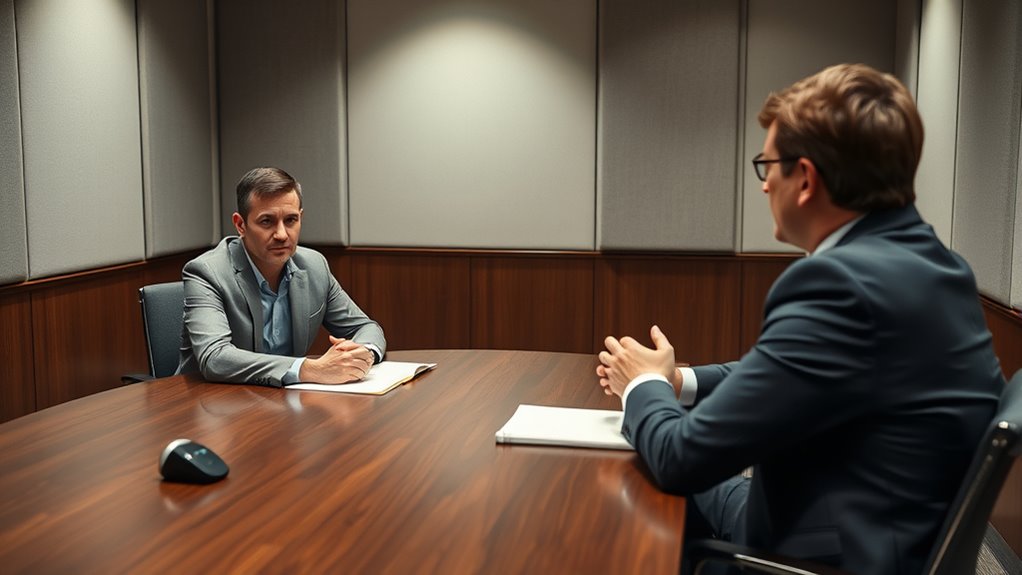
Have you ever wondered how investigators gather accurate information from witnesses? It all begins with understanding how memory recall works and how to mitigate bias. Memories aren’t perfect recordings; they’re reconstructive, meaning every time someone recalls an event, details can shift or fade. As an interviewer, your goal is to create an environment that encourages the witness to access their memories accurately without introducing their own assumptions or prejudices. To do this effectively, you must be aware of the common pitfalls that impact memory recall, such as leading questions or distractions, and actively work to minimize them.
Understanding memory’s reconstructive nature helps improve witness interviews and reduce bias.
Bias mitigation is essential in this process. Witnesses are often influenced by their surroundings, personal beliefs, or even recent events, which can distort their recollections. As the interviewer, your role is to remain neutral and impartial, avoiding any language or tone that might suggest a “correct” answer or lead the witness toward a particular response. This means sticking to open-ended questions that allow the witness to describe their experience in their own words. For example, instead of asking, “Did the suspect wear a red jacket?” you might say, “Can you tell me what the suspect was wearing?” This approach helps prevent confirmation bias and encourages the witness to provide a more authentic, detailed account.
Building rapport is another key element in fostering accurate memory recall. When witnesses feel comfortable and safe, they’re more likely to share information honestly and thoroughly. Maintain a calm demeanor, listen actively, and show genuine interest without interrupting or rushing them. It’s also helpful to remind witnesses that they don’t need to guess or speculate; they should focus solely on what they remember. Sometimes, memories can come back unexpectedly if they’re not pressured, so patience is essential.
Additionally, techniques like mental reinstatement of context can profoundly improve recall. You might ask the witness to close their eyes and visualize the scene, recalling sights, sounds, and feelings from that moment. This method helps access details that might be buried or suppressed. Understanding the importance of color accuracy and how visual details impact memory can further enhance the quality of their responses. Throughout the interview, be mindful of your own language and behavior, continually working to reduce the influence of your presence on their responses.
Top picks for "interview witness practic"
Open Amazon search results for this keyword.
As an affiliate, we earn on qualifying purchases.
Frequently Asked Questions
How Do You Establish Rapport Quickly With Witnesses?
You establish rapport quickly with witnesses by building trust through genuine, empathetic interaction. Start with a warm, approachable tone and maintain eye contact. Use active listening to show you value their input, nodding and summarizing their statements. Keep questions clear and non-threatening. By demonstrating understanding and respect, you create a comfortable environment where witnesses feel safe sharing their details, making the interview more effective and trustworthy.
What Techniques Improve Memory Recall During Interviews?
You can improve memory recall during interviews by using memory cues and cognitive techniques. Encourage witnesses to visualize details vividly and recreate the scene mentally. Ask open-ended questions to stimulate their memory, and give them time to think. Repeating key details subtly helps reinforce memory. These methods help witnesses access accurate information without leading them, making their recall clearer and more reliable.
How Do You Handle Uncooperative Witnesses?
You handle uncooperative witnesses by staying calm and observing their body language for cues. Use gentle questioning techniques to build rapport and trust, avoiding confrontation. If they remain resistant, adjust your approach, ask open-ended questions, and give them time to respond. Maintain eye contact and a non-threatening posture to encourage cooperation. Remember, patience and empathy often lead to better cooperation and more accurate information.
What Are Common Mistakes to Avoid in Witness Interviews?
Avoid common mistakes like neglecting legal ethics and cultural sensitivity, which could compromise your interview. Studies show that 60% of witness inaccuracies stem from miscommunication or bias. You should prepare thoroughly, ask open-ended questions, and listen actively. Never rush or intimidate witnesses, and always respect their backgrounds. Being aware of cultural differences helps build trust, ensuring you gather accurate, reliable information without jeopardizing legal or ethical standards.
How Is Digital Evidence Integrated Into Witness Testimony?
You integrate digital evidence into witness testimony by leveraging digital forensics to authenticate electronic transcripts and other digital data. During interviews, encourage witnesses to reference specific digital evidence, helping them connect their statements with concrete facts. You can also present digital forensics findings to clarify details or resolve inconsistencies. This approach helps guarantee testimonies are accurate, credible, and supported by verified digital evidence, strengthening your overall case.
Conclusion
By mastering these interviewing techniques, you hold the power to unseal secrets that could topple kingdoms or rewrite history itself. Every question you ask is a key that can open the floodgates of truth, revealing details so startling they could shake the very foundation of justice. Remember, your skill in interviewing isn’t just a tool—it’s a force capable of changing lives, uncovering the unimaginable, and shaping the course of events in ways you never thought possible.