

You keep raw notes separate from published conclusions to maintain clarity and transparency in your research. By isolating unfiltered observations, questions, and hypotheses, you prevent early ideas from contaminating final insights. This separation helps you track how your thinking evolves and guarantees your conclusions are well-supported. It also makes your process more credible and easier to review objectively. If you explore further, you’ll discover how this approach strengthens the integrity of your work and results.
Key Takeaways
- Separating raw notes from conclusions preserves the clarity and integrity of the final findings.
- It allows tracking the evolution of ideas without contamination from preliminary thoughts.
- Maintaining separation facilitates objective review and identification of biases or assumptions.
- It ensures raw observations remain unaltered and accessible for verification or further analysis.
- Clear distinction supports transparent, credible communication of research outcomes.
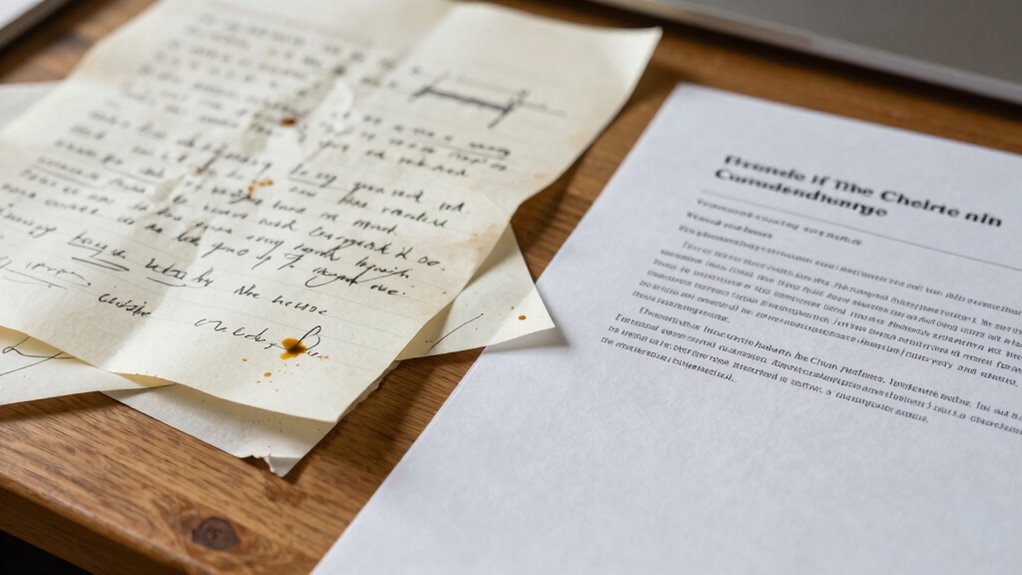
When working on research or analysis, keeping raw notes separate from published conclusions is essential for maintaining clarity and integrity. This separation allows you to track your thought process without contaminating your final findings with initial uncertainties or tangential ideas. A mindfulness practice helps you stay present and aware of your cognitive habits, making it easier to distinguish between raw data and refined insights. By intentionally organizing your notes, you create a clear boundary between the exploratory phase and the conclusion-writing stage. This practice not only prevents confusion but also enhances your overall note organization, making it easier to revisit ideas and verify your reasoning later.
In your note-taking process, raw notes serve as the unfiltered, often messy record of your initial observations, questions, and hypotheses. They are the raw material from which your conclusions are born. Keeping these notes separate from your published conclusions ensures you don’t accidentally present preliminary thoughts as final insights. When you practice mindful note organization, you develop a disciplined approach to compartmentalizing your thinking. This means labeling your raw notes clearly, perhaps with timestamps or tags, so you can easily differentiate between exploratory thoughts and your polished, publish-ready insights. Such discipline in note organization minimizes the risk of confusion during later review or when sharing your work with others.
Label and organize raw notes with timestamps or tags to distinguish initial ideas from polished insights.
Moreover, maintaining this separation encourages a more objective review process. When you revisit your raw notes, you can see how your ideas evolved, which helps you identify biases or assumptions that might have influenced your conclusions. It also allows you to trace your thought process, making your analysis more transparent and credible. This clarity supports the integrity of your work, especially when sharing findings with colleagues or publishing reports. The mindfulness practice of being intentional about how you handle your notes makes this process second nature, reinforcing good habits and helping you stay focused on the task at hand. Recognizing the importance of content organization helps you develop a systematic approach aligned with design thinking principles, ensuring your process remains clear and adaptable.
Ultimately, keeping raw notes separate from published conclusions isn’t just about tidiness—it’s about fostering a systematic approach that respects the complexity of analysis. It enables you to refine your ideas without losing sight of their origins, ensuring that your final conclusions are well-founded and credible. With mindful note organization, you create a workflow that respects both the messy process of discovery and the polished outcome you want to present, making your research more robust and trustworthy.

Hardcover Lined Spiral Notebook with Removable Dividers Leather Bound Black
- Size: 8×10 inches with 300 pages
- Dividers: Removable colorful plastic dividers
- Organization: Adjustable sections for projects or courses
As an affiliate, we earn on qualifying purchases.
As an affiliate, we earn on qualifying purchases.
Frequently Asked Questions
How Do Raw Notes Impact the Peer Review Process?
Your raw data and notes greatly impact the peer review process by providing transparent evidence of your research methods. Keeping raw notes separate guarantees note confidentiality and prevents biases from influencing reviewers. When you share raw data, reviewers can verify your findings’ accuracy and integrity. This process maintains scientific rigor, builds trust, and fosters an honest evaluation, ultimately strengthening the credibility of your published conclusions.
Can Raw Notes Be Used for Future Reference?
Yes, raw notes can be useful for future reference. By maintaining good note organization and idea categorization, you can quickly locate specific insights or data points later. Keeping raw notes separate from published conclusions helps preserve the original thoughts and context, making it easier to review your thought process or build upon previous ideas. Proper organization ensures your raw notes remain a valuable resource for ongoing research or projects.
What Tools Are Best for Organizing Raw Notes?
You should use tools that support note categorization and digital archiving, like Notion, Evernote, or OneNote. These platforms let you organize raw notes into categories, tags, or folders, making retrieval easy later. They also support digital archiving, so your notes stay safe and accessible over time. Look for tools with search functions and tagging options to streamline note management, ensuring your raw notes remain organized and useful for future reference.
How Do Raw Notes Differ Across Different Industries?
Think of raw notes like ingredients in a kitchen—industry-specific documentation shapes their form. In healthcare, detailed note-taking methodologies focus on precision and compliance, while in tech, notes emphasize quick, iterative insights. For example, a journalist’s raw notes might capture fleeting impressions, whereas a scientist’s are meticulously detailed. Your approach should adapt to your industry’s standards, ensuring raw notes support clear, effective published conclusions.
What Are the Risks of Mixing Raw Notes With Conclusions?
Mixing raw notes with conclusions risks compromising note authenticity, making it harder to distinguish original insights from interpreted ideas. It can blur idea clarity, leading you to draw conclusions based on incomplete or biased information. When raw notes get mixed, you may unintentionally misrepresent data or overlook important nuances, which can affect decision-making. Keeping them separate guarantees you maintain the integrity of your raw observations and preserve clear, unbiased conclusions.
Conclusion
Keeping raw notes separate from published conclusions is like storing raw ingredients away from a finished dish—you preserve their integrity and clarity. By doing so, you guarantee your ideas stay fresh and untainted until you’re ready to serve them up polished and ready for others to taste. This separation helps you avoid mixing up raw thoughts with final insights, making your work more organized and trustworthy. Think of raw notes as seeds—carefully kept until they’re ready to bloom into something beautiful.