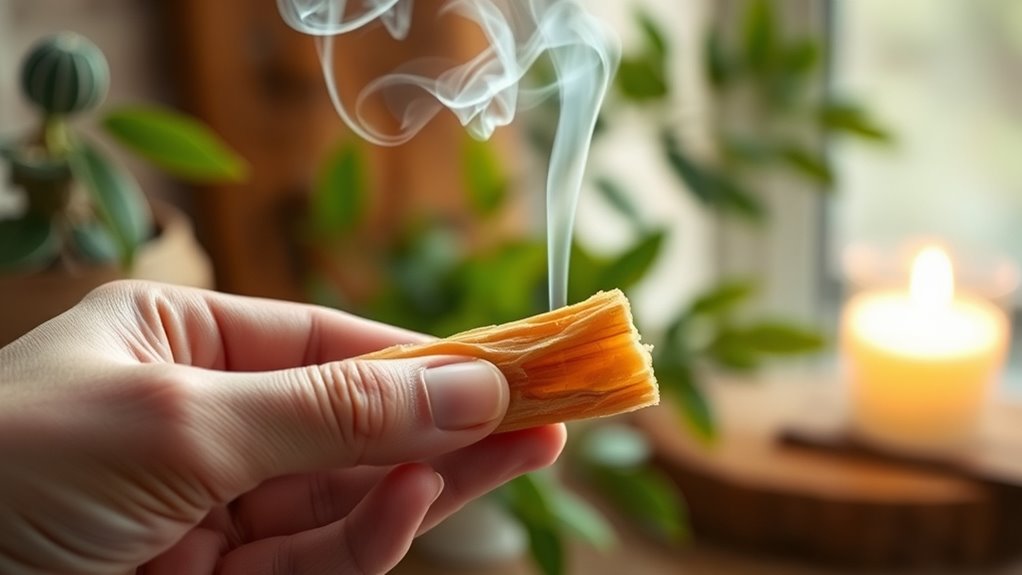

When using Palo Santo, it’s important to respect its cultural roots and practice sustainability. Always choose ethically sourced sticks, preferably from vendors that harvest fallen wood or use responsible methods. Set a clear intention before lighting, and handle it with reverence. Avoid overharvesting and support artisans connected to its traditions. By practicing mindfully and ethically, you help preserve both the environment and the sacred nature of this spiritual tool; there’s more to think about, so continue to explore how to integrate this responsibly.
Key Takeaways
- Ensure Palo Santo is sustainably sourced, preferably from fallen wood or certified suppliers, to protect wild populations.
- Use Palo Santo with respect, setting clear intentions and practicing mindfulness during lighting and burning rituals.
- Support ethical vendors who practice responsible harvesting and contribute to indigenous communities.
- Educate yourself about Palo Santo’s cultural significance and avoid cultural appropriation or trivialization.
- Incorporate eco-friendly practices, such as limiting usage and extinguishing the wood properly, to promote environmental conservation.
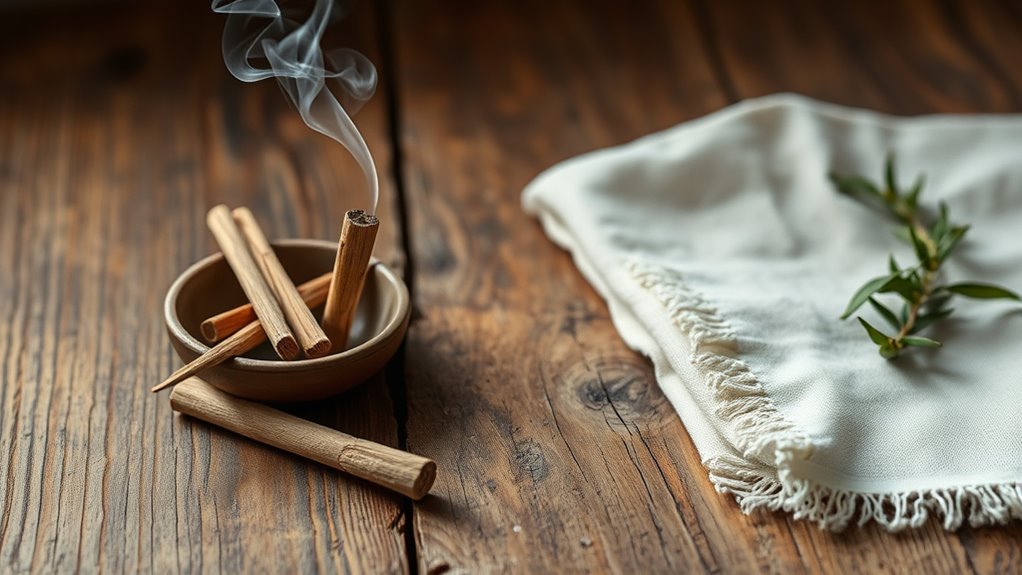
Have you ever wondered how to properly use Palo Santo to enhance your space and spirit? If so, it’s important to understand not just the ritual, but also the considerations surrounding its ethical use. The growing popularity of Palo Santo has sparked conversations about sustainability concerns and cultural respect. These issues are essential because they remind us that our practices should honor both the environment and the traditions from which this sacred wood originates.
Palo Santo, meaning “holy wood” in Spanish, is traditionally used by indigenous communities in South America for spiritual cleansing and healing. When you incorporate it into your practice, you’re engaging with a powerful cultural tradition that’s been passed down for generations. However, because of its increased demand worldwide, overharvesting has become a significant concern. Unsustainable harvesting methods threaten wild populations and the ecosystems where Palo Santo trees naturally grow. To avoid contributing to deforestation or damaging local environments, look for ethically sourced products. Reputable suppliers often ensure their Palo Santo is harvested sustainably, either by collecting fallen wood or through responsible cultivation practices. Supporting these sources helps preserve the species and respects the cultural significance behind its use.
Cultural respect also plays a fundamental role in how you approach using Palo Santo. It’s more than just a scented stick; it’s a spiritual tool deeply rooted in indigenous traditions. When you purchase and use Palo Santo, do so with mindfulness and appreciation for its cultural origins. Avoid appropriating or trivializing its significance—educate yourself about its history, and consider supporting artisans or communities that have a rightful connection to the practice. This respectful approach encourages a more ethical and meaningful experience, rather than simply using it as a trendy scent.
Before lighting your Palo Santo, make sure you’re doing so with intention. Hold it in your hand, set a clear purpose—whether it’s clearing negative energy, inviting positivity, or simply creating a peaceful atmosphere. Light the tip, let it burn for a few seconds, then gently blow out the flame, allowing it to smolder and release fragrant smoke. Use the smoke to cleanse your space, moving it around your environment or over your body. Remember, this ritual is about connection and mindfulness—treat it with reverence. Incorporating sustainable harvesting practices into your choices ensures that you support the conservation of Palo Santo trees and respect the ecosystems they inhabit.
ethically sourced Palo Santo sticks
As an affiliate, we earn on qualifying purchases.
As an affiliate, we earn on qualifying purchases.
Frequently Asked Questions
Is It Legal to Buy Palo Santo Internationally?
Yes, you can buy palo santo internationally, but you need to check legal regulations and import restrictions in your country. Some countries have strict laws to protect endangered species and regulate the import of palo santo. Always research your local laws before purchasing or importing. Verify the palo santo comes from sustainable sources to avoid legal issues and support ethical practices. Staying informed helps you buy responsibly and legally.
How Can I Identify Sustainably Harvested Palo Santo?
Did you know that only about 10% of palo santo sold globally is sustainably sourced? To identify sustainably harvested palo santo, look for certifications like Fair Trade or FSC, which indicate ethical harvesting practices. You can also ask vendors about their sourcing methods, ensuring they prioritize conservation and respect local communities. Choosing responsibly sourced palo santo helps preserve this sacred wood for future generations and supports environmental and social sustainability.
Can Palo Santo Be Used for Medicinal Purposes?
Yes, you can use palo santo for medicinal purposes, as it has traditional practices that highlight its medicinal benefits. People often burn it to promote relaxation, clear negative energy, and improve mood. Though scientific evidence is limited, many believe its natural properties support mental clarity and emotional balance. Just guarantee you’re sourcing sustainably, respecting cultural practices, and using it responsibly to enjoy its potential health benefits.
Are There Alternatives to Palo Santo That Are Eco-Friendly?
Looking for eco-friendly, ethical options? You can consider incense made from sustainably harvested herbs or resins like cedar, sage, or lavender. These alternatives offer spiritual scent without depleting resources. By choosing sustainable harvesting, you support the environment and honor traditional practices. Ethical alternatives guarantee you’re respecting nature while enjoying aromatic ambiance. So, explore these natural, nurturing options that align with your values and keep the earth thriving.
What Cultural Significance Does Palo Santo Hold in Indigenous Communities?
You should know that Palo Santo holds deep cultural significance in Indigenous rituals and spiritual traditions. It’s considered a sacred tool for cleansing and connecting with spirits, often used in ceremonies to promote healing and protection. In these communities, harvesting and using Palo Santo is done with respect and care, honoring its spiritual role. Respecting these practices helps preserve the cultural integrity and spiritual meaning behind this revered wood.
sustainable Palo Santo bundle
As an affiliate, we earn on qualifying purchases.
As an affiliate, we earn on qualifying purchases.
Conclusion
So, next time you burn a stick of Palo Santo, remember—you’re not just indulging in a fragrant ritual. You’re participating in an ancient dance of ethics and ecology, all while pretending it’s perfectly sustainable. Maybe pause and ask if your spiritual enlightenment is worth the ecological footprint. Or, better yet, just enjoy the scent and leave the planet a little less smoldered, one ethically sourced stick at a time. After all, enlightenment shouldn’t come at Earth’s expense.
Palo Santo ceremonial set
As an affiliate, we earn on qualifying purchases.
As an affiliate, we earn on qualifying purchases.
Palo Santo smudging kit
As an affiliate, we earn on qualifying purchases.
As an affiliate, we earn on qualifying purchases.