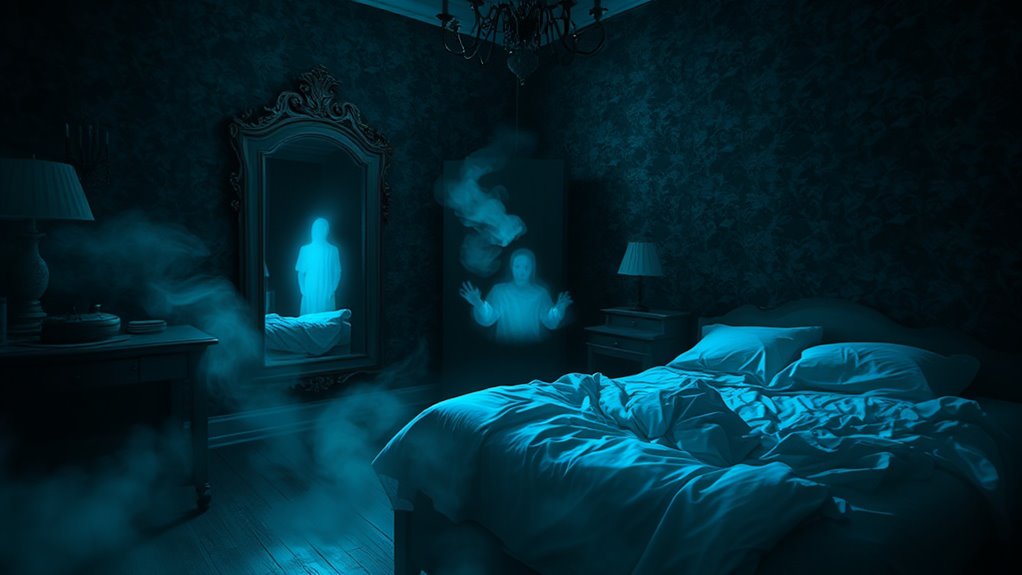

Nightmares are caused by psychological, emotional, or physiological factors, not by supernatural hauntings. They often reflect stress, trauma, or mental health issues and can include vivid, intense images that feel very real. Sleep phenomena like paralysis can also create frightening experiences, but these are natural brain responses. If you experience frequent nightmares, it’s more likely linked to stress or sleep habits rather than spirits. Keep exploring to understand more about what your dreams might mean.
Key Takeaways
- Nightmares are typically caused by stress, trauma, or mental health issues, not supernatural hauntings.
- Sleep paralysis can produce vivid hallucinations mistaken for paranormal activity.
- Nightmares often symbolize unresolved personal fears or issues, not signs of a haunting.
- Scientific explanations attribute nightmares to brain activity, making hauntings unlikely causes.
- Understanding dream symbolism and seeking medical advice can help reduce fear and clarify the experience.
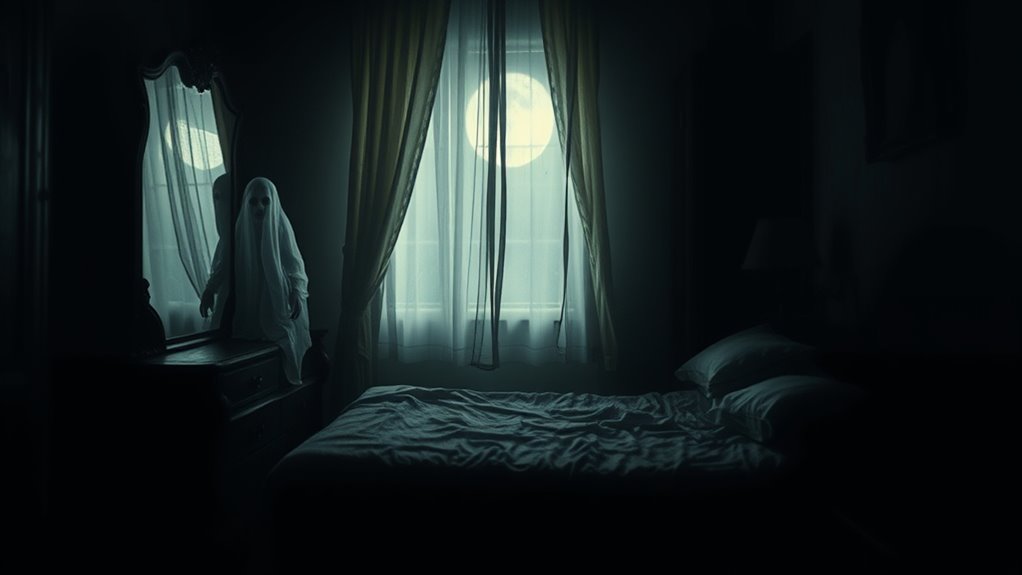
Have you ever woken up in a cold sweat, feeling like a nightmare is still lingering in your mind? That unsettling sensation can leave you questioning whether there’s more to your frightening dreams than just your imagination. Nightmares often feel so vivid and intense that they seem to carry a deeper meaning, which is why many wonder if they could be a sign of a haunting. To understand this, it’s helpful to explore dream symbolism, the subconscious messages your mind sends during sleep, and how they might relate to paranormal activity. Sometimes, recurring nightmares or disturbing dreams can be interpreted as symbols of unresolved issues or fears, reflecting something more than just random images. However, it’s also important to recognize that nightmares can stem from natural causes like stress, trauma, or even sleep disorders.
Nightmares may reflect unresolved fears or stress, not supernatural activity, but understanding their meaning can bring peace of mind.
Sleep paralysis, a common phenomenon, can intensify these terrifying experiences. During sleep paralysis, you wake up temporarily unable to move, often accompanied by hallucinations or a feeling of pressure on your chest. This state blurs the line between dreaming and waking, creating a perfect environment for vivid, sometimes frightening visions. When you’re in sleep paralysis, your mind might interpret these hallucinations as supernatural entities or spirits, which could easily be mistaken for signs of a haunting. This experience can leave you feeling overwhelmed and scared, leading you to believe there’s something more sinister at play. But in reality, it’s a physiological response that occurs when your brain awakens before REM sleep ends, trapping you in a dream-like state while your body remains immobile.
While some people might see recurring nightmares as evidence of supernatural activity, scientific explanations often point to psychological or physiological factors. Nightmares caused by trauma or anxiety can sometimes mimic haunting scenarios, especially if your subconscious is processing fears about the unknown or unresolved issues. It’s *essential* to differentiate between genuine paranormal activity and natural sleep phenomena. If nightmares persist or become particularly disturbing, consulting a healthcare professional or sleep specialist can help identify underlying causes. Recognizing the role of sleep disorders and physiological processes can help you understand why these episodes happen. Remember, the mind is complex, and while dreams can carry symbolic meaning, they’re usually rooted in personal experiences or brain activity rather than paranormal forces.
In the end, understanding your dreams and sleep experiences can help you find peace. Nightmares and sleep paralysis are common experiences that, although frightening, are usually explainable through science. They’re unlikely signs of a haunting but can serve as signals from your subconscious to address emotional or mental stressors. Recognizing the difference between dream symbolism and actual supernatural activity is key to overcoming fear and gaining clarity about what’s truly happening during these unsettling episodes.
Top picks for "nightmar sign haunt"
Open Amazon search results for this keyword.
As an affiliate, we earn on qualifying purchases.
Frequently Asked Questions
Can Nightmares Predict Future Hauntings or Paranormal Activity?
Nightmares can’t predict future hauntings or paranormal activity, but they might reflect your subconscious fears or dream symbolism. Sometimes, you experience sleep paralysis during nightmares, which can cause vivid, frightening sensations. While they feel real, these episodes aren’t signs of ghosts or spirits. Instead, focus on understanding your sleep patterns and stress levels, as these often influence nightmares, rather than expecting them to foretell paranormal events.
Are Certain Personality Types More Prone to Haunted Nightmares?
Yes, your personality traits and sleep patterns can influence haunted nightmares. If you’re anxious, highly sensitive, or prone to stress, you’re more likely to experience vivid, unsettling dreams. Poor sleep habits or irregular sleep schedules can also trigger nightmares. By understanding your personality and maintaining healthy sleep routines, you may lessen these haunted nightmares, helping you feel more secure and rested each night.
How Do Cultural Beliefs Influence Nightmare Experiences Related to Hauntings?
Cultural beliefs and symbolism shape how you interpret nightmares related to hauntings. If your belief system views spirits or ghosts as real, you’re more likely to experience vivid, haunting dreams reflecting those fears. Cultural symbolism influences the themes and imagery in your nightmares, making them feel more intense or meaningful. Your background determines whether you interpret these dreams as warnings, messages, or mere psychological responses rooted in your cultural worldview.
Can Medication or Therapy Reduce Nightmares Linked to Paranormal Fears?
Yes, medication options like antidepressants or anti-anxiety drugs, along with dream therapy, can help reduce nightmares linked to paranormal fears. You should consult a healthcare professional to explore these options. Dream therapy techniques, such as imagery rehearsal therapy, empower you to change distressing dreams. Combining medication and therapy can effectively lessen your nightmares, helping you feel more secure and in control of your fears.
Are Children More Susceptible to Nightmares Involving Spirits or Ghosts?
Yes, children are more susceptible to nightmares involving spirits or ghosts because their vivid imagination and childhood fears often influence their dreams. These nightmares can cause sleep disruptions, making it harder for them to rest peacefully. You should comfort your child and reassure them, as this can help reduce fear and improve their sleep. Addressing their childhood fears directly can also lessen the likelihood of recurring nightmares about spirits or ghosts.
Conclusion
Nightmares often mirror your fears, acting as shadows that dance just beyond your grasp. They’re like whispers of a storm brewing inside, signaling something unseen. While they might feel like hauntings, they’re really just your mind’s way of illuminating hidden truths. Remember, even in darkness, a flicker of light exists—guiding you through the night, reminding you that you hold the power to face whatever shadows linger. Trust that dawn will break.