

A poltergeist is a phenomenon where objects move or disappear, and strange noises occur, often driven by human emotions or stress rather than spirits. These disturbances tend to happen in haunted locations or during times of intense emotional tension. While some believe spirits cause the activity, many experts suggest psychological or environmental factors are behind it. If you keep exploring, you’ll discover more about the complex theories and what might really be going on.
Key Takeaways
- A poltergeist is a phenomenon involving unexplained object movements, noises, and disturbances often linked to emotional stress.
- Many experts believe poltergeist activity may result from human psychology, such as subconscious energy or emotional tension.
- These phenomena are more frequently reported in haunted locations, but scientific explanations often point to environmental or psychological causes.
- The concept of poltergeists is rooted in cultural stories and fears, with some attributing activity to spirits and others to natural factors.
- Advances in technology help monitor such events, but definitive proof of supernatural origins remains elusive.
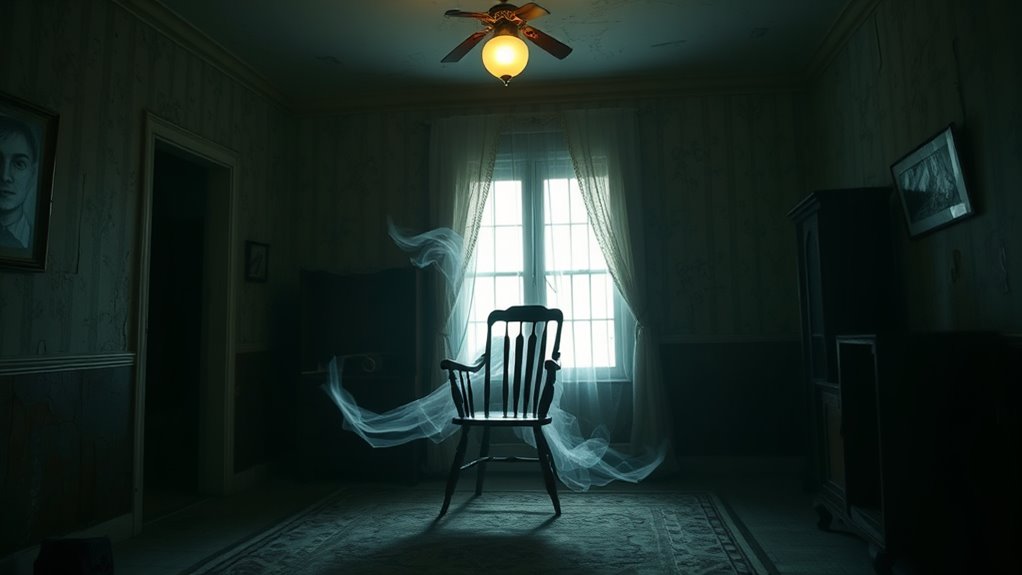
Poltergeist activity has long intrigued and alarmed people, often leaving them searching for straightforward answers amidst the chaos. When you hear stories of objects flying through the air or unexplained noises, it’s natural to wonder if these events are connected to haunted locations known for such supernatural disturbances. Many believe that poltergeists are associated with psychic phenomena, where unseen forces seem to manipulate physical surroundings without any clear explanation. These phenomena often occur in places with emotional or psychological tension, which some suggest may trigger the activity.
Poltergeist activity often involves objects moving and unexplained noises linked to emotional or psychological tension.
In haunted locations, reports of poltergeist activity tend to be more intense and frequent. People living or working in such areas describe objects moving or disappearing without reason, doors slamming on their own, or eerie sounds echoing through the halls. These locations seem to act as focal points where psychic phenomena manifest vividly, making it tempting to think that the environment itself amplifies the activity. However, some skeptics argue that many supposed hauntings are psychological, driven by fear, suggestion, or collective imagination. Still, witnesses often insist they experience tangible and startling events, which keeps the mystery alive.
Understanding what a poltergeist really is requires peeling back layers of folklore and scientific inquiry. Many experts believe that what’s often labeled as a poltergeist could be a form of psychokinesis—an unconscious mental energy that causes physical disturbances. This theory suggests that the activity might be rooted in the subconscious emotions of individuals, especially adolescents or those under stress, rather than a supernatural entity. In this context, the phenomena are a manifestation of psychic energy rather than a ghostly presence. Such explanations challenge the idea of poltergeists as external spirits, shifting the focus to human psychology and emotional states. Additionally, advancements in IoT technologies have made it easier to monitor environmental factors that could contribute to supposed paranormal activity, further questioning supernatural explanations.
Despite the scientific skepticism, the allure of poltergeist activity persists because it taps into deep-seated fears and curiosity about the unknown. When you encounter stories of haunted locations where psychic phenomena seem to take on a life of their own, it’s tempting to believe in some form of supernatural cause. But often, the most plausible explanations involve natural, psychological, or environmental factors that mimic paranormal activity. Whether you see poltergeists as spirits, psychic energy, or simply a product of the mind, one thing remains clear: these phenomena challenge your understanding of reality and keep the mystery alive.
As an affiliate, we earn on qualifying purchases.
Frequently Asked Questions
Can Poltergeists Harm Living Humans Physically?
Yes, poltergeists can cause physical injuries, posing real threats to your safety. They often create loud noises, move objects suddenly, or even cause injuries through unexplained physical threats. While some believe these spirits target people intentionally, others see them as manifestations of emotional stress. Regardless, you should take any signs of a poltergeist seriously to protect yourself from potential physical injuries and spiritual threats.
Are Poltergeists More Active During Certain Times of Day?
Imagine a shadow dancer, moving more freely when the stage is dimmer. Poltergeists are often more active during late evening and nighttime, mimicking this shadowy performance. Their seasonal activity peaks in colder months, much like wildlife becomes more restless as winter approaches. So, if you notice strange disturbances, consider the time of day and season — they seem to influence the spirit’s dance more than you might think.
How Can I Differentiate Between a Poltergeist and a Prank?
You can differentiate a poltergeist from a prank by observing if the activity involves persistent paranormal mischief that defies logical explanation, like objects moving on their own or unexplained noises. Pranks usually involve intentional deception, with clear signs like human involvement or obvious tricks. If the disturbances happen unpredictably and seem to target emotional or physical responses without obvious human cause, it’s more likely paranormal rather than a simple prank.
Do Poltergeists Target Specific Individuals or Families?
You might notice a poltergeist targets specific individuals or families, often influenced by psychological and environmental factors. Imagine a spotlight shining on one person amid a dark room—these spirits seem drawn to certain individuals, possibly due to emotional stress or unresolved issues. Psychological influence plays a role, making it seem like they target specific people, while environmental factors—like a stressful home—may create conditions that invite or amplify the activity.
Can Technology Detect or Block Poltergeist Activity?
Technology can sometimes detect or block poltergeist activity using paranormal detection devices that sense electromagnetic interference, which is often linked to such phenomena. These devices pick up unusual energy fluctuations, helping you identify potential activity. While they might not block the activity directly, they offer insight and can help you understand if paranormal forces are present. Always combine technology with personal intuition for a more all-encompassing approach.
Conclusion
So, next time you hear strange noises, remember, a poltergeist isn’t necessarily a ghostly prankster. It’s often a mix of psychology, environment, and sometimes just plain misinterpretation—like a modern haunted smartphone buzzing in the night. While some believe in real spirits, others see it as a trick of the mind. Whether myth or mystery, understanding these phenomena helps you stay grounded, even if it feels like you’re caught in a ghostly episode straight out of a Victorian séance.