
TL;DR

Get books and cozy reading nights delivered free with Prime
- Fast, free delivery on millions of items
- Prime Video, Amazon Music and more included
- Member-only deals all year
The 1966 film Billy the Kid Versus Dracula combines a Western story with John Carradine’s vampire, who targets ranch heiress Betty Bentley. Its low-budget production and unusual premise are part of its appeal, though the title overstates Billy’s role in Dracula’s defeat. The film was released as a double feature with Jesse James Meets Frankenstein’s Daughter.
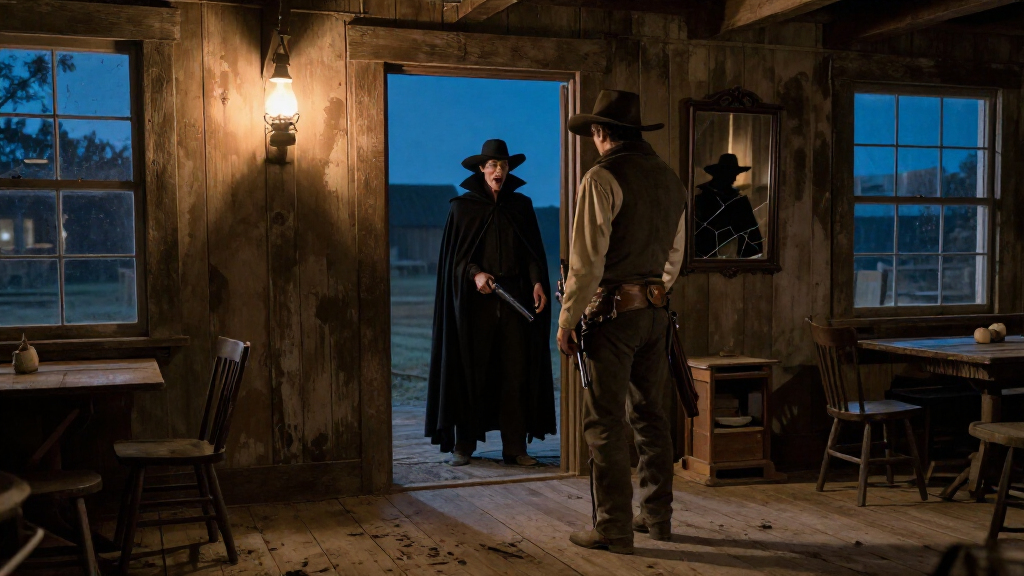
The 1966 film Billy the Kid Versus Dracula puts John Carradine’s vampire in the American West, where he threatens ranch heiress Betty Bentley and faces a reformed Billy the Kid. The film’s unlikely collision of Gothic horror and Western remains its defining hook, while its title promises a more direct showdown than the story ultimately delivers.
Directed by William Beaudine and written by Carl K. Hittleman, the film stars Carradine as Dracula, Chuck Courtney as Billy and Melinda Plowman as Betty. Dracula becomes obsessed with Betty, steals another man’s identity and works his way into her life. The story treats his deception as part of a predatory supernatural threat, while Billy is positioned as the person standing between the vampire and his fiancée.
A review published by Spooky Isles describes the production as resembling a clean-cut 1960s Western television episode interrupted by a classic horror villain. The review points to its conspicuously modest look, studio-built settings, unconvincing fights and bat effects, but also argues that the film is brisk and entertaining. Carradine’s theatrical performance — marked by a top hat, fixed stare and leering menace — is identified as a major reason to keep watching.
The film does not give Billy the decisive victory its title suggests. According to the review, local doctor Henrietta Hull, played by Virginia Christine, recognizes the danger and supplies the knowledge needed to finish Dracula. Billy remains the central Western hero, but the doctor performs much of the practical work that leads to the vampire’s defeat.
A 1966 Genre Collision · Review Guide
What Makes the Paranormal Showdown in Billy the Kid Versus Dracula Worth a Review?
A reformed Western outlaw, a ranch heiress, and John Carradine’s theatrical vampire share a low-budget frontier tale whose odd premise still does the heavy lifting.
01 / The premise
Two screen traditions collide
Dracula becomes obsessed with Betty Bentley, a ranch heiress, steals another man’s identity, and works his way into her life. Billy stands between the vampire and his fiancée—but the film’s appeal reaches beyond the advertised contest.
A familiar frontier hero
Billy is a reformed outlaw drawn into danger as Betty’s protector, giving the supernatural threat a grounded Western frame.
Carradine’s vampire
Top hat, fixed stare, and leering menace: the reviewer identifies Carradine’s performance as a key reason to keep watching.
Betty Bentley
Melinda Plowman plays the ranch heiress at the center of Dracula’s deception and predatory attention.
02 / The advertised showdown
The title overpromises the finish
The story does not deliver a simple Billy-versus-Dracula victory. Local doctor Henrietta Hull recognizes the danger and supplies crucial knowledge about how to stop him.
Who does what?
Billy remains the Western lead and confronts the vampire. Henrietta Hull, played by Virginia Christine, performs much of the practical work that makes Dracula’s defeat possible.
Why that difference matters
Viewers expecting a direct duel between two famous figures may find a group effort instead. The film’s unusual balance—heroic framing, local expertise, and a shared resolution—is part of its story.
03 / From threat to resolution
A showdown built by several characters
The vampire’s path through the plot runs from deception to danger, with local knowledge helping turn the tide.
Infiltrate
Dracula takes another man’s identity to approach Betty.
Threaten
His fixation makes the ranch heiress the target.
Recognize
Henrietta Hull identifies the supernatural danger.
Confront
Billy and the doctor’s knowledge help bring the threat to an end.
04 / Production texture
Low-budget roughness, cult appeal
The review describes a brisk picture with a modest, almost television-like look. Studio-built settings, unconvincing fights, and bat effects reveal the constraints; Carradine’s presence and the premise give the oddity its staying power.
Plain by design
California locations and studio sets give the film a restrained Western setting rather than grand Gothic scale.
Brisk entertainment
The review sees enough momentum and eccentricity to make the compact crossover fun despite uneven action.
Two monster matchups
Released with William Beaudine’s Jesse James Meets Frankenstein’s Daughter, another Western-horror blend.
05 / The reviewer’s lens
What the source emphasizes
“It looks less like a feature film than an episode of a clean-cut 1960s Western television series in which somebody has suddenly chucked Dracula into the middle of the story.”
Spooky Isles review
Carradine had previously played Dracula in House of Frankenstein (1944) and House of Dracula (1945). The review’s view that this role gives him more to do is an interpretation, not a measured comparison.
06 / What remains uncertain
A retrospective review has limits
The account offers critical impressions rather than a production record or a full history of the film’s reception.
No independent audience figures, box-office results, or detailed contemporary reception history are provided.
The review recounts Carradine’s negative view, but does not give the original interview, date, or full wording.
No new restoration, screening, or release is announced; current purchase formats, stock, and prices are unspecified.
Does Carradine’s theatrical vampire charm outweigh the cheap effects and uneven action? The film invites viewers to decide.
07 / Quick answers
Key questions
What is the film about?
Dracula targets Betty Bentley, a ranch heiress, while Billy the Kid tries to protect her. It mixes a Western setting with a vampire story.
Who plays the leads?
John Carradine plays Dracula, Chuck Courtney plays Billy, Melinda Plowman plays Betty, and Virginia Christine plays Henrietta Hull.
Does Billy defeat Dracula?
Not by himself, according to the review. Henrietta Hull provides important knowledge that helps bring about the vampire’s defeat.
A Western Hero Meets Dracula
The film’s interest lies in more than its novelty title. It brings together two familiar screen traditions — the Western outlaw and the Gothic vampire — without trying to make the result feel grand or seamless. The mismatch is visible: Dracula moves through a Western setting, while the production retains the plain, television-like look described by the Spooky Isles review. That makes the film a compact example of how genre mash-ups can become memorable through their oddness as much as through polish.
The credit given to Henrietta Hull also complicates the advertised contest. The title spotlights Billy, but the account of the story gives the doctor a central role in identifying how Dracula can be stopped. That distinction matters to anyone approaching the film expecting a straightforward duel between two famous figures: the actual conflict is a group effort, with a local woman’s knowledge essential to the outcome.
Carradine’s performance offers another point of interest. He had played Dracula in House of Frankenstein (1944) and House of Dracula (1945), and the review argues that this film gives him more opportunity to stalk, hypnotize and menace his targets. That is an assessment of the reviewer, not a measured comparison of screen time. It captures why the film can hold attention even when its effects and staging are visibly limited.
Popular right now

Bose QuietComfort Wireless Bluetooth Headphones with Active Noise Cancellation, Mic, USB‑C Charging, Deep Bass, 24‑Hour Battery – White Smok

Dyson Ball Animal 3 Corded Upright Vacuum

TCL T7 Series 85-Inch 4K 144Hz QLED Smart Google TV
As an affiliate, we earn on qualifying purchases.
A Low-Budget Double Feature
Billy the Kid Versus Dracula was released as a double feature with Jesse James Meets Frankenstein’s Daughter, another Western-horror crossover directed by Beaudine. The source review says both films were shot rapidly in California in 1965, with locations including Red Rock Canyon and Corrigan Ranch as well as studio sets. It describes cost control as a clear production priority, helping explain the films’ modest appearance.
The two productions were Beaudine’s final feature films before he returned to television work, according to the source material. The double-bill pairing gave audiences two familiar Western names placed against classic monster figures. In Dracula’s case, the mixture also plays loosely with vampire conventions: the film shows him in daylight, while the review notes that sunlight in Bram Stoker’s novel weakens Dracula’s powers rather than automatically destroying him. The movie itself does little to lay out consistent rules.
Another unusual detail is that the name “Dracula” is not spoken in the film, according to the review, despite appearing in the title. The character is identified within the story as a vampire. These choices contribute to the sense that the film relies on its premise and Carradine’s presence rather than on a carefully developed mythology.
“It looks less like a feature film than an episode of a clean-cut 1960s Western television series in which somebody has suddenly chucked Dracula into the middle of the story.”
— Spooky Isles review
What the Review Cannot Settle
The account is a critical review, not a production record or a new announcement about the film. Its judgments about Carradine’s performance, the picture’s entertainment value and its place among his Dracula roles are the reviewer’s interpretations. The source material does not provide independent audience figures, box-office results or a detailed contemporary reception history.
The review also recounts Carradine’s negative view of the film without giving the original interview, date or full wording. The precise basis for that later judgment is not available here. Nor does the source establish a comparative runtime analysis for Carradine’s Dracula appearances; the claim that he gets more to do in this film is presented as the reviewer’s observation.
The Film’s Ongoing Afterlife
No new release, restoration or screening announcement is included in the source material. The immediate development is a retrospective reassessment of a 1966 genre oddity, rather than a change in the film’s availability or status. The source points readers to Amazon UK for purchase, but does not specify current stock, formats or pricing.
For viewers who want to judge the film themselves, its central question is straightforward: does the contrast between a restrained Western setting and Carradine’s theatrical vampire create enough charm to outweigh the cheap effects and uneven action? The movie’s double-feature partner, Jesse James Meets Frankenstein’s Daughter, provides a related point of comparison. No further production or distribution developments are confirmed.
Key Questions
What is Billy the Kid Versus Dracula about?
The 1966 film follows Dracula as he targets Betty Bentley, a ranch heiress, and Billy the Kid tries to protect her. It mixes a Western setting with a vampire story.
Who plays Dracula and Billy the Kid?
John Carradine plays Dracula, and Chuck Courtney plays Billy the Kid. Melinda Plowman plays Betty Bentley, while Virginia Christine plays local doctor Henrietta Hull.
Does Billy the Kid defeat Dracula?
Not entirely, according to the Spooky Isles review. Billy confronts Dracula, but Henrietta Hull provides important knowledge that helps bring about the vampire’s defeat.
What film was released with it?
Billy the Kid Versus Dracula was released as a double feature with Jesse James Meets Frankenstein’s Daughter, another Western-horror film directed by William Beaudine.
Why does the film remain of interest?
Its unusual meeting of Western and horror conventions, Carradine’s performance and deliberately modest production give it a distinctive place among genre crossovers. The review presents its awkwardness as part of its cult appeal, not as proof that the film is technically accomplished.
Source: Spooky Isles