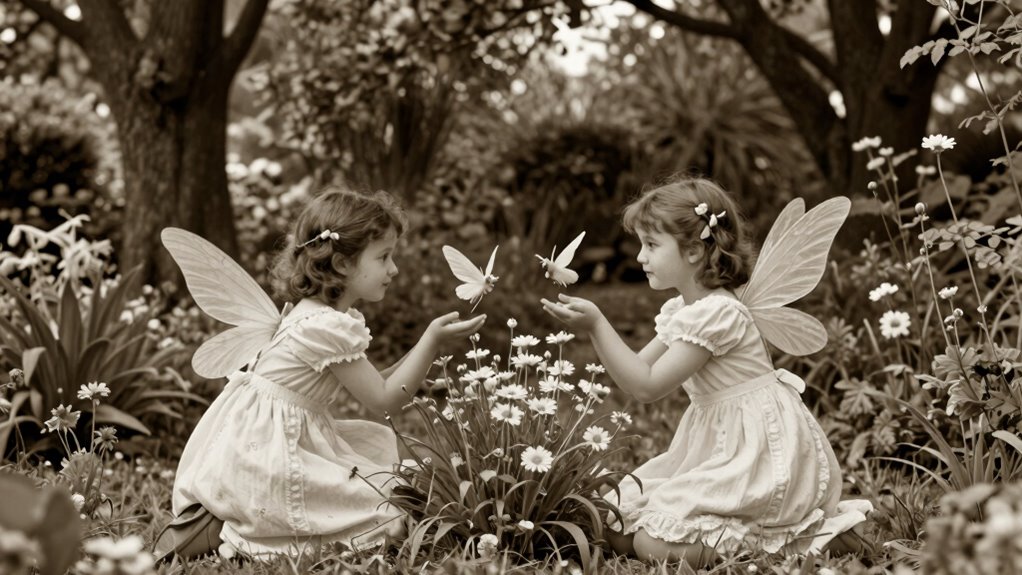
The Cottingley Fairies matter to belief studies because they show how perception, innocence, and skepticism influence what we accept as real. They remind you that images can be staged or manipulated, making it hard to distinguish truth from illusion. Your beliefs can stay firm even when faced with contradictory evidence, shaped by biases and context. If you keep exploring, you’ll discover how perception and doubt shape our understanding of reality in surprising ways.
Open a free Amazon Business account
Business pricing, bulk buying and tax-exempt orders.
As an affiliate, we earn on qualifying purchases.
Key Takeaways
- The Cottingley Fairies illustrate how visual evidence can evoke strong belief despite potential deception.
- They exemplify the influence of innocence and prior beliefs on perception and acceptance of images.
- The case highlights the importance of skepticism and critical evaluation in distinguishing authenticity from illusion.
- It demonstrates cognitive biases, like confirmation bias, that sustain belief even amid conflicting evidence.
- The photos serve as a historical example of perceptual manipulation and its impact on cultural and scientific discourse.

The Cottingley Fairies continue to matter to belief studies because they challenge our understanding of innocence, perception, and the nature of evidence. When you examine these photographs, you’re confronted with the delicate balance between what you see and what you believe. The images seem straightforward at first glance, but they evoke a deeper question: how much can perception be trusted? As you analyze the photographs, you realize that perception is inherently subjective. Your mind interprets visual cues based on prior knowledge, beliefs, and biases, which means that what appears real to you may not be. The photos tempt you to accept their authenticity, yet skepticism lurks in the background, urging you to question their validity.
This tension between perception and skepticism is central to understanding why the Cottingley Fairies stay relevant in belief studies. When you look at the images, you might feel a sense of wonder and innocence, especially knowing they were created by two young girls. But that innocence can also blind you to the possibility of deception. Skepticism, in this context, acts as a necessary tool; it compels you to scrutinize the evidence rather than accept it at face value. The photographs serve as a case study demonstrating how easily perception can be influenced by context, expectation, and desire. You might want to believe in fairies because it aligns with a sense of magic or childhood innocence, but skepticism reminds you to question whether the images are genuine or fabricated.
The debate surrounding the Cottingley Fairies also underscores how visual evidence can be misleading. You’re aware that photographs, which seem like concrete proof, can be manipulated or staged. The images challenge you to differentiate between authentic evidence and cleverly crafted illusions. This ongoing struggle influences belief studies because it underscores that perception alone isn’t enough to establish truth. Additionally, understanding the role of confirmation bias helps explain why people may cling to belief despite contradictory evidence. The photographs remind you that belief isn’t solely rooted in visual evidence but also in the context, intention, and credibility behind it. Recognizing cognitive biases is crucial because they shape how individuals interpret and prioritize evidence. Moreover, being aware of perceptual illusions can deepen your understanding of how easily our senses can be fooled. Ultimately, the Cottingley Fairies continue to matter because they exemplify how perception and skepticism shape our understanding of reality, forcing you to think about what you accept as evidence and what you question as illusion.
historical photography illusion books
As an affiliate, we earn on qualifying purchases.
As an affiliate, we earn on qualifying purchases.
Frequently Asked Questions
Were the Cottingley Fairy Photographs Ever Proven Authentic?
The Cottingley fairy photographs were never proven authentic; instead, they are widely recognized as photographic deception. Despite initial claims of truth, experts revealed the images were faked using cutouts. This case highlights cultural skepticism, showing how societal beliefs can influence acceptance of extraordinary claims. You see, even with convincing imagery, skepticism persists, reminding us to question and analyze evidence critically, especially when it challenges our perceptions of reality.
How Did the Public Initially React to the Fairy Images?
When the fairy images first surfaced, you’d see public skepticism dominate, with many doubting their authenticity. Despite that, cultural perceptions of magic and wonder fueled fascination, leading some to believe in the possibility of fairies. The images sparked debates and curiosity, reflecting a society torn between scientific skepticism and a longing for mystical belief. Over time, the mix of doubt and awe kept the Cottingley fairies relevant in belief studies.
What Impact Did the Photos Have on Spiritualism Movements?
Imagine a delicate butterfly fluttering through a storm—your belief is touched by these fairy images. They sparked a cultural influence, inspiring both hope and doubt within spiritualism movements. The media’s skepticism acted like gusts of wind, challenging the authenticity of the photos. Yet, they fueled ongoing debates about unseen worlds, reminding you that faith often dances between illusion and reality, shaping spiritual discourse for generations.
Are There Modern Equivalents to the Cottingley Fairy Controversy?
Yes, modern equivalents like deepfake videos and digital manipulation challenge belief today. These forgeries often spark debates about authenticity, much like the Cottingley fairy photos did. You see cultural symbolism in how society reacts to such images, questioning whether they reveal truth or deceive. Just as with the Cottingley fairies, these modern examples test your trust in visual evidence and highlight how technology influences belief systems.
How Have Perceptions of the Photos Changed Over Time?
Perceptions of the Cottingley Fairies have shifted like the tides over time. You now see them less as proof of supernatural beings and more as cultural artifacts, shaped by societal beliefs and technological advances. The perception shift highlights how our understanding evolves, influenced by media and skepticism. Their story remains a mirror reflecting human curiosity, illustrating how cultural influence can turn even fabricated images into symbols of wonder or doubt.
Conclusion
So, as you reflect on the Cottingley Fairies, it’s fascinating to realize how a simple coincidence—two photographs capturing impossible images—can challenge your understanding of belief. It’s almost as if the very chance that these images fooled so many reminds us how easily perception can deceive. In the end, their story shows that belief isn’t just about proof but about the strange, unpredictable moments that make you question what’s real.
Flea & tick season Picks
flea and tick prevention
As an affiliate, we earn on qualifying purchases.