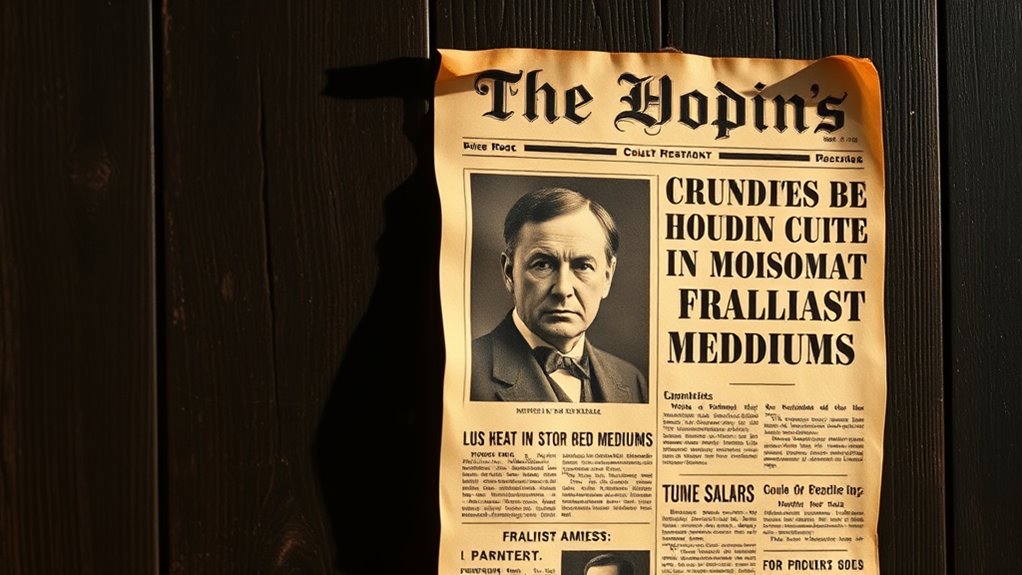

Houdini’s war on fraudulent mediums was driven by his goal to expose tricks that exploit grief and credulity. He carefully studied séance setups, revealing how illusion techniques like misdirection, cold reading, and concealed signals create fake spiritual contact. By demonstrating these methods, Houdini aimed to protect vulnerable people from emotional and financial harm. If you want to understand more about his efforts, you’ll find plenty of insights into his methods and impact.
Key Takeaways
- Houdini launched a campaign to expose mediums exploiting grief through illusions and deception.
- He used scientific analysis and magic techniques to demonstrate how mediums faked supernatural phenomena.
- Houdini’s investigations revealed the use of misdirection, concealed signals, and psychological tricks.
- His efforts aimed to protect grieving families from emotional and financial exploitation by frauds.
- Key sources include Houdini’s writings, public demonstrations, and documented investigations into medium tricks.

Harry Houdini, renowned magician and skeptic, launched a relentless campaign against fraudulent mediums who exploited people’s grief and credulity. His goal was to expose the tricks used by those claiming to communicate with the dead, revealing how they manipulated vulnerable individuals through psychic deception. Houdini believed that many mediums relied heavily on illusion techniques to create convincing, yet entirely fabricated, spiritual experiences. By understanding and dissecting these techniques, he aimed to dispel the false hope they offered and prevent others from falling victim to their scams. He also emphasized the importance of authenticity in magic and illusion, recognizing that clear distinctions between entertainment and deception are crucial to protecting the public from fraud. You might not realize it, but psychic deception often involves a combination of misdirection, psychological manipulation, and finely honed illusion techniques. Mediums frequently rely on subtle cues, cold reading, and vague statements that seem eerily specific but are actually general enough to apply to many people. Houdini meticulously studied these methods, recognizing that what appeared to be supernatural communication was, in reality, skillful trickery. For example, he knew that many mediums used hidden cues, such as pre-arranged signals or concealed information, to convince their audience they possessed supernatural powers. These illusion techniques, when combined with psychological manipulation, create a compelling but false narrative of contact with spirits. Houdini’s dedication to exposing such deception wasn’t just about debunking trickery; it was about protecting the vulnerable from emotional exploitation. He understood that grieving families, desperate to reconnect with lost loved ones, could be easily deceived by these false mediums. His investigations often involved attending séances, scrutinizing their equipment, and demonstrating how simple illusions could produce seemingly supernatural effects. Houdini’s approach was methodical and scientific—he sought to understand how illusion techniques were used to simulate paranormal phenomena, then reveal those tricks to the public. His efforts resulted in numerous exposes that laid bare the tactics of fraudulent mediums. Houdini published detailed accounts of their tricks, often comparing their methods to stage illusions used in magic shows. He wanted to make it clear that these “spiritual” communications were nothing more than cleverly disguised illusion techniques. By doing so, he hoped to empower the public to distinguish between genuine spiritualism and deception. Ultimately, Houdini’s war on fraudulent mediums was a crusade to uphold truth and prevent others from being duped by false promises of contact with the afterlife. His legacy endures as a testament to the importance of skepticism and scientific inquiry in uncovering psychic deception.

Ghost Hunting Equipment, Briidea Paranormal Detection Kit Music Box, Taking You to Experience The Thrilling Ghost Research Activities and Seances
EXPLORE THE SUPERNATURAL: Looking for an unprecedented, thrilling ghost-hunting experience? This ghost detector will let you genuinely feel…
As an affiliate, we earn on qualifying purchases.
As an affiliate, we earn on qualifying purchases.
Frequently Asked Questions
How Did Houdini Initially Become Interested in Exposing Mediums?
You become interested in exposing mediums when you notice the widespread medium deception fueling the spiritualist controversy. Houdini, driven by skepticism and personal loss, starts investigating these frauds to reveal their tricks. His curiosity and desire for truth lead him to scrutinize their performances, exposing their tricks and debunking false claims, ultimately aiming to protect the public from being deceived by these fraudulent spiritualist practices.
What Were the Most Common Tricks Used by Fraudulent Mediums?
You might be surprised to learn that fraudulent mediums often relied on spiritualist deception and clever séance tricks. They used hidden wires, trapdoors, and concealed speakers to produce ghostly appearances or mysterious sounds. Misdirection was key—manipulating your focus while secret assistants moved objects or whispered messages. These tricks created an illusion of contact with the spirit world, fooling many into believing in supernatural powers that, in reality, were just elaborate illusions.
How Did Houdini’s Efforts Impact the Spiritualist Movement?
Your efforts markedly shifted the spiritualist movement by increasing mediumship skepticism. Houdini’s relentless exposure of frauds made people question claimed supernatural abilities, pushing for spiritualist reform. You see, his work challenged mediums’ credibility, encouraging the public and skeptics alike to demand transparency and honesty. As a result, his activism helped curb deception and foster a more critical, evidence-based approach within spiritualism.
Were There Any Legal Consequences for Mediums Houdini Exposed?
You might think Houdini’s exposeings led to legal repercussions, but surprisingly, most mediums avoided courtroom proceedings. While he publicly debunked fraudulent practitioners, few faced formal legal actions. Instead, Houdini’s effort was more about exposing scams through performances and demonstrations, which often forced courts to reconsider cases. His relentless pursuit kept the spiritualist movement on edge, even if actual legal consequences for the mediums remained rare.
How Has Houdini’s Campaign Influenced Modern Skepticism?
Houdini’s campaign has greatly influenced modern skepticism by highlighting psychological manipulation used by fraudulent mediums. You see his efforts in media skepticism today, where critical thinking and scientific inquiry prevent deception. His advocacy encourages you to question extraordinary claims and recognize tricks behind supposedly supernatural events. By exposing frauds, Houdini helped shape a culture that values evidence and rationality, making skepticism a powerful tool against deception.

JL Corp. Color Change Vanishing CD Magic Tricks (Include Ribbon) Disk Clip Stage Magic Props Mentalism Illusion Gimmick
MAGIC ILLUSION: Professional-grade color-changing CD magic trick that creates an impressive vanishing effect, perfect for aspiring magicians
As an affiliate, we earn on qualifying purchases.
As an affiliate, we earn on qualifying purchases.
Conclusion
You can see Houdini’s relentless fight against fraudulent mediums as a beacon of truth shining through a fog of deception. His efforts peeled back the curtain of illusion, revealing the tricks behind the curtain. Just as a lighthouse guides ships safely home, Houdini’s work continues to inspire us to question, investigate, and seek genuine truth. His battle reminds us that even in darkness, the light of honesty can still blaze brightly.

The Customer Service Survival Kit: What to Say to Defuse Even the Worst Customer Situations
As an affiliate, we earn on qualifying purchases.
As an affiliate, we earn on qualifying purchases.

Living in the Daze of Deception: How to Discern Truth from Culture’s Lies
As an affiliate, we earn on qualifying purchases.
As an affiliate, we earn on qualifying purchases.