
The Scole Experiment, conducted from 1993 to 1998 in England, was a serious effort to scientifically prove an afterlife by capturing paranormal phenomena like spirit voices and materializations. Using cameras, audio recorders, and electromagnetic meters, the researchers emphasized transparency, documentation, and eliminating trickery. They involved witnesses and maintained strict controls to support their findings. To learn more about their approach and sources, keep exploring this fascinating investigation into the boundaries of science and spirituality.
Key Takeaways
- The Scole Experiments were conducted from 1993 to 1998 in England to scientifically investigate paranormal phenomena and the afterlife.
- Researchers used cameras, audio devices, and electromagnetic meters under controlled conditions to document spirit communication.
- They prioritized transparency, repeatability, and eyewitness verification to establish credible evidence of supernatural events.
- The experiments aimed to bridge science and spirituality, challenging skepticism with systematic methodologies.
- Key sources include detailed reports, participant accounts, and analyses published in paranormal research literature.
Between 1993 and 1998, a team of researchers and mediums in Scole, England, conducted a series of experiments aimed at demonstrating the existence of an afterlife through paranormal phenomena. As you explore their work, you’ll find that their approach was rooted in a rigorous paranormal investigation, combining scientific inquiry with spiritual communication. They sought to move beyond mere anecdote, employing an experimental methodology designed to produce measurable and repeatable results. This approach set the Scole experiments apart from many other paranormal studies, which often rely on subjective reports and unverified claims.
The team’s experimental methodology was carefully structured to test specific hypotheses about life after death. They used a variety of tools—such as cameras, audio recorders, and electromagnetic field meters—aiming to capture evidence of spirits or other supernatural entities. The investigators believed that, through controlled conditions and systematic procedures, they could document phenomena like spirit voices, appearances, and materializations. By maintaining a disciplined setup, they aimed to eliminate natural explanations and guarantee that any anomalies observed could be attributed to paranormal activity rather than coincidence or trickery.
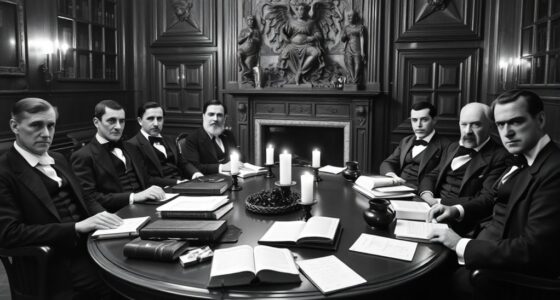
During their investigations, you’ll notice that the team prioritized transparency and repeatability. They often conducted séances in a controlled environment, with witnesses present to observe and verify the phenomena as they occurred. Their experimental methodology included multiple sessions, with detailed documentation of each event—photographs, audio recordings, and eyewitness accounts. They also sought to rule out fraud by carefully monitoring all participants and ensuring that no external influences could account for the phenomena. This meticulous approach gave their findings a level of credibility that many other paranormal investigations lack.
The team prioritized transparency, meticulous documentation, and fraud prevention to ensure credible, verifiable paranormal findings.
Furthermore, the Scole team believed that their experiments could offer scientific proof of an afterlife, challenging conventional skepticism. They viewed their work as an extension of scientific inquiry into the unknown. Their commitment to a disciplined experimental methodology reflected a desire to bridge the gap between science and spirituality. This rigorous approach meant that the phenomena they reported weren’t dismissed as simple tricks or hallucinations but were, in their view, evidence of an existence beyond physical life. Moreover, their work exemplifies how scientific rigor can be applied to controversial topics, encouraging a more open-minded exploration of the unknown. Ultimately, their work provides a compelling case study in how paranormal investigation can be approached with scientific rigor, even when exploring the most elusive and controversial phenomena.

Talking Products, Voice Pad Voice Recorder, Communication Sound Button for Kids, 40 Seconds Recording. Sensory Learning Resource for Practising Phonics and Speaking and Listening Activities in School
Record and playback 40 seconds of speech, music or sound effects using the built-in microphone and speaker. Re-record…
As an affiliate, we earn on qualifying purchases.
As an affiliate, we earn on qualifying purchases.
Frequently Asked Questions
How Did the Scole Experiment Influence Modern Paranormal Research?
The Scole Experiment influenced modern paranormal research by challenging traditional methodologies and encouraging open-minded exploration. You see, it pushed researchers to incorporate paranormal methodology with rigorous experimental skepticism, questioning assumptions while testing phenomena. This balance inspired a more scientific approach, fostering credibility in the field. As a result, contemporary studies now emphasize careful experimentation and skepticism, shaping how paranormal investigations are conducted and evaluated today.
Were There Any Notable Skeptics or Critics of the Experiment?
Ever wonder if skeptics truly doubted the Scole Experiment? Scientific skepticism and experimental criticism came from notable figures who questioned its methodology and credibility. Critics argued that the phenomena could have been manipulated or explained by natural causes, emphasizing the need for rigorous controls. Their skepticism kept the debate alive and pushed researchers to refine their methods, reminding you that questioning is essential for scientific progress in paranormal research.
What Specific Techniques or Tools Were Used During the Sessions?
During the sessions, you’ll notice they used techniques like remote viewing, where participants attempt to perceive distant or hidden information. Electronic recording played a key role, capturing phenomena such as sounds, light, and movements, which were then analyzed. These tools aimed to document psychic activities objectively, helping investigators verify responses beyond human perception. The combination of remote viewing and electronic recordings made the experiment unique and focused on gathering tangible evidence.
Did the Experiment Have Any Long-Term Impacts on Scientific Communities?
You might find that the Scole Experiment sparked some scientific skepticism, prompting researchers to re-examine research methodology in paranormal studies. While it didn’t lead to widespread acceptance or major breakthroughs, it encouraged more rigorous testing and discussions about evidence credibility. Its long-term impact lies in challenging scientists to develop better methods for investigating extraordinary claims, pushing the boundaries of scientific inquiry and fostering critical thinking in the community.
Are There Any Documented Personal Stories From Participants Beyond the Reports?
You’ll find that personal anecdotes and participant testimonials from the Scole Experiment are surprisingly scarce, as if the spirits themselves preferred whispers over roars. While some claim transformative experiences, most stories remain anecdotal, cloaked in mystery. It’s as if the participants signed a psychic nondisclosure agreement, leaving us with tantalizing hints rather than solid, documented personal stories. In the end, the experiment’s true ghosts are its elusive human narratives.
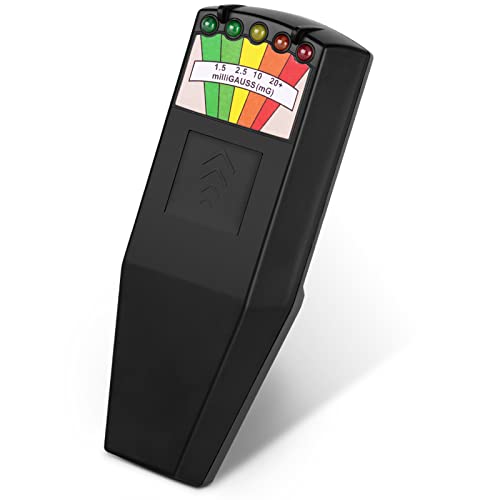
color tree Handheld LED EMF Magnetic Field Ghost Hunting Detector Electromagnetic Paranormal Equipment Tester 50Hz-20,000Hz Black
The EMF Meter Range for Ghost Hunting helps measure the electromagnetic fields to identify appliances that produce high-level…
As an affiliate, we earn on qualifying purchases.
As an affiliate, we earn on qualifying purchases.
Conclusion
As you close this chapter, you realize the Scole Experiment was a delicate dance between the known and the mysterious, like chasing whispers in a shadowed forest. It beckons you to keep questioning, to see beyond the veil of ordinary sight. Though its secrets remain elusive, it leaves a shimmering trail of curiosity, urging you to explore the unseen domains with an open mind. In the end, it’s a reminder that some mysteries are meant to dance just beyond reach.

11 Pcs Ghost Hunting Kit with 1 EMF Meter,1 EVP Recorder, 1 Spirit Box,1 Speaker,1 Infrared Thermometer,1 UV Light,2 Brass Detection Rods,2 LED Light up Cat Balls & 1 Carrying Case
Complete Ghost Hunting Kit:Ghost hunting equipment kit Includes 1 EMF detector, 1 UV flashlight, 1 EVP recorder, 1…
As an affiliate, we earn on qualifying purchases.
As an affiliate, we earn on qualifying purchases.

Paranormal Investigation Equipment EMF+ATDD for Ghosting Hunting with High-Sensitivity Temperature Detection, EMF Meter, EMF Detector Tool for Professional Paranormal Investigators, Gift for Halloween
Designed exclusively for serious paranormal researchers and ghost hunting professionals, this comprehensive investigation kit integrates dual high-sensitivity sensors…
As an affiliate, we earn on qualifying purchases.
As an affiliate, we earn on qualifying purchases.