
To profile ambient noise step-by-step, start by selecting suitable sound measuring devices like calibrated microphones or sound level meters. Place them strategically in areas representing typical sound environments, avoiding unusual noise sources. Record sound levels over set periods, covering different times and days for extensive data. Analyze the recordings to identify dominant frequencies, patterns, and sources, ensuring you document all details accurately. Continuing will reveal more about transforming raw data into meaningful acoustic insights.
Key Takeaways
- Select appropriate measurement locations and times to ensure representative ambient sound data.
- Use calibrated microphones or sound level meters to record background noise over designated periods.
- Process recordings with sound analysis software to identify dominant frequencies, amplitudes, and patterns.
- Document measurement details meticulously and repeat tests across different times and days for reliability.
- Analyze collected data to determine baseline noise levels, sources, and variability for informed noise management.
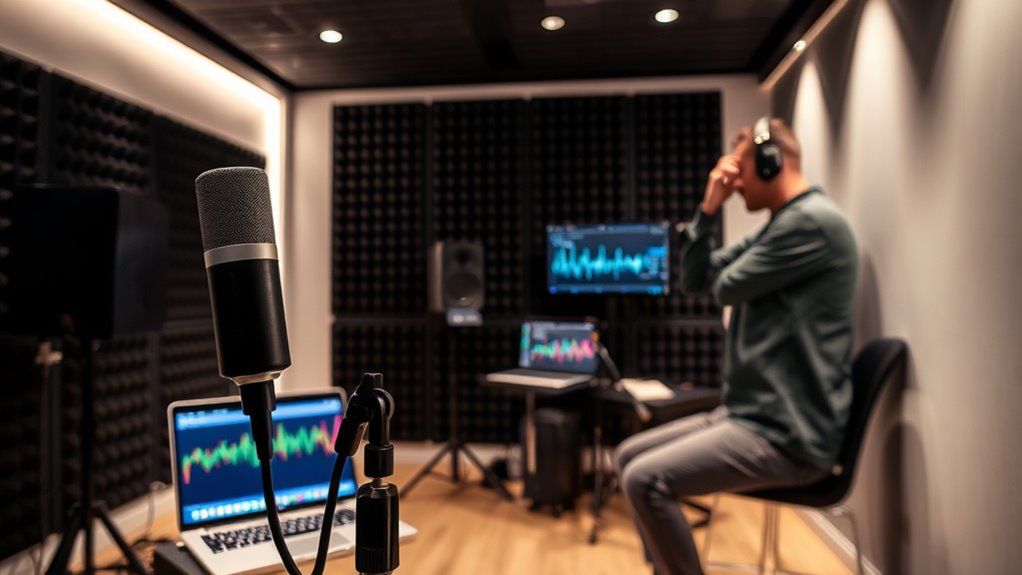
Ambient noise profiling involves analyzing the background sounds present in a given environment to understand its acoustic characteristics. When you start this process, your goal is to gather accurate data about the existing noise levels, which requires precise noise measurement and sound analysis. Noise measurement involves using specialized equipment like sound level meters or calibrated microphones to record the intensity of sounds over a specific period. Guaranteeing your measurements are consistent and representative is vital, so you need to place your devices strategically within the environment, avoiding areas with unusual sound sources that could skew results. You should also consider the timing of your measurements—whether during peak activity hours or quieter periods—so you can capture a thorough profile of the ambient noise. Proper placement and calibration of measurement devices are essential to obtain reliable data and minimize measurement errors.
Accurate ambient noise profiling requires strategic device placement and timing considerations for reliable data collection.
Once you’ve set up your measurement tools, the next step is to perform sound analysis. This involves processing the recorded data to identify the dominant frequencies, amplitude, and patterns of background noise. Sound analysis helps you understand not just how loud an environment is, but also the nature of the sounds—whether they are steady, intermittent, or fluctuating. Using software tools, you can visualize sound levels over time and detect specific noise sources, such as traffic, machinery, or human activity. This detailed insight allows you to pinpoint problematic noise areas and determine their impact on the environment or occupants. Accurate sound analysis also helps in establishing baseline noise levels, which are essential for future comparisons if noise mitigation measures are implemented.
In the process, it’s important to document your findings meticulously, including the time, location, and conditions of each measurement session. This documentation guarantees your data is reliable and can be referenced later for analysis or reporting. It’s also wise to repeat measurements across different times and days to account for variability in noise levels. When interpreting your sound analysis, look for patterns that could indicate persistent noise issues or occasional disturbances that might need addressing. Recognizing these patterns helps you develop targeted strategies for noise control or environment optimization. Additionally, understanding the reliability of your measurements ensures the data accurately reflects the environment’s typical sound profile.
Ultimately, effective ambient noise profiling hinges on thorough noise measurement and insightful sound analysis. By carefully capturing and interpreting the background sounds, you gain valuable knowledge of an environment’s acoustic profile. This understanding forms the foundation for making informed decisions about noise mitigation, environmental design, or acoustic treatment. Whether you’re working on a new construction project, evaluating a workspace, or studying an urban environment, mastering these steps ensures your noise profiling is accurate, extensive, and actionable.
As an affiliate, we earn on qualifying purchases.
Frequently Asked Questions
How Do Ambient Noise Profiles Vary Across Different Environments?
You’ll notice that ambient noise profiles vary substantially across environments. In urban landscapes, they’re often dominated by traffic, machinery, and human activity, creating a constant, high-energy soundscape. Conversely, natural soundscapes feature sounds like bird calls, flowing water, and wind, which tend to be calmer and more rhythmic. These differences impact how noise is perceived and recorded, requiring tailored profiling strategies for each environment.
What Equipment Is Best for Accurate Ambient Noise Profiling?
You’ll want to use high-quality noise measurement tools like precision sound level meters for accurate ambient noise profiling. Guarantee proper calibration techniques, such as using a calibration tone or pistonphone, to maintain measurement accuracy. Select equipment with suitable frequency response and sensitivity for your environment. Regularly calibrate your devices to avoid drift, and consider directional microphones if you need to isolate specific noise sources for more precise profiling.
How Can Ambient Noise Data Improve Sound System Calibration?
By harnessing ambient noise data, you enhance your sound system calibration with precise, pinpointed adjustments. This process promotes noise mitigation, reducing unwanted sounds, and refines acoustic modeling to mirror real-world conditions. As you analyze the ambient audio, you can tune your system for clarity and consistency, ensuring superior sound quality across spaces. This strategic sound shaping sharpens your setup, ensuring every note and nuance resonates flawlessly in every environment.
Are There Legal Considerations When Recording Ambient Noise?
Yes, when recording ambient noise, you need to consider legal compliance and privacy concerns. You should inform people if they’re being recorded and obtain necessary permissions, especially in private spaces. Be aware of local laws regarding audio recording, as unauthorized recording can lead to legal issues. Respect privacy rights and ensure your data collection practices are transparent, helping you avoid potential legal trouble and maintain ethical standards.
How Often Should Ambient Noise Profiles Be Updated?
Have you wondered how often you should update your ambient noise profiles? You should review and update them regularly, ideally every few months or whenever there are noticeable changes in noise level trends. Profiling frequency depends on environmental stability—more frequent updates guarantee accuracy. By staying current, you keep your noise management precise, adapting to evolving conditions and maintaining ideal performance in your recordings or noise-sensitive projects.
Conclusion
By understanding ambient noise, you gain awareness; by profiling it, you improve accuracy; by analyzing it, you optimize performance. Embrace the process, refine your techniques, and adapt your approach. Recognize the importance of each step, value every measurement, and learn from every noise pattern. Keep listening, keep adjusting, and keep improving. Ambient noise profiling isn’t just a task—it’s a continuous journey of listening, learning, and evolving to achieve clearer, more precise results.