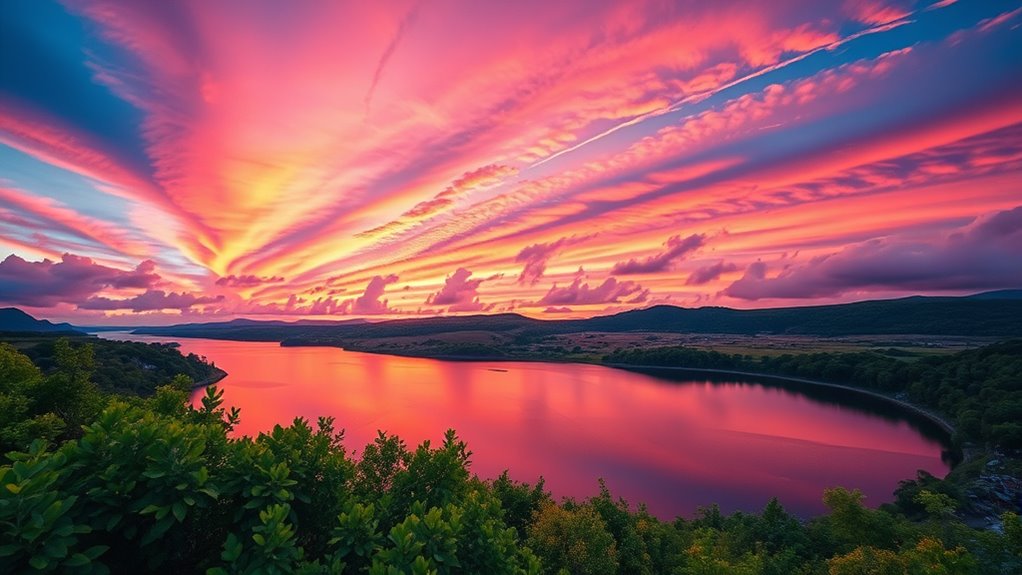

To start full-spectrum photography, first select the right filters to capture ultraviolet, infrared, or other wavelengths beyond the visible spectrum. Next, calibrate your camera by adjusting white balance, exposure, and ISO settings, often using manual controls for accuracy. Prepare your equipment by cleaning lenses and using a tripod, then experiment with different exposures and filter combinations. Continuing will help you master the techniques needed to reveal hidden details and produce stunning images beyond normal vision.
Key Takeaways
- Understand the concept of full-spectrum photography and its ability to capture ultraviolet, infrared, and other hidden wavelengths.
- Select appropriate filters to isolate specific spectrum parts based on your photography goals.
- Calibrate your camera settings, including white balance, exposure, and ISO, for accurate and consistent results.
- Prepare your equipment by cleaning lenses, using a tripod, and setting manual mode for precise control.
- Use longer exposures and proper techniques like remote shutter release to capture detailed images in non-visible wavelengths.
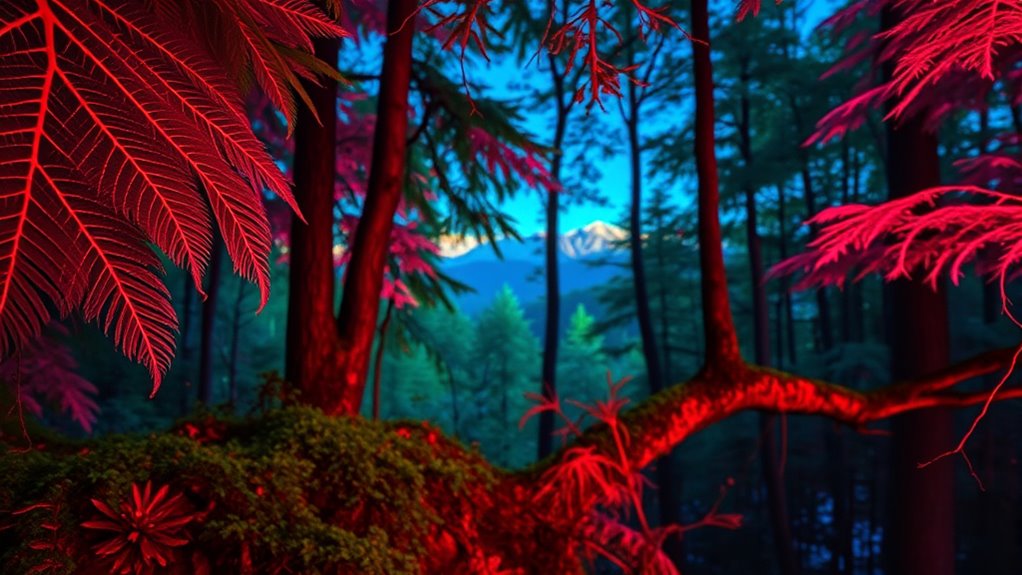
Have you ever wondered how to capture a broader range of colors and details beyond what the human eye can see? Full-spectrum photography makes this possible by revealing ultraviolet, infrared, and other wavelengths that are normally hidden. To get started, you’ll need to understand filtering techniques. Filters are essential because they block certain wavelengths while allowing others through, letting you isolate specific parts of the spectrum. For example, infrared filters can help you capture images that reveal details invisible in standard photography. Choosing the right filters depends on your goals and the wavelengths you want to explore. Once you’ve selected your filters, it’s important to focus on equipment calibration. Proper calibration ensures that your camera captures accurate, consistent results across different sessions. This process often involves equipment calibration to adjust your camera settings—like white balance, exposure, and ISO—to account for the spectrum you’re working with. Many cameras have dedicated settings or modes for full-spectrum photography, but manual adjustments often yield the best results. Before shooting, make sure to check your equipment thoroughly. Clean your lens and filters to avoid artifacts, and verify that your camera’s sensor is functioning correctly. Calibration also means customizing your camera’s color profiles if needed, so the images reflect true-to-life colors within the spectrum you’re capturing. When you’re ready to shoot, set your camera to manual mode to control exposure precisely. Since infrared and other non-visible wavelengths can require longer exposure times, use a tripod to prevent blurring. Adjust your aperture and shutter speed based on your filters and lighting conditions. Remember, the proper filtering techniques combined with diligent equipment calibration will dramatically improve your images’ quality. You might need to experiment with different filters and calibration settings to find what works best for your preferred subject matter. Keep notes on your settings for future reference, so you can replicate successful shots or refine your approach. Additionally, consider using a remote shutter release or timer to minimize vibrations during long exposures. As you gain experience, you’ll develop a better sense of how adjusting filters and calibration impacts your images, allowing you to harness the full potential of full-spectrum photography. Ultimately, mastering these foundational steps—filtering techniques and equipment calibration—gives you the confidence to explore the unseen world and produce stunning, unique images that stand out. With practice, you’ll be able to capture extraordinary details and colors that most people will never see, opening new creative horizons in your photography journey.
Frequently Asked Questions
What Equipment Is Essential for Full-Spectrum Photography?
You need a camera with manual settings, full-spectrum camera filters, and a light meter for full-spectrum photography. Camera filters are essential because they help you capture different wavelengths of light beyond visible spectrum. A light meter guarantees proper exposure, especially since full-spectrum images can be tricky to expose correctly. Together, these tools let you explore beyond normal photography, revealing details hidden to the naked eye.
How Do I Convert a Regular Camera for Full-Spectrum Use?
To convert your regular camera for full-spectrum use, start with an infrared conversion by removing the internal IR filter, allowing infrared light to reach the sensor. You can also add ultraviolet modification to capture UV light. This process often involves professional services, but it’s essential to research your camera model first. Once converted, you’ll be able to explore the full spectrum, including infrared and UV photography, with your modified camera.
Are There Any Legal Considerations for Full-Spectrum Photography?
You should be aware of legal compliance and intellectual property laws when venturing into full-spectrum photography. Imagine capturing stunning images, but if you’re using protected equipment or infringing on someone’s intellectual property, you risk legal trouble. Always respect privacy rights, obtain necessary permissions, and familiarize yourself with local regulations. Staying informed guarantees your creative exploration remains safe, legal, and respectful of others’ rights and innovations.
What Post-Processing Techniques Enhance Full-Spectrum Images?
You should focus on color correction and contrast enhancement to improve your full-spectrum images. Use software like Photoshop or Lightroom to adjust color balance, making the nuanced tones more vivid and accurate. Increase contrast selectively to add depth and detail, especially in shadowy or bright areas. These techniques help you bring out the full potential of your full-spectrum photos, ensuring they look striking and true to your creative vision.
Can Full-Spectrum Photography Be Used for Scientific Research?
Yes, you can use full-spectrum photography for scientific research. It’s valuable in scientific applications because it captures a broader range of wavelengths, revealing details invisible to the naked eye. You’ll want to apply research methodologies that include precise calibration and controlled lighting to guarantee accurate data. This approach helps in fields like biology, forensics, and environmental studies, where detailed spectral analysis can provide critical insights.
Conclusion
Now that you’ve mastered full-spectrum photography, go ahead and chase rainbows in your backyard—just don’t be surprised if your neighbors start calling you the local wizard. With your camera now armed with supernatural powers, you’ll capture everything from ultraviolet mysteries to infrared secrets hiding in plain sight. So, get out there and turn your mundane world into a kaleidoscope of bizarre beauty—because who needs normal when you can see everything the universe is trying to hide?