TL;DR

Get books and cozy reading nights delivered free with Prime
- Fast, free delivery on millions of items
- Prime Video, Amazon Music and more included
- Member-only deals all year
Simon Willison reported that his Beep Locator software found the source of an intermittent beep in his home to within about 40 centimeters. He traced it to an old carbon monoxide detector that needed new batteries; the account is a personal report, not an independent evaluation of the software.
Simon Willison says a browser-based system he built with multiple phones, tablets and computers located an intermittent beep in his home to within about 40 centimeters. The sound came from an old carbon monoxide detector in a room full of unpacked boxes, which he found and says needed new batteries.
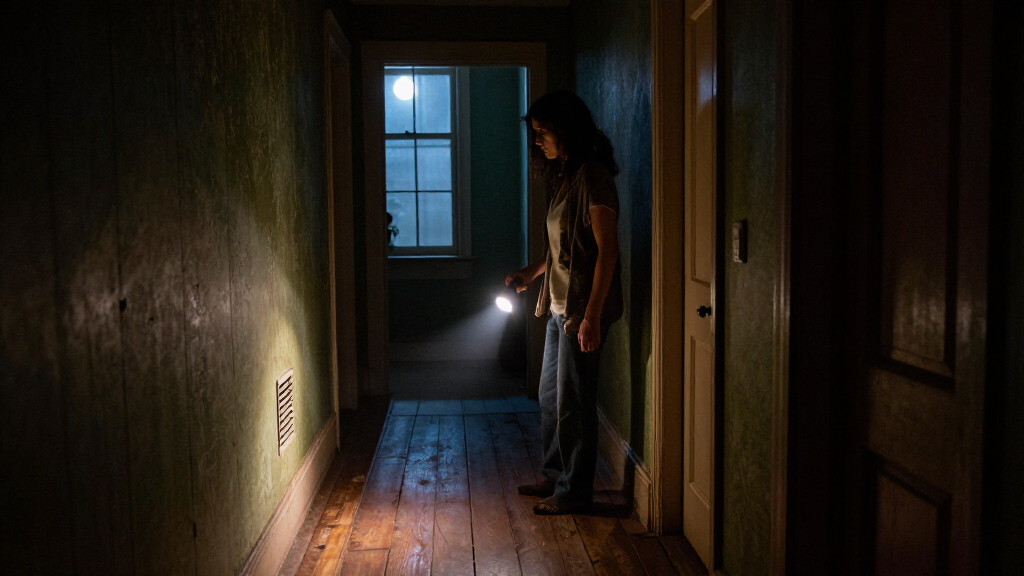
Willison described the project, called Beep Locator, in a November 9 post on his blog. He said the beeps began a couple of weeks earlier in a small room used for storage. They were intermittent and far enough apart that waiting in the room to identify the source was frustrating; searching through every box was also unappealing.
The system uses a Python web server to coordinate devices that join through a URL or QR code. In Willison’s test, two iPads, a phone, a MacBook Pro and a Surface Ultra acted as listeners. Their browsers requested microphone access, recorded recent audio and sent potential beep detections to the server. Willison said the system ultimately narrowed the source to a spot on its room map, allowing him to search one particular pile of boxes.
He reported finding an old carbon monoxide detector that needed its batteries replaced. The account does not say whether the detector was still functioning as a safety device or whether it had been tested after the batteries were changed. The result is Willison’s account of one home experiment, rather than a published independent assessment of accuracy across different rooms or devices.
A Search Guided by Sound
The immediate value was practical: the mapped estimate reduced a search through many boxes to a specific area, according to Willison. Intermittent sounds can be difficult to locate by ear because a person may have to wait for each beep and judge its direction in a room where objects and walls affect what they hear. Coordinating several microphones offers another way to narrow the search.
The find also involved a carbon monoxide detector, a device associated with household safety. Willison said this unit needed new batteries, but his post does not establish whether it was emitting a low-battery warning, whether it remained capable of detecting carbon monoxide, or whether any hazardous condition was present. A locator can help identify a sound’s likely source; it cannot verify a detector’s operation or diagnose the reason for its alert.
For software developers, the report is an example of using ordinary consumer hardware and browser-based audio tools for a narrowly defined task. Its significance should stay in proportion: the described result shows what Willison says his setup achieved in one room, not a general guarantee that the method will locate every alarm or beep with similar precision.
Popular right now

Vitamix VX1 Professional-Grade Blender, 64 oz, Black

Dyson Airwrap i.d. Multi-Styler for Straight and Wavy Hair

Dyson V8 Cyclone Cordless Vacuum
As an affiliate, we earn on qualifying purchases.
How the Locator Was Built
Willison said he started the project after deciding he did not want to unpack the room’s boxes to search for the sound. He used Claude Code to develop the software and said the work drew on a 2007 research paper, “BeepBeep: A High-Accuracy Acoustic-Based System for Ranging and Localization Using COTS Devices,” by Chunyi Peng, Guobin Shen, Yongguang Zhang, Yanlin Li and Kun Tan. The paper describes a software-based acoustic ranging approach for commodity devices; Willison said its methods appeared suited to his problem.
Beep Locator’s listeners keep a 60-second buffer of recent audio and use a detector based on a fast Fourier transform and a high-pass filter to flag possible beeps. When a listener reports one, the server selects a device to play a short chirp, then requests audio clips from the listeners. The chirp provides a shared sound for aligning those recordings, which the system needs to compare timing and estimate where the original beep came from.
Automatically determining the devices’ positions did not work well in Willison’s setup, he wrote. He added a “Rough mode,” allowing him to drag device icons to approximate locations and let the sound measurements adjust them. He also added a clapping mode, using claps at different positions to check how well the map represented known sound locations before relying on it to find the intermittent beep.
“The system worked as intended.”
— Simon Willison, in his November 9, 2026 blog post
Limits of This One-Room Test
The account does not provide independent measurements of the 40-centimeter estimate, a controlled comparison with other locating methods, or results from other rooms. It is also unclear how the system would perform with different room layouts, background noise, device microphones, speaker quality or beep patterns. Willison described a working test in his own home, but the available report does not establish accuracy across a broader range of conditions.
The exact cause and status of the detector’s sound remain unverified beyond Willison’s description. He identified the object as an old carbon monoxide detector and said it needed new batteries; he did not report whether replacing them stopped the beep, whether the unit passed a test, or whether the sound indicated a low battery rather than another condition. The post also does not say whether the software has been packaged for general use or tested by others.
Further Tests Would Show Range
Willison’s post describes the build and the result but does not announce a formal release, outside evaluation or planned follow-up test. The next evidence that could clarify the system’s broader usefulness would be testing in other rooms and with different devices, alongside measurements that show how location estimates compare with known sound sources.
For readers dealing with a similar sound, the report offers a possible way to narrow a search, not a substitute for checking safety equipment. Because the object Willison found was a carbon monoxide detector, anyone whose alarm is beeping should consult its manufacturer’s instructions and verify the detector’s status rather than relying on a mapped location alone.
Key Questions
What was making the beep?
Willison said he found an old carbon monoxide detector in a pile of boxes. He described it as needing new batteries, but did not report a separate test identifying the precise reason for its beep.
How close did Beep Locator get?
Willison reported that the system placed the source to within about 40 centimeters in his room. That figure comes from his account of one test and has not been presented here as an independently verified or generally expected accuracy.
What equipment did the system use?
His setup used two iPads, a phone, a MacBook Pro and a Surface Ultra as listening devices, coordinated by a Python web server. The devices connected through a browser and used microphones and speakers to help compare audio.
Does the report show the tool works in every room?
No. Willison reported a successful result in his home, but the post does not include tests across other rooms, layouts or device combinations. Its performance beyond that setup remains unclear.
Source: simonwillison.net