
TL;DR

Get books and cozy reading nights delivered free with Prime
- Fast, free delivery on millions of items
- Prime Video, Amazon Music and more included
- Member-only deals all year
Pocket-sized ghost-hunting gear includes EMF meters, audio recorders, and thermal cameras. While useful for documenting environmental changes, no device proves ghosts exist. Combining multiple sensors and careful documentation boosts credibility.
Imagine holding a tiny gadget that claims to detect spirits—fascinating, right? But in the world of ghost hunting, size isn’t everything. These small tools pack a punch, but they also come with limits.
Whether you’re a curious enthusiast or a skeptic with a flair for the mysterious, understanding what these pocket-sized devices can and can’t do helps you hunt smarter. You’ll learn how to assemble a compact kit, interpret readings, and avoid chasing illusions that seem paranormal but are just ordinary physics.
Always use multiple sensors simultaneously to strengthen your case—one device alone rarely proves anything.
Environmental factors like drafts, wiring, and insects are common false positives—control for them whenever possible.
Invest in a reliable audio recorder and environmental data logger; they provide more credible evidence than novelty gadgets.
Respect safety and privacy. Never investigate unsafe locations or without permission, and always act ethically.
Interpret data skeptically; one unexplained reading doesn’t mean you’ve found proof of spirits.
What small ghost-hunting gadgets actually measure (and what they don’t)
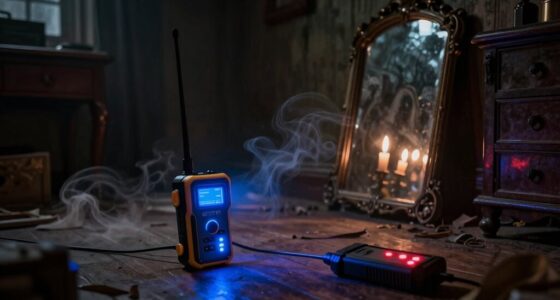
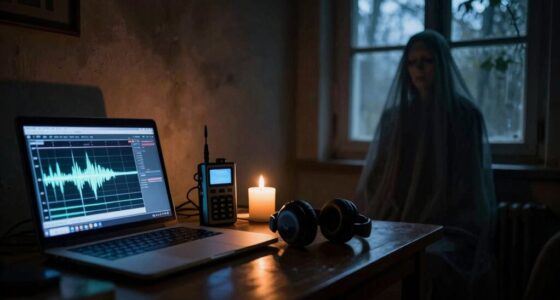
Most tiny ghost-hunting devices aim to catch physical signs of activity. EMF meters, for example, scan electromagnetic fields. When you see a sudden spike, it’s a sign of electrical interference, not a ghost. Digital audio recorders capture EVPs, but often pick up radio signals, environmental noise, or even your own breathing.
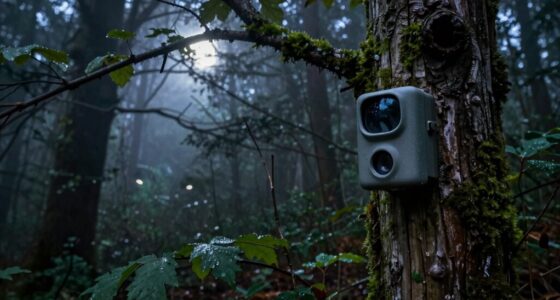
Thermal cameras and infrared thermometers show surface temperature changes. They can help locate drafts or heating vents, but can’t reveal spirits themselves. Motion sensors detect movement but tell you nothing about what caused it—an animal, a loose floorboard, or an unseen entity.
According to investigations, these tools gather data that’s often explainable by natural causes. The key is to use them together, not rely on a single reading. A thermal camera pointing at a cold spot, combined with an EMF spike and unexplained audio, makes a stronger case than any one alone.
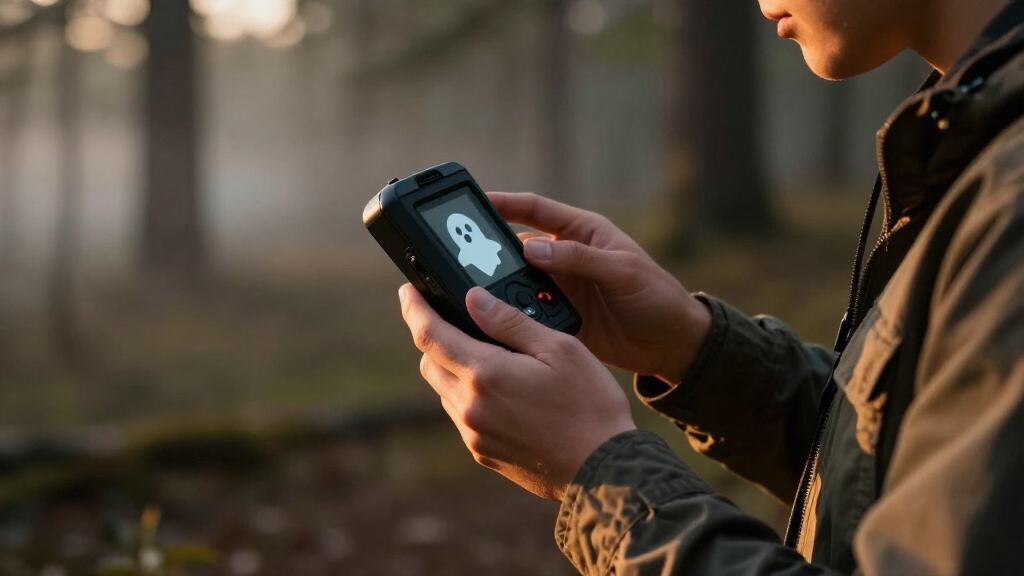
pocket-sized EMF meter for ghost hunting
As an affiliate, we earn on qualifying purchases.
As an affiliate, we earn on qualifying purchases.
How to choose the best tiny tools for your ghost hunt
- Prioritize documentation features: Look for devices with timestamped logs and easy data export. You want solid records to review later.
- Adjustable sensitivity: This helps avoid false alarms and fine-tune your device for different environments.
- Clear measurement units: The more precise, the better you understand what’s happening.
- Long-lasting batteries: Fieldwork can last hours. Look for rechargeable options or power banks.
- Compatibility with mounts or tripods: Stability is key for clear photos and consistent data.
For example, a basic EMF meter with a digital display and a temperature logger can fit in your pocket. Pair that with a portable audio recorder, and you’re halfway there. Remember, no single gadget is magic—combine data streams for credibility.
The latest tech trends in tiny ghost-hunting gear
Modern gadgets borrow heavily from consumer electronics. Smartphone thermal apps now offer surprisingly decent resolution, while multi-sensor devices combine EMF, temp, humidity, and vibration in one compact unit. Wireless logging allows remote monitoring—great for avoiding contamination from your own presence.
Automatic timestamps and synchronized recordings make analyzing an event easier. AI tools can enhance audio quality or transcribe voices, but beware—they can also produce false positives.
One trend gaining momentum is convergence: fewer devices that do more. A single multi-sensor gadget can track environmental changes, motion, and electromagnetic fluctuations simultaneously. Yet, more sensors often mean more anomalies, not necessarily paranormal ones.
According to recent reports, the real challenge isn’t equipment quality but interpretation. More data can mean more noise, both literally and figuratively.
Why science still hasn’t confirmed ghosts—and what your gadgets really measure
Despite all these tiny devices, science has yet to verify that ghosts emit electromagnetic signals or cause temperature drops. Most readings are explainable by environmental factors—wiring, drafts, insects, or even human suggestion.
For example, a sudden EMF spike might come from a faulty wire, not a spirit. A cold spot could be a draft or a reflection, not an apparition. Many false positives happen because our environment is full of natural influences that mimic paranormal signs.
Experts recommend controlling your environment, documenting everything, and avoiding assumptions. A single unexplained reading doesn’t mean much. It’s the pattern, the repetition, and the independent verification that count.
According to scientific reviews, credible evidence demands more than a flickering device—proof must be reproducible and free from environmental confounders.
Building a pocket kit that actually helps your ghost hunt
Start with the essentials: a dependable digital audio recorder, a simple EMF meter, and a temperature logger. These tools can fit in a pocket or small bag, ready to record environmental changes and strange sounds.
Add a compact night-vision camera or mount your smartphone on a tripod for better stability. Bring spare batteries or portable charging options—fieldwork drains power fast. Don’t forget a notebook or a phone app for timestamps and location notes.
A thermal camera is great but optional—expensive and not always necessary. Focus on tools that produce clear, timestamped data you can review later. Remember, a balanced kit helps avoid chasing illusions and builds credibility in your findings.
For example, during an investigation, a thermal camera revealed a subtle cold patch, while the audio recorder captured faint whispers. Comparing these with environmental logs made the case stronger than any single ghostly image.
Staying safe and respectful while hunting tiny spirits
Always get permission before entering private property. Respect the environment, and never investigate unsafe structures. An unstable floor or exposed wiring is more dangerous than any ghost.
Work with a partner, tell someone your plans, and carry safety gear. Avoid disturbing graves, religious sites, or grieving families. Never disable alarms or electrical systems—your safety comes first.
Be mindful of privacy: record only with consent, and don’t publish identifiable faces or voices without permission. Remember, some tragedies or sensitive sites deserve respect, not sensationalism.
According to safety guidelines, responsible investigation means balancing curiosity with caution. Equipment is just a tool—your judgment and respect are what truly matter.
Your questions about miniature ghost-hunting gear, answered
Can an EMF meter detect a ghost? It can sense electromagnetic fluctuations, but no scientific link confirms these signals mean spirits are present. Many environmental factors cause EMF spikes.
What’s the best pocket device for beginners? A quality audio recorder or environmental logger beats novelty gadgets for credible evidence. Choose based on your focus—recording sounds or tracking environmental changes.
Do ghost apps work? Some display real sensor data, but many are just entertainment. Even real readings don’t prove paranormal activity—context matters.
Can a phone replace dedicated tools? Phones can handle many functions—audio, video, motion—but dedicated devices usually offer better accuracy and less interference.
Why do EMF meters spike? Common causes include wiring, electronics, magnets, or even movement. They rarely mean ghosts.
Are cold spots proof of spirits? No—drafts, insulation gaps, and thermal reflections explain most cold spots. They’re not ghostly.
What is an EVP? A sound interpreted as speech in recordings, often caused by background noise or radio interference. Many are false positives.
Do spirit boxes communicate with ghosts? No, they scan radio frequencies, so any “voices” are fragments of broadcasts, not spirits.
Are thermal cameras useful? Yes, for spotting temperature differences or heat sources, but not for confirming spirits.
Should equipment be calibrated? Yes, especially for precision, but at minimum, test devices around known heat or electrical sources first.
How to reduce false positives? Record baseline data, turn off unnecessary electronics, sync clocks, and reproduce anomalies to verify.
Cost of a starter kit? Basic gear can be inexpensive—your smartphone plus a recorder and EMF meter—while high-end thermal cameras cost hundreds.
Is it safe for kids? Only with responsible supervision and in safe environments. Dark, abandoned sites pose real risks.
What counts as strong evidence? Multiple, independent recordings that can’t be explained by environmental factors, and that can be reproduced and reviewed without bias.
Conclusion
Small tools can be powerful allies in your paranormal hunts—if you understand their limits and use them wisely. Remember, credible evidence comes from careful observation, multiple data streams, and a healthy dose of skepticism.
Next time you hold that tiny EMF meter or whisper into your recorder, picture yourself as a detective, piecing together clues in a world full of mysteries. The real magic isn’t just in the gadgets, but in your curiosity and responsible approach.
Fall Picks
fall essentials
As an affiliate, we earn on qualifying purchases.