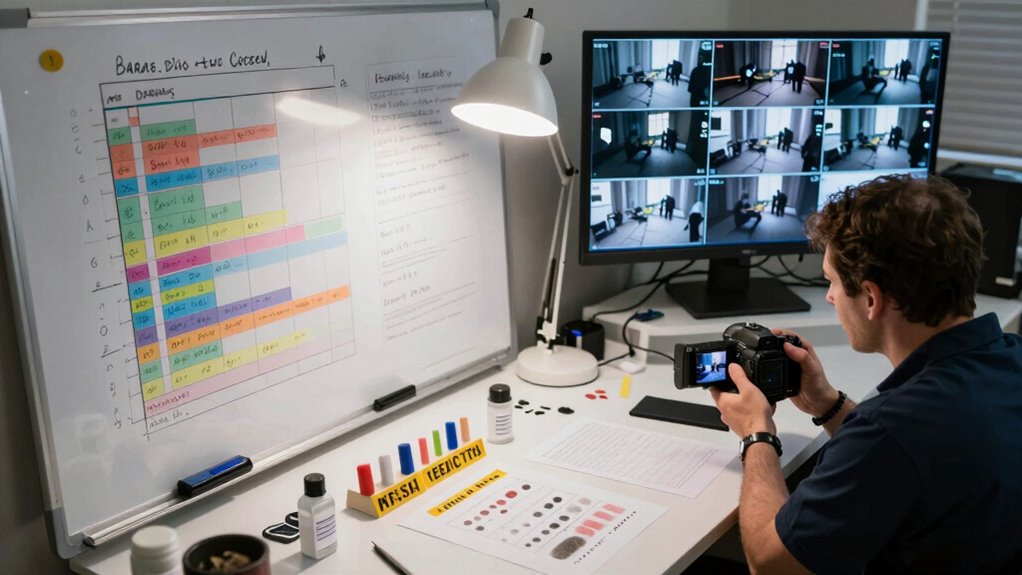
As an investigator, you use redundancy by cross-checking clues through multiple forensic techniques like fingerprint analysis, DNA testing, and ballistic analysis. You verify details by comparing witness statements, surveillance footage, and physical evidence, making certain everything aligns. This layered approach helps catch errors and strengthens your conclusions. By applying scientific methods and multiple verification steps, you build a more reliable case. Keep exploring to discover even more ways investigators ensure their findings are trustworthy.

Get books and cozy reading nights delivered free with Prime
- Fast, free delivery on millions of items
- Prime Video, Amazon Music and more included
- Member-only deals all year
Key Takeaways
- Investigators cross-verify evidence using multiple forensic techniques like DNA, fingerprint, and ballistics analysis.
- They utilize data triangulation by combining witness statements, surveillance footage, and physical evidence.
- Multiple layers of analysis confirm findings and ensure consistency across different investigative methods.
- Redundant testing and validation of evidence prevent errors and increase the reliability of conclusions.
- Scientific methods and independent verification sources strengthen confidence in event reconstruction.
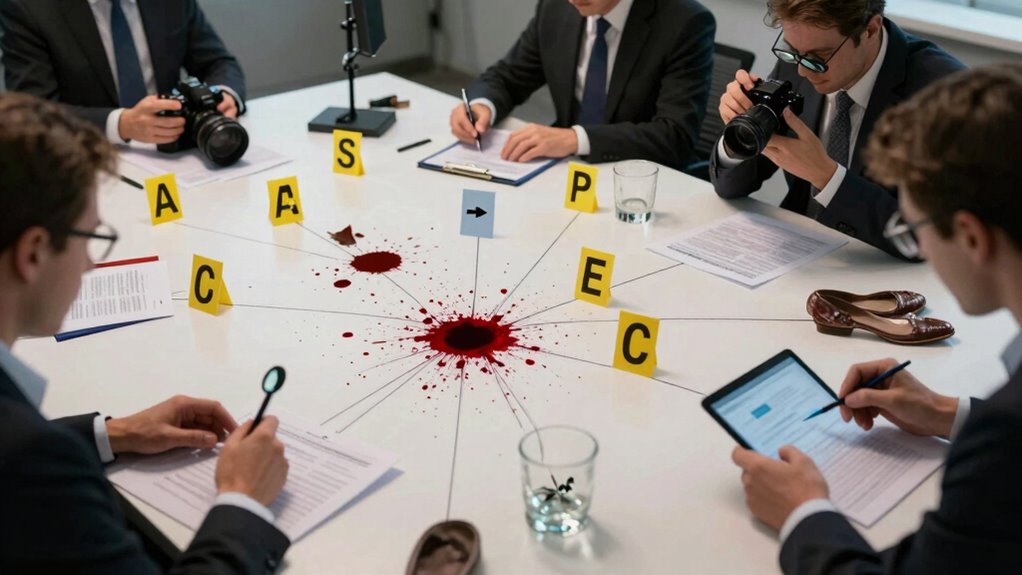
Have you ever wondered how investigators guarantee their findings are accurate? The answer lies in their use of redundancy, a key strategy that assures the events they uncover are reliable. When you think about how complex investigations can be, it’s clear why relying on a single piece of evidence isn’t enough. Instead, investigators employ multiple methods to confirm their conclusions, creating a safety net that catches errors or misinterpretations. Forensic techniques play a pivotal role in this process. They involve applying scientific methods—like fingerprint analysis, DNA testing, ballistics, and digital forensics—to gather evidence from different sources. By cross-verifying results from these diverse techniques, investigators reduce the risk of false positives or mistaken identities. This layered approach makes their findings more thorough. Additionally, advancements in digital forensics technology continue to enhance the accuracy and efficiency of evidence verification. Another essential tool in their arsenal is data triangulation. When you hear this term, think of it as using different viewpoints or data sources to pinpoint the truth. Investigators don’t just rely on one piece of evidence; they look at multiple data points—such as witness testimonies, surveillance footage, physical evidence, and forensic reports—and see if these sources align. If all these independent avenues lead to the same conclusion, confidence in the event’s accuracy increases. Data triangulation acts as a form of redundancy, providing a check against potential errors in any single source. It helps investigators confirm that what they’re seeing is the real story, not a misinterpreted or incomplete fragment. By combining forensic techniques and data triangulation, investigators build a complete picture of events. For example, they might analyze a crime scene with fingerprint analysis, then confirm their findings with DNA testing, and further corroborate their conclusions through witness statements and surveillance footage. If all these different strands point to the same sequence of events, they can be much more certain about what happened. This multi-layered verification process minimizes mistakes and strengthens the case. Recognizing the importance of scientific methods helps to understand how investigations ensure accuracy and reliability. The use of multiple verification techniques exemplifies this principle, ensuring a comprehensive and trustworthy assessment of the evidence. Moreover, employing a variety of verification techniques aligns with the scientific method, which emphasizes testing and validation through multiple approaches. Incorporating redundant checks is fundamental to building confidence in investigative conclusions, reducing the likelihood of errors slipping through.
As an affiliate, we earn on qualifying purchases.
Frequently Asked Questions
How Do Investigators Determine Which Sources Are Most Reliable?
You determine the most reliable sources by evaluating their source credibility, checking for consistency, and examining their expertise. You also look for bias detection to spot any potential skewing of information. Cross-referencing multiple sources helps confirm facts, while understanding each source’s background reveals possible biases. By combining these strategies, you guarantee the information you rely on is accurate and trustworthy, reducing the risk of misinformation influencing your investigation.
What Tools Assist in Cross-Verifying Event Data?
You use tools like source triangulation and data corroboration to cross-verify event data. Source triangulation involves comparing information from multiple independent sources to identify consistencies. Data corroboration cross-checks details across various records or reports to confirm accuracy. These methods help you spot discrepancies and validate findings, ensuring your investigation remains reliable. By systematically applying these tools, you strengthen your conclusions and build a clearer, more accurate picture of the events.
How Is Redundancy Maintained Across Different Investigative Teams?
You maintain redundancy across different investigative teams through effective source triangulation and team coordination. By sharing data regularly and cross-referencing findings, teams guarantee consistency and accuracy. Establishing clear communication channels and standardized procedures helps prevent discrepancies. When teams collaborate and verify sources collectively, they strengthen the robustness of their investigations, reducing errors and confirming event details from multiple perspectives. This approach ensures thorough, reliable verification of events.
What Challenges Arise When Sources Conflict During Verification?
When sources conflict during verification, you face challenges like source bias, which can skew information, and information overload, making it hard to sift through data. Notably, studies show that over 60% of investigative errors stem from conflicting sources. You must carefully evaluate each source’s credibility, cross-check facts, and remain aware of potential biases to ensure accurate verification amid these hurdles.
How Does Technology Improve Redundancy in Investigations?
Technology improves redundancy in investigations by employing automated algorithms that quickly analyze large data sets, reducing human error. You can also use data triangulation, combining multiple sources to cross-verify information. This layered approach guarantees more reliable results, as inconsistencies are flagged early. By leveraging these tools, you enhance the accuracy and efficiency of your investigations, making it easier to confirm events and identify discrepancies.
Conclusion
By relying on redundancy, you create a safety net that catches even the tiniest discrepancies, making your verification process nearly infallible. When you cross-check multiple sources and methods, you’re not just verifying events—you’re building an unbreakable fortress of truth. This approach transforms your investigations into battles against chaos itself, where every detail counts. In this relentless pursuit of accuracy, your meticulous efforts guarantee that no falsehood can survive, no matter how cunningly it’s concealed.
Halloween Picks
halloween
As an affiliate, we earn on qualifying purchases.