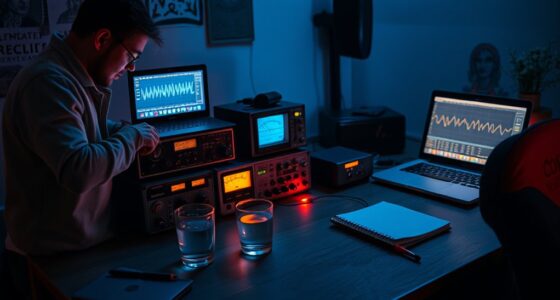
To guarantee effective thermal imaging, start by calibrating your device with a blackbody source before each use. Prepare the environment by minimizing drafts, adjusting for reflectivity, and allowing your equipment to stabilize. Maintain proper angles and use shields to block sun or wind interference. Regularly perform maintenance and keep your device clean to certify accuracy. Attention to these steps helps prevent false readings and improves reliability—continue for more detailed tips to master thermal imaging techniques.
Key Takeaways
- Calibrate the thermal imager regularly using a blackbody source before each session.
- Prepare the environment by reducing drafts, controlling humidity, and eliminating reflective surfaces.
- Allow the device to warm up and stabilize after powering on or moving between locations.
- Use proper measurement angles and shielding to minimize environmental interference and reflections.
- Document calibration details and environmental conditions to ensure accurate, repeatable thermal readings.

Thermal imaging is an invaluable tool for identifying temperature differences and detecting issues that might otherwise go unnoticed. When you’re using a thermal camera, ensuring accurate readings is essential, and that begins with proper sensor calibration. Regular calibration helps your device provide precise temperature measurements by adjusting the sensor to account for any drift or inaccuracies over time. You should follow the manufacturer’s guidelines to calibrate your thermal imager, typically involving a blackbody calibration source that provides a known temperature reference. Doing this before each use or periodically during extended sessions guarantees your readings stay reliable. Ignoring calibration can lead to misinterpretations, causing you to overlook critical issues or chase false alarms. Always verify that your thermal camera’s sensor is properly calibrated, especially if you’ve recently stored it, transported it, or exposed it to extreme conditions. Additionally, using proper maintenance routines can extend the lifespan and accuracy of your thermal imaging equipment. Environmental considerations play a significant role in capturing accurate thermal images. External factors such as ambient temperature, humidity, wind, and reflective surfaces can influence your readings. For example, high humidity or direct sunlight can cause temperature readings to be skewed, leading you to misjudge the true thermal profile of the object or area. To mitigate these effects, take your measurements in controlled conditions whenever possible. If you’re inspecting a building, ensure the environment is stable, avoid drafts, and shield your camera from direct sunlight. When working outdoors, be mindful of wind, which can cool surfaces quickly and create misleading temperature differences. Also, consider the reflective properties of surfaces like metal or glass, which can reflect thermal radiation from other sources, giving false readings. Using proper techniques to minimize environmental interference, such as angling the camera correctly or employing barriers, can improve accuracy. In addition to calibration and environmental factors, always allow your thermal imager to acclimate to the surroundings before taking measurements. This means giving it a few moments to stabilize after powering on or moving between different temperature zones. Properly preparing your environment and equipment reduces errors and ensures you’re interpreting thermal data correctly. Remember, thermal imaging is most effective when you understand its limitations and take steps to account for external influences. By maintaining sensor calibration diligently and considering environmental factors, you’re setting yourself up for precise, dependable results. These best practices will help you identify issues early, optimize maintenance routines, and make confident decisions based on accurate thermal data.
Frequently Asked Questions
How Often Should Thermal Cameras Be Calibrated for Optimal Accuracy?
You should calibrate your thermal cameras at least once a year to guarantee accuracy maintenance. However, calibration frequency may need to increase if you use the camera frequently, work in extreme temperatures, or notice inconsistent readings. Regular calibration helps you maintain precise measurements, reduces errors, and ensures your thermal imaging stays reliable. Always follow manufacturer guidelines for calibration intervals and procedures to optimize your camera’s performance.
What Environmental Factors Most Affect Thermal Imaging Results?
Ironically, environmental interference and surface emissivity are your thermal imaging nemeses. Weather conditions like fog, rain, or strong sunlight can skew your readings, making accurate detection a challenge. Meanwhile, surface emissivity varies with materials, affecting thermal accuracy. You need to consider these factors to guarantee reliable results. Ignoring them risks misinterpretation, turning a precise instrument into an unreliable guesswork device. Stay vigilant, and adapt to these environmental quirks.
Can Thermal Imaging Detect Hidden Electrical Faults?
Yes, thermal imaging can detect hidden electrical faults. When you use a thermal camera, proper maintenance is vital to guarantee accurate electrical fault detection. Regularly calibrate and clean your device to prevent false readings. Look for hot spots, which often indicate loose connections or overloaded circuits. By following best practices in thermal camera maintenance, you improve your chances of identifying electrical issues early and preventing potential failures.
What Safety Precautions Are Necessary During Thermal Inspections?
Prioritize protection during thermal inspections by donning dedicated safety gear like gloves, goggles, and flame-resistant clothing. Follow strict inspection protocols to prevent electrical shocks, burns, or falls. Always de-energize equipment when possible, maintain clear communication, and keep a safe distance from live parts. Proper preparation and precautionary procedures guarantee your safety while conducting thermal imaging, helping you avoid accidents and achieve accurate, reliable results.
How Does Weather Influence Thermal Imaging Effectiveness?
Weather conditions considerably impact your thermal imaging effectiveness. High humidity, rain, or fog can obscure your view, while temperature fluctuations between day and night cause surface temperature differences that may lead to inaccurate readings. Cloud cover and wind can also cool surfaces unevenly. To get reliable results, you should plan inspections during stable weather, preferably when conditions are clear and temperature changes are minimal, ensuring ideal thermal contrast and accuracy.
Conclusion
Think of thermal imaging like catching a hidden message in a puzzle—your careful steps reveal secrets others miss. I once inspected a building where a tiny hotspot led to a major leak, saving the owner thousands in repairs. By following best practices, you become that detective, uncovering issues before they escalate. Remember, precision and patience turn a simple scan into a powerful tool—transforming invisible problems into clear solutions. Keep practicing, and you’ll master the art of thermal imaging.