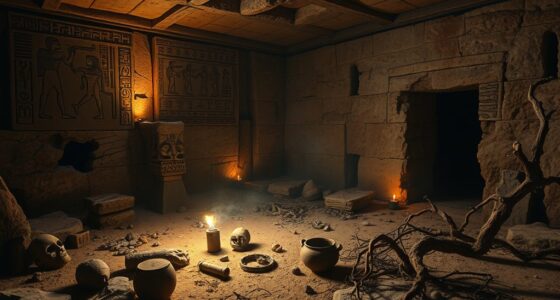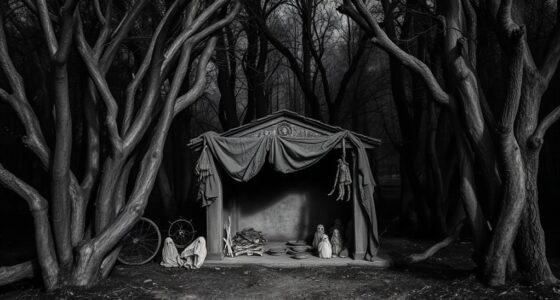
You might notice strange symbols or marks on old houses, called apotropaic witch marks, which were believed to protect homes from evil spirits and harm. These symbols, like circles or zigzags, served as magical barriers rooted in superstitions and cultural traditions. They were often carved into walls or hidden within homes to ward off negative forces. If you explore further, you’ll uncover the fascinating history and deeper meanings behind these ancient protective symbols.
Key Takeaways
- Witch marks are protective symbols carved or painted in homes to ward off evil spirits and malevolent forces.
- Their origins date back to ancient superstitions, serving as magical barriers to prevent harm and misfortune.
- Common shapes include circles and zigzags, symbolizing unbreakable boundaries and spiritual warding.
- These symbols were often placed in hidden or strategic locations like doorways, walls, or hearths.
- They reflect cultural beliefs in harnessing spiritual energy for safety and are rooted in folklore and tradition.
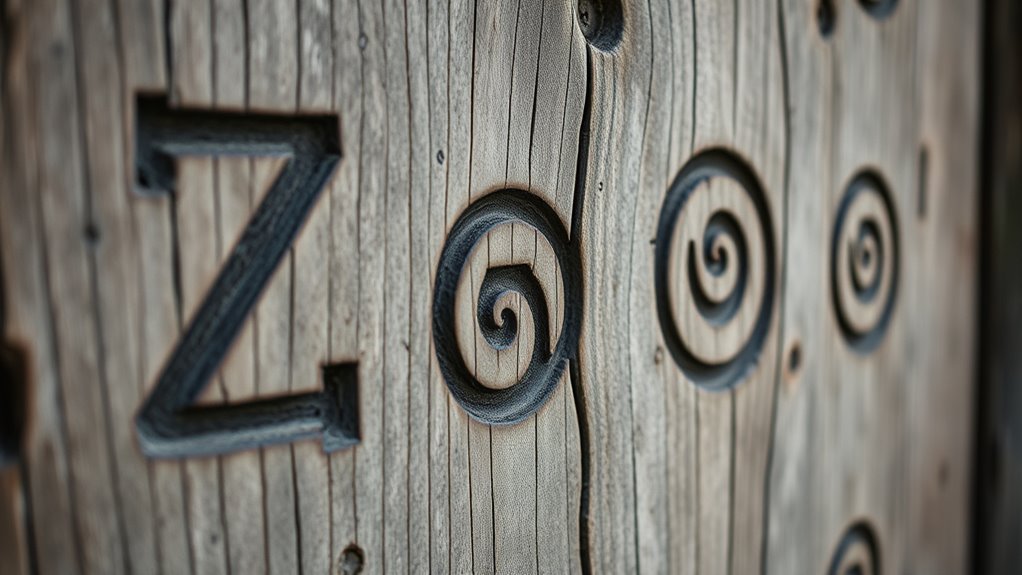
Throughout history, people have believed that certain marks and symbols could protect their homes from evil spirits and malevolent forces. These markings, often called apotropaic witch marks, stem from deep-rooted superstitious practices meant to ward off harm. You might wonder why so many homes display these mysterious symbols—especially since their origins trace back centuries. They are a direct reflection of the historical symbolism that communities used to feel safer within their walls. These marks weren’t just random doodles; they held significant cultural and spiritual meaning, incorporated into daily life as a form of protection.
Throughout history, protective symbols like witch marks reflected communities’ deep-rooted superstitions and desire for safety.
In earlier times, people believed that evil spirits and malicious forces could enter homes and cause harm, whether through illness, misfortune, or even death. To combat this, they devised symbols and marks that would act as divine or magical barriers. These superstitious practices often involved carving or painting symbols onto doorways, windows, or hearths. Some common shapes include circles, zigzags, or double lines, each carrying specific protective meanings. For example, a circle might symbolize an unbreakable boundary, while a zigzag could be intended to ward off evil spirits lurking outside. These symbols weren’t arbitrary; they were chosen based on their perceived power within the cultural context and were believed to harness spiritual energy to keep danger at bay.
Additionally, the use of protective symbols in homes was often supported by cultural traditions and folklore, reinforcing their perceived effectiveness over generations. As you explore old houses, you might notice these marks etched into walls or ceilings, often hidden or faint. They serve as silent witnesses to the superstitions held by past generations, embodying their hopes for safety and well-being. These symbols often appeared alongside other superstitious practices, like placing charms or talismans nearby, creating a layered system of protection. The historical symbolism embedded in these marks reveals a world where everyday life was intertwined with spiritual beliefs. People relied on these symbols because they believed in their efficacy—whether rooted in folklore, religious tradition, or a mixture of both.
Ultimately, these witch marks offer a fascinating glimpse into the fears and beliefs of our ancestors. They remind us that even in the face of uncertainty, humans sought comfort in tangible symbols. Whether you see them as magical or simply as cultural artifacts, they underscore a universal desire for security and protection—an enduring part of human superstitious practices passed down through generations.

Holmgren Evil Eye Dream Catcher – Black Dream Catchers for Bedroom, Evil Eye Wall Hanging for Witch Dark Decor, Gothic Wall Decorations, Ornament Craft Gift(Black)
Lucky Eye Dream Catcher: The Evil Eye can identify evil in the world, protect yourself and your family…
As an affiliate, we earn on qualifying purchases.
As an affiliate, we earn on qualifying purchases.
Frequently Asked Questions
When Did the Tradition of Marking Houses Begin Historically?
You’ll find that marking houses began during medieval superstitions, roughly between the 14th and 17th centuries. People used folk protective symbols, like apotropaic marks, to ward off evil spirits and witches. These symbols served as a form of magic protection, believed to keep harm away. Over time, these marks became a common part of folk beliefs, reflecting a widespread desire for safety and spiritual safeguarding in homes.
Are Apotropaic Marks Found in Specific Regions More Often?
You’ll find apotropaic marks more frequently in regions with strong folk traditions, like parts of England and Ireland. Studies show that these marks appear in about 60% of historic homes in certain villages, highlighting regional variations. Cultural influences shape their design and purpose, reflecting local beliefs about warding off evil. So, the presence and style of witch marks often reveal regional customs and spiritual practices, making them fascinating historical artifacts.
What Materials Were Used to Create These Protective Marks?
You use a variety of materials to create these protective marks, including chalk drawings, which are easy to apply on walls and surfaces, and metal engravings that offer durability and clarity. Sometimes, people also use soot, charcoal, or even knives to carve symbols directly into wood or stone. These materials help guarantee the marks remain visible over time, serving as effective protective symbols against evil or harm.
How Do Experts Differentiate Between Protective Marks and Graffiti?
Imagine tracing delicate lines on ancient walls—expert analysis reveals protective marks through careful symbol analysis, spotting deliberate patterns meant to ward off evil. They differentiate these from graffiti by examining stylistic comparison, noting precise, intentional shapes versus casual or vandalistic marks. Protective symbols often follow traditional motifs, while graffiti varies wildly, reflecting personal expression. This detailed scrutiny helps you distinguish purposeful magic from mere vandalism, connecting you to the past’s hidden beliefs.
Are Similar Protective Symbols Used in Other Cultures Worldwide?
Yes, you’ll find similar protective symbols across cultures worldwide. Many cultures use cross cultural symbols and universal protective motifs like amulets, talismans, and specific patterns to ward off evil spirits or bad luck. These symbols often share common features, such as geometric shapes or sacred signs, reflecting a universal human desire for safety and protection. Recognizing these symbols helps you understand how different societies express their fears and hopes through protective imagery.

PAIION Alchemical Symbols Metal Poster Wall Decoration Metal Signs Home Decor Chart Knowledge Bathroom Decor Retro Plaque Birthday Gift 8×12 Inches
Professional Knowledge and education posters can be gifts for children, biological lovers, adults, or decorated for your home,…
As an affiliate, we earn on qualifying purchases.
As an affiliate, we earn on qualifying purchases.
Conclusion
You might think witch marks are just old superstition, but evidence suggests they served real protective purposes. These symbols likely originated from ancient beliefs in warding off evil spirits and bad luck. While some dismiss them as mere folklore, their consistent presence across different cultures hints at a genuine attempt to safeguard homes. So, next time you see such marks, remember they weren’t just superstition—they were a meaningful way people tried to keep danger away.
AWISBI Metal Triple Moon Pentagram Wall Art – Gothic Witchy Occult Decor for Home, Pagan Symbol with Stars & Moon – Black Gothic Wall Hanging Decoration
🌒【Durable and Reliable】- Crafted with high-grade iron material, this witch wall decor pentagram decor ensures long-lasting performance. Its…
As an affiliate, we earn on qualifying purchases.
As an affiliate, we earn on qualifying purchases.

TIUUOK No Kings Protest Poster,Patriotic Symbol Wall Art,Historical Decor Perfect for Student Dormitory 12x18in Wframed
Perfect Size for Versatile Decoration: Measuring 12x18in, this framed poster wall art is ideally sized to fit any…
As an affiliate, we earn on qualifying purchases.
As an affiliate, we earn on qualifying purchases.