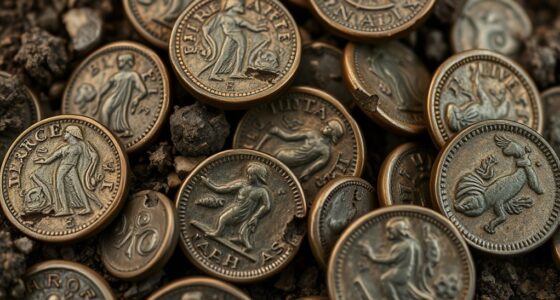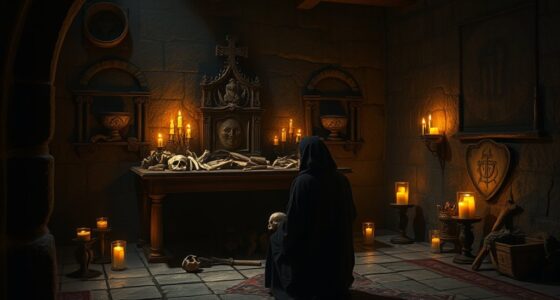
Witch marks are ancient symbols carved or painted in homes to ward off evil spirits and protect the inhabitants. Their origins trace back to superstitions in earlier times, where shapes like circles, crosses, or geometric patterns were believed to trap or repel malevolent forces. These marks served as physical charms and psychological reassurance, reflecting deep-seated fears and hopes. If you keep exploring, you’ll discover how these symbols reveal much about cultural beliefs and history.
Key Takeaways
- Witch marks are symbols carved or painted in homes to ward off evil spirits and protect inhabitants.
- They originated from ancient superstitions and beliefs in spiritual defense against malevolent entities.
- Common forms include circles, crosses, and geometric shapes placed near entrances or fireplaces.
- These marks served as active protective rituals, often accompanied by prayers or charms.
- Today, they are recognized as cultural heritage artifacts symbolizing historical efforts to ensure safety.
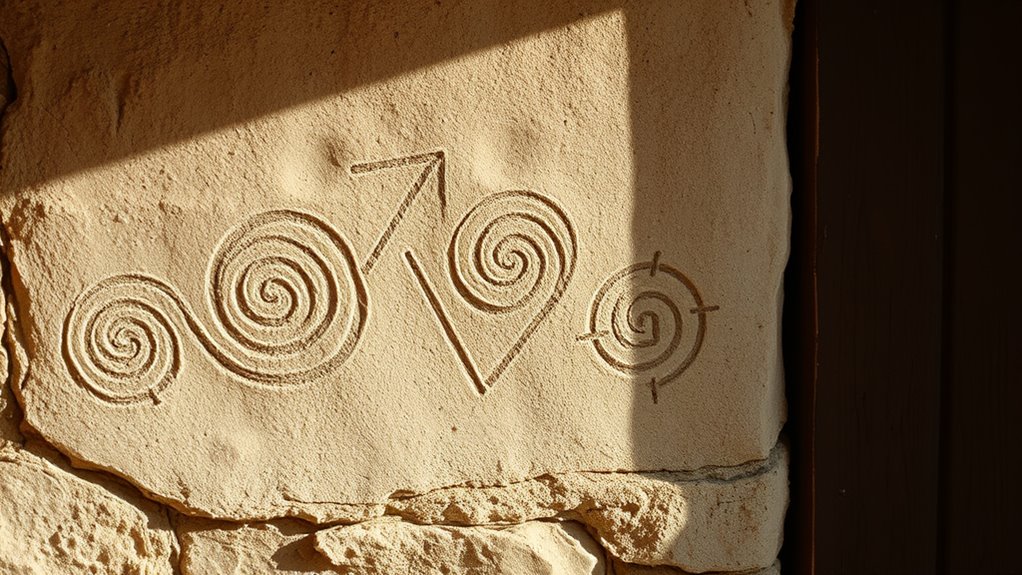
Witch marks in houses are mysterious symbols and carvings believed to have been used in olden times to ward off evil spirits or protect homes from witchcraft. These markings often appear near entrances, fireplaces, or windows and serve as silent guardians against malevolent forces. You might notice them etched into beams, doorframes, or walls—simple yet powerful symbols that carry deep significance rooted in historical superstitions. These protection symbols originated from a time when people believed that unseen entities could harm their homes or loved ones, and so they created these marks as a form of spiritual defense.
Understanding the origins of these marks helps you appreciate their importance in historical context. Superstitions played a significant role in everyday life, shaping behaviors and beliefs about safety. In many communities, it was thought that witches or evil spirits could enter through cracks or weak points in a house, especially during times of unrest or illness. To counteract this, people carved or painted symbols like circles, crosses, or other geometric shapes believed to trap or repel these entities. These symbols weren’t just random; they reflected a collective desire for protection and were often passed down through generations as part of local folklore.
You might wonder how these symbols worked in practice. While no scientific evidence supports their efficacy, their psychological impact was significant. The belief in protection symbols provided comfort and a sense of control in uncertain times. Carving these marks was also an act of ritual, a way to actively ward off harm rather than passively relying on faith alone. In some cases, the symbols were accompanied by prayers or charms, further reinforcing their protective power. Additionally, recent studies suggest that interior design elements can influence a space’s perceived safety and comfort, subtly reinforcing the protective intent of these marks. Over centuries, these protections became ingrained in cultural practices and local superstitions, shaping how communities viewed safety and evil.
It’s fascinating to see how these old superstitions have persisted, even if their original meanings are less understood today. Many homeowners and historians now recognize these marks as part of cultural heritage, reflecting the fears and hopes of past generations. Whether you believe in their mystical power or see them as historical artifacts, they serve as a reminder of how human beings have long sought ways to defend themselves from unseen dangers. In the end, witch marks in houses embody a timeless desire for security—proof that protection, whether through symbols or faith, is deeply woven into human history.
Top picks for "apotropaic witch mark"
Open Amazon search results for this keyword.
As an affiliate, we earn on qualifying purchases.
Frequently Asked Questions
Were Apotropaic Marks Used Worldwide or Only in Specific Regions?
You’ll find apotropaic witch marks used worldwide, but regional variations and cultural adaptations shape their designs and meanings. Different cultures develop unique symbols to ward off evil spirits, reflecting local beliefs and traditions. While the core purpose remains the same, these marks adapt to specific regions, showcasing a fascinating diversity in protective practices. So, these marks aren’t limited to one area—they’re a global phenomenon rooted in cultural diversity.
How Have Modern Interpretations of Witch Marks Changed Over Time?
You might notice that modern interpretations of witch marks have shifted due to symbol reinterpretation and increased modern skepticism. People now see these marks less as protective symbols and more as historical curiosities or folk art. While some still believe in their protective power, many view them through a critical lens, understanding them as cultural artifacts rather than divine safeguards, reflecting changing attitudes toward superstition and history.
Are There Any Documented Cases of Protection From Specific Types of Harm?
In historical case studies, you find that certain witch marks, like those in 17th-century European homes, were believed to protect against malicious spirits or illness. Cultural variations show many societies used symbols or charms for specific harm protection—like protective sigils in Scandinavian houses or talismans in Africa. These documented examples reveal that, regardless of era or place, people actively employed symbols to ward off particular dangers, demonstrating a universal desire for safety.
Can Similar Protective Symbols Be Found Outside Residential Architecture?
Yes, you can find similar protective symbols outside residential architecture. Ritualistic carvings and spiritual symbols appear on ancient temples, tombs, and boundary stones, serving to guard against evil or negative influences. These symbols are often etched into stone or wood, functioning as protective talismans. You might notice them in sacred sites or historical landmarks, where they continue to symbolize spiritual protection beyond just homes.
What Materials Were Traditionally Used to Create These Protective Marks?
You might think these protective symbols are just chalk drawings on walls, but historically, people used a variety of materials. Metal amulets were buried or attached to homes for protection, while chalk was often applied directly to surfaces to ward off evil. These materials combined practicality with superstition, creating a layered defense that’s both visible and tangible, blending everyday objects with spiritual beliefs.
Conclusion
You now see how these tiny witch marks hold centuries of mystery and powerful protection. They’re not just scratches or symbols, but ancient guardians that could stop evil in its tracks—like a medieval forcefield! Next time you spot a strange mark on a house’s wall, remember, it’s a tiny but mighty talisman, guarding generations from dark forces. These marks are a testament to our ancestors’ fierce belief in magic’s power to keep the worst at bay.