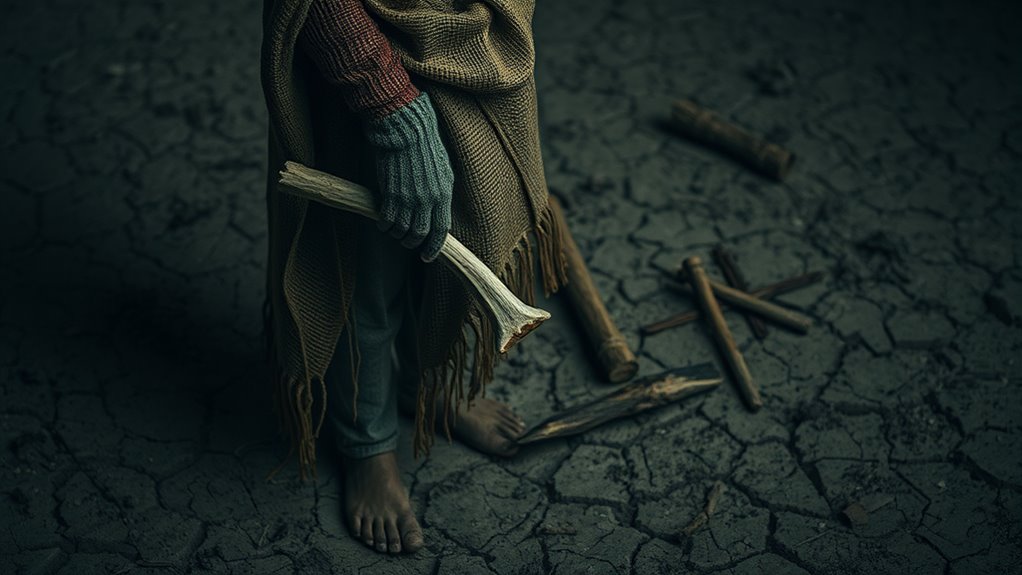

Cannibalism in famine folklore highlights how extreme hunger pushes individuals beyond moral boundaries, testing societal taboos. These stories originate from real survival situations where desperation causes people to rationalize acts normally deemed unthinkable. They reveal that survival instincts can override cultural morals, exposing human fragility during crises. Understanding these tales shows how famine can blur the line between civilization and chaos, offering insights into human morality’s fragile nature—if you continue, you’ll uncover more about these complex stories.
Key Takeaways
- Folklore about famine-related cannibalism highlights the tension between moral taboos and survival instincts during extreme hardship.
- These stories serve as cultural memories, illustrating how starvation can push individuals beyond societal moral boundaries.
- They reflect the psychological impact of famine, revealing how desperation can justify morally forbidden acts as necessary for survival.
- The narratives underscore the fragile boundary between civilization and chaos when societal norms are challenged by extreme hunger.
- Originating from real survival experiences, these tales function as cautionary stories about human morality and resilience in crises.

Throughout history, tales of cannibalism during famines have persisted as haunting folklore, reflecting both the desperation and moral dilemmas faced by those suffering extreme hunger. When starvation pushes people to the brink, your survival psychology shifts dramatically. The instinct to live overrides many moral boundaries, and what once seemed unthinkable becomes a matter of immediate necessity. In these moments, you might find yourself grappling with feelings of shame and horror, yet also a primal urge to continue existing at all costs. These stories serve as stark reminders of how fragile human morality can become when confronted with life-and-death situations.
In extreme hunger, survival instincts override morality, revealing humanity’s fragile moral boundaries in life-and-death moments.
Cultural taboos play a *pivotal* role in shaping how societies interpret and remember these extreme acts. In many cultures, cannibalism is deeply forbidden and seen as an abomination, often associated with evil or moral decay. When famine strikes, however, these taboos are tested. You may wonder how communities reconcile their core beliefs with the brutal reality of survival. Sometimes, the collective memory of such acts is suppressed or demonized, emphasizing the horror rather than the context. Other times, tales emerge that acknowledge the complex moral landscape, where hunger and human instinct collide with ingrained cultural values. These narratives highlight the tension between societal norms and the desperate measures taken under extreme circumstances.
Understanding the psychology behind such acts helps you see that these decisions aren’t made lightly. Survival psychology reveals how, under acute stress, your reasoning can become clouded. The brain prioritizes immediate survival over abstract moral principles, leading individuals to commit acts they’d normally find unthinkable. In famine conditions, the mind may rationalize cannibalism as a necessary evil, a temporary lapse in moral judgment driven by survival instinct. You might also recognize that these stories often serve as cautionary tales, emphasizing the importance of preparedness and social cohesion in preventing such tragedies.
These stories aren’t just about individual acts; they reflect broader human responses to extreme hardship. They force you to confront uncomfortable truths about human nature and the thin line separating civilization from chaos. The enduring folklore of cannibalism during famines underscores how, in the face of overwhelming hunger, societal norms can crumble, and survival psychology takes precedence. Despite cultural taboos, these tales remind you that under the right circumstances, even the most taboo acts can seem justified in the desperate pursuit of life.
Frequently Asked Questions
Are There Documented Cases of Historical Cannibalism During Famines?
Yes, there are documented cases of historical cannibalism during famines. Survivor testimonies often recount desperate acts, while archaeological evidence reveals bones with cut marks indicating cannibalism. Notable examples include the 19th-century Irish Potato Famine and the Donner Party in California. These accounts and findings show that extreme starvation pushed some individuals to commit acts they later regarded as unimaginable.
How Do Different Cultures Interpret Cannibalism Myths During Famines?
You see that different cultures interpret cannibalism myths during famines through cultural symbolism and mythological interpretations. Some view it as a warning about greed or moral decay, while others see it as a reflection of survival instincts. These myths often serve as moral lessons or explanations for extreme circumstances, emphasizing the importance of community and spiritual beliefs. You can explore how these stories shape cultural attitudes toward morality, death, and resilience.
What Psychological Factors Drive Stories of Cannibalism in Famine Folklore?
You might think stories of cannibalism stem from evil, but often, psychological trauma and survival instincts drive these tales. Ironically, in desperate famine times, the mind creates horrifying narratives to cope with unimaginable hunger and fear. These stories serve as warnings and psychological outlets, reflecting deep-seated fears and the primal urge to survive. Your mind turns to the unthinkable, illustrating how trauma shapes folklore in extreme circumstances.
Are There Any Legal Implications Associated With Accusations of Famine-Related Cannibalism?
Accusations of famine-related cannibalism can lead to serious legal consequences, especially if there’s solid accusation evidence. If you’re falsely accused, you might face criminal charges, social stigma, or even imprisonment. The legal system relies on evidence to determine guilt, so gathering credible proof is essential. Remember, allegations without proper evidence can unjustly ruin lives, so always approach these accusations carefully and within the bounds of the law.
How Has Modern Media Influenced Perceptions of Famine-Related Cannibalism Stories?
Modern media acts like a magnifying glass, amplifying famine-related cannibalism stories and shaping your perception. Media sensationalism often highlights extreme cases, making these stories seem more common and shocking than they truly are. This distorts public perception, fueling fear and misunderstanding. You might find yourself reacting emotionally, influenced by vivid headlines and images, rather than understanding the complex historical and social contexts behind these tragic stories.
Conclusion
As you reflect on famine folklore, remember that “what’s done is done,” and these stories reveal how desperation shapes human stories and fears. Cannibalism, though horrifying, represents more than just survival—it’s a symbol of extreme hardship and societal boundaries pushed to the edge. By understanding these tales, you see that history’s darkest moments teach us resilience and caution. In the end, knowing where we’ve been helps us avoid repeating what we’d rather forget.