Charon’s obol, or burial coin, originates from ancient Greek beliefs that coins placed in the mouth or hand of the deceased guarantee safe passage to the afterlife. This ritual paid the ferryman Charon for crossing the river Styx or Acheron, symbolizing a fee for the soul’s journey. These coins reflect a deep cultural tradition, showing respect for the dead and their progression. Continue exploring to uncover more about how these coins reveal ancient views on death and the afterworld.
Key Takeaways
- Burial coins, known as Charon’s Obol, originated in ancient Greece as payment for the ferryman, Charon, to transport souls across the underworld rivers.
- These coins symbolized a necessary fee for safe passage into the afterlife, reflecting beliefs about death as a transitional journey.
- Placed in the deceased’s mouth or alongside the body, burial coins demonstrated respect and facilitated their peaceful transition beyond mortal life.
- The practice of using coins in burials was part of broader ancient rituals, signifying the importance of honoring the dead and navigating the mysteries of the afterworld.
- Archaeological discoveries of burial coins reveal the cultural and spiritual significance of death, illustrating the connection between economy, religion, and ritual in ancient societies.
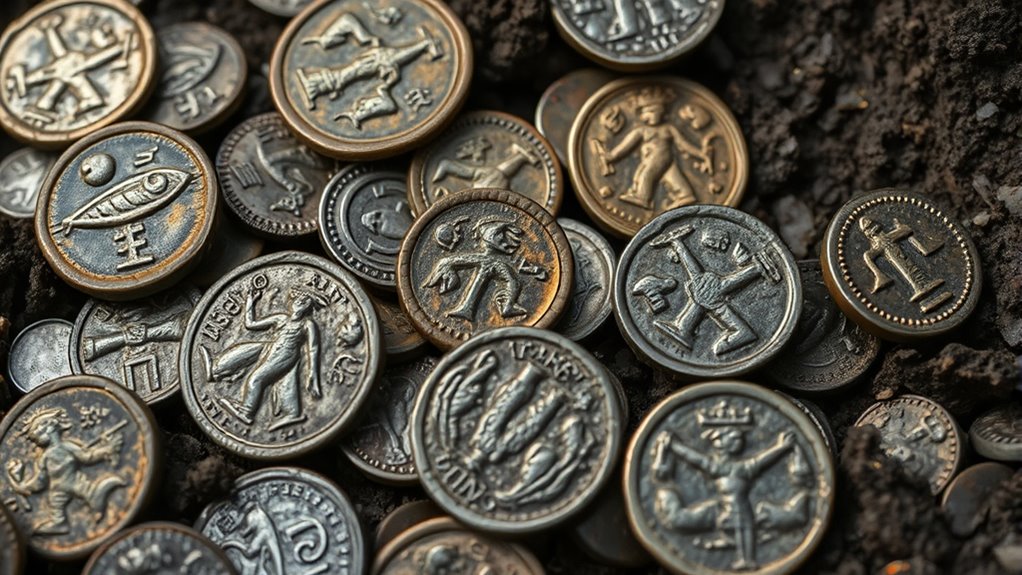
In ancient Greek mythology, coins placed in a deceased person’s mouth or alongside their body served an essential purpose: they were believed to pay Charon, the ferryman of the underworld, for safe passage across the Styx or Acheron rivers. This practice was a key part of funeral rituals, reflecting a deep-seated belief in an ongoing journey after death. The coins used, often called burial coins, were a form of ancient currency, but their value extended beyond mere monetary worth. Instead, they symbolized a fee that guaranteed the soul’s transit into the afterlife, marking a tangible connection between the living and the dead.
You might wonder why such a simple object held such significance. In Greek culture, death wasn’t seen as an end but as a passage. The presence of coins in graves demonstrated a respect for this passage, emphasizing the importance of proper rites to secure peace in the afterworld. These funeral rituals, which included placing coins with the deceased, were believed to influence the comfort and safety of the soul’s journey. The coins didn’t serve as offerings to gods but rather as a necessary payment to Charon, assuring your loved ones could cross the river safely and reach the realm of the dead without impediment. Additionally, similar funerary practices can be observed in other ancient civilizations, illustrating a widespread belief in the importance of ritual acts for the afterlife.
Coins in graves signified respect for the passage to the afterlife, ensuring safe crossing for the departed.
The concept of burial coins isn’t confined to Greece; many ancient civilizations used similar tokens associated with funerary practices. These coins often varied in design and material, but their core purpose remained consistent: to facilitate passage or to serve as a protective talisman. Over time, the practice became deeply ingrained in cultural traditions, symbolizing respect for the dead and a recognition of the mysteries that lie beyond mortal life. The ritualized placement of these coins underscores the universal human concern with honoring ancestors and guaranteeing their peaceful afterlife.
Today, archaeological discoveries of burial coins continue to shed light on ancient funeral customs. They reveal how societies understood death and the afterworld, illustrating that currency wasn’t solely a means of trade but also a spiritual tool. By examining these artifacts, you gain insight into the complex relationship between economic practices and religious beliefs in antiquity. The coins serve as tangible links to the past, encapsulating the hopes, fears, and rituals that defined ancient cultures’ approach to death and the afterlife. Their presence in graves underscores a universal truth: that even in death, humans seek to navigate the unknown with rituals rooted in tradition and belief.

Tondiamo 12Pcs Ancient Greek Coins 22 mm with Black Velvet Bag Silver Ancient Greek Mythology Themed Historical Prop Novelty Commemorative Coins Tetradrachm Athena Pegasus Owl Goddess Artemis
Pack of Valuable Collectibles: Our set contains 12 roman coins, in 4 different designs, with 3 coins of…
As an affiliate, we earn on qualifying purchases.
As an affiliate, we earn on qualifying purchases.
Frequently Asked Questions
How Did the Use of Burial Coins Spread Across Different Cultures?
You see, the use of burial coins spread across cultures through trade routes and cultural exchange. As traders and travelers moved between regions, they shared customs, including placing coins in graves. This practice traveled along Mediterranean and Asian trade routes, adapting to local beliefs about the afterlife. Over time, each culture incorporated their own symbolism, making burial coins a widespread tradition that reflects interconnected ancient societies.
Are There Modern Practices Inspired by Ancient Burial Coins?
You might think burial coins are long gone, but modern funeral customs sometimes borrow their spirit. Some cultures still place small tokens or keepsakes with the deceased, echoing spiritual symbolism from ancient times. These practices honor the journey beyond, blending tradition with personal meaning. So, while shiny coins may have faded, the idea of guiding spirits with symbolic offerings persists—proof that ancient customs can still influence today’s farewell rituals.
What Materials Were Most Commonly Used for Burial Coins Historically?
Historically, burial coins were mainly made from metals like bronze, silver, and occasionally gold, chosen for their durability and significance. These metal compositions ensured the coins could withstand artifact preservation processes over centuries. You’ll find that the choice of material reflected social status and beliefs, with durable metals helping preserve the coin’s symbolism and function as a essential artifact for the afterlife journey.
How Do Burial Coins Vary in Design Across Regions?
Imagine holding a coin with intricate regional motifs, each telling a different story. Across regions, burial coins showcase stylistic variations—from Greek coins with detailed gods and mythological scenes to Roman ones featuring emperors’ profiles. These design differences reflect local artistic traditions and cultural influences, making each region’s coins uniquely identifiable. So, you see, regional coin motifs and stylistic variations create a fascinating mosaic of diverse artistic expressions in burial practices.
Are There Legal Restrictions on Collecting Ancient Burial Coins?
You should know that collecting ancient burial coins is often subject to legal regulations that restrict their trade and export, especially if they’re considered cultural heritage. Cultural sensitivities also play a role, as authorities aim to preserve historical artifacts and respect local traditions. Before collecting or purchasing, check your country’s laws and international agreements like UNESCO conventions to avoid legal issues and respect cultural significance.
Charon's obol replica coin
As an affiliate, we earn on qualifying purchases.
As an affiliate, we earn on qualifying purchases.
Conclusion
Just like a key open a door, burial coins open a window into ancient beliefs about the afterlife. Charons Obol and other coins weren’t just valuables—they were your ticket to crossing into the next world. By understanding their origins and meanings, you get a glimpse of how ancient civilizations viewed death and the journey beyond. So, next time you see a coin, remember it might have carried hopes, fears, and prayers for a safe passage—like a tiny bridge to eternity.

zeqingjw Cremation Jewelry Urn Necklace for Ashes Pendants Butterfly with Flower Memorial Funeral Keepsake Jewelry for Ashes (Silver)
🦋1.【Ashes Necklace Material】Necklace for ashes select healthy and durable stainless steel as material, 100% water resistant.Ashes Necklace for…
As an affiliate, we earn on qualifying purchases.
As an affiliate, we earn on qualifying purchases.
ancient currency for burial
As an affiliate, we earn on qualifying purchases.
As an affiliate, we earn on qualifying purchases.