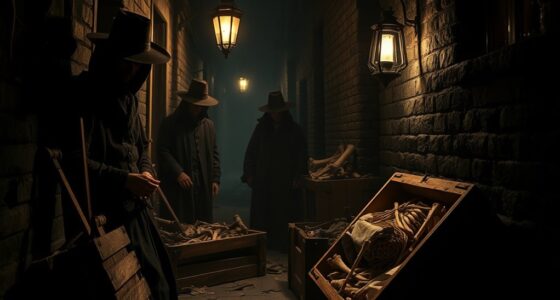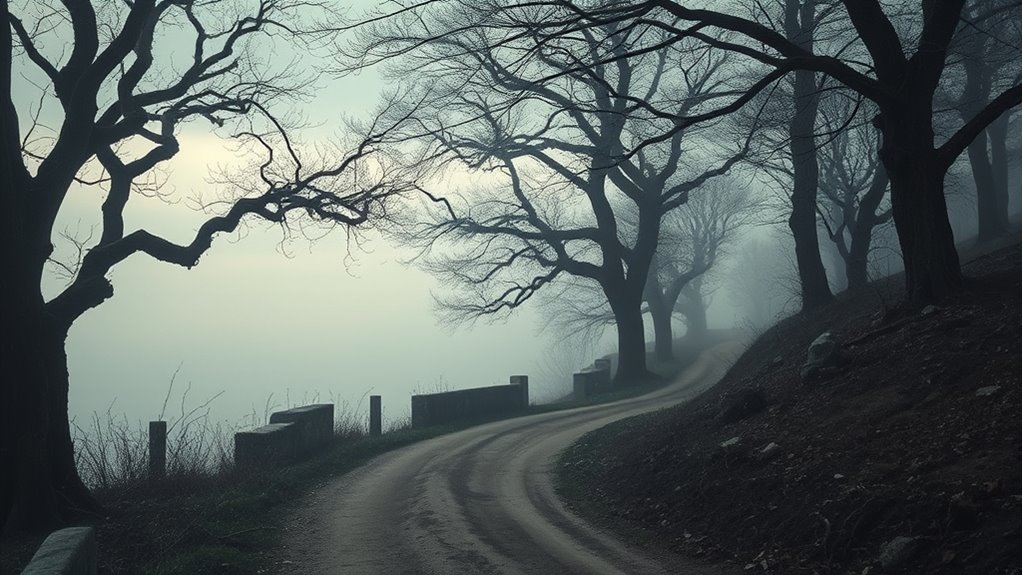
Corpse roads and ghost paths are ancient routes designed for funeral processions, carrying deep spiritual meaning. Communities used these pathways to connect the living with the domain of the dead, often avoiding populated areas and marking them with cairns or crosses. These routes helped guide spirits safely and prevent unrest or misfortune. They’re surrounded by legends of haunted spirits and rituals that ensured proper passage. To uncover more about their origins and significance, keep exploring these mysterious pathways.
Key Takeaways
- Sacred routes like corpse roads and ghost paths originated as spiritual pathways for funeral processions, connecting the living to the realm of the dead.
- These paths were intentionally placed through remote areas to protect communities from wandering spirits and ensure proper soul passage.
- Marked by cairns, crosses, or ritualistic acts, they served as boundaries between the living world and spiritual domain.
- Folklore depicts these routes as haunted, with stories warning against wandering spirits and emphasizing their protective significance.
- Remnants of these routes reflect ancient death customs, embodying spiritual beliefs about death, afterlife, and cultural memory.
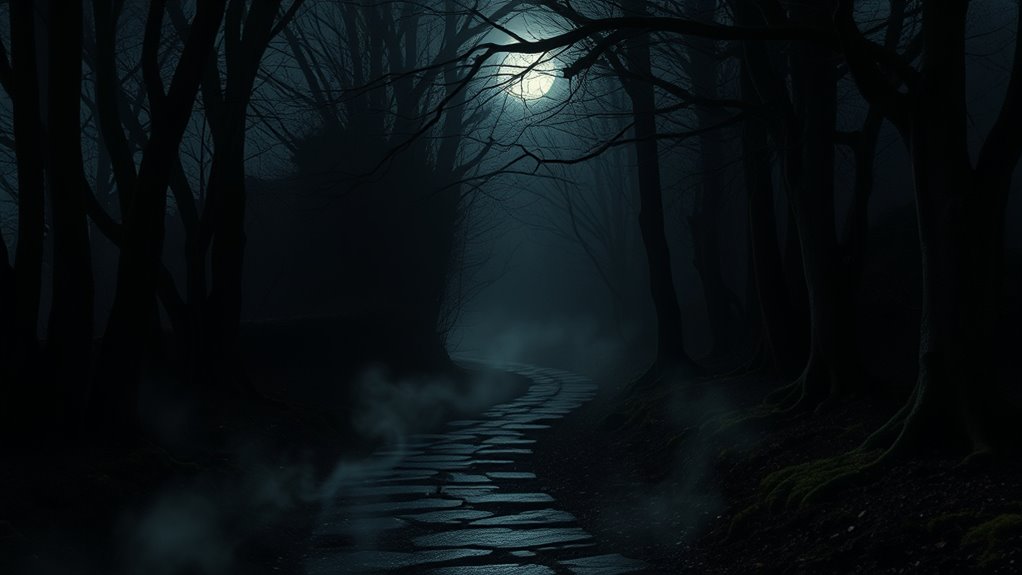
Throughout history, communities have used designated routes known as corpse roads and ghost paths to transport the dead, often avoiding populated areas or dangerous terrain. These routes weren’t just practical; they carried deep spiritual significance. When you think about funeral processions, imagine a journey that’s more than just moving a body from one place to another. These processions followed specific spiritual pathways believed to connect the living world with the domain of the dead. By adhering to these routes, communities aimed to protect the living from restless spirits and to honor the dead properly, guaranteeing their peaceful passage into the afterlife.
Communities historically used sacred routes for funeral processions to protect the living and honor the dead.
Many of these pathways were chosen because they avoided villages, farms, or other populated areas. Instead, they wound through remote forests, across hills, or along ancient tracks that seemed to hold a sacred purpose. It was thought that following these designated routes helped keep evil spirits or disruptive entities at bay, creating a boundary between the world of the living and the spiritual domain. The idea was to prevent spirits from wandering into the homes of the living or causing misfortune. These routes became deeply ingrained in local folklore, with stories warning of spirits or ghosts lurking along the way, which is why some of these paths earned names like ghost paths.
The funeral processions along these spiritual pathways often involved more than just a simple walk to the cemetery. They were imbued with rituals, prayers, and symbolic acts meant to guide the soul and guarantee it reached its final resting place. The routes themselves were sometimes marked by cairns, crosses, or other symbols that served as boundary markers and reminders of the sacredness of the journey. These markers helped those involved in the procession stay on the correct path and reinforced the spiritual importance of the route. Over time, communities believed that straying from these designated routes could bring misfortune or leave the spirit trapped.
In some areas, these ghost paths and corpse roads became part of local legends, haunted by the spirits of those who had not found peace. People avoided these routes at night or after certain hours, fearing encounters with wandering spirits or ghostly apparitions. The routes, thus, weren’t just practical pathways—they became symbols of spiritual protection and cultural memory. Today, remnants of these routes can still be found, serving as a reminder of how ancient communities viewed death as a sacred transition, with specific pathways designed to honor and safeguard the journey of the soul. Additionally, understanding these routes offers insight into the spiritual beliefs and customs of past societies surrounding death and the afterlife.
Frequently Asked Questions
How Did Corpse Roads Influence Local Community Rituals?
You observe that corpse roads shaped local community rituals by guiding funeral processions along specific routes, emphasizing their spiritual significance. During these processions, community members participate with reverence, reinforcing shared beliefs about the journey of the soul. These roads fostered a collective sense of connection, honoring the deceased and their spiritual passage. As a result, funeral processions along corpse roads became essential cultural practices, strengthening community bonds through reverence and tradition.
Are Ghost Paths Linked to Specific Historical Events?
Yes, ghost paths are often linked to specific historical events, serving as supernatural symbolism of past tragedies or significant moments. You might see these paths as ancestral connections, where spirits are believed to linger or return during certain times. These routes act as spiritual reminders, embodying the community’s collective memory and offering a tangible link between history, the supernatural, and the living world.
What Materials Were Used to Construct These Pathways?
You’ll find that these pathways were often constructed using local materials like gravel, stones, or compacted earth, chosen for their availability and durability. Sometimes, wood or turf was used to reinforce the path, ensuring it could withstand weather and frequent use. The choice of construction materials directly impacts the pathway’s durability, allowing it to serve as a reliable route over time. This careful selection helped preserve these ghost paths through centuries.
Do Modern Communities Recognize or Preserve These Routes?
Like guardians of history, modern communities often recognize these routes, valuing their archaeological significance. You’ll find efforts in preservation, whether through local history groups or heritage projects, keeping these ghostly paths alive. They serve as poignant reminders of the past, connecting communities to their roots. By maintaining these routes, you help preserve cultural memory, ensuring future generations appreciate the eerie beauty and historical importance of these ancient pathways.
How Do Beliefs About Corpse Roads Vary Across Cultures?
You’ll find that beliefs about corpse roads vary widely across cultures, often reflecting different funeral customs and spiritual symbolism. In some societies, such routes are seen as sacred pathways guiding spirits safely to the afterlife, while others view them as ominous or taboo. These customs shape how communities honor their dead, emphasizing respect, protection, or avoidance, depending on their spiritual beliefs and traditions.
Conclusion
As you walk along these ancient routes, you might wonder if they truly hold the spirits of the past. Some believe corpse roads and ghost paths are remnants of old funeral customs or spiritual gateways, while others see them as mere legends. The truth remains elusive, but their mysterious aura continues to weave through history and folklore. Whether fact or myth, these paths invite you to connect with centuries of stories etched into the landscape.