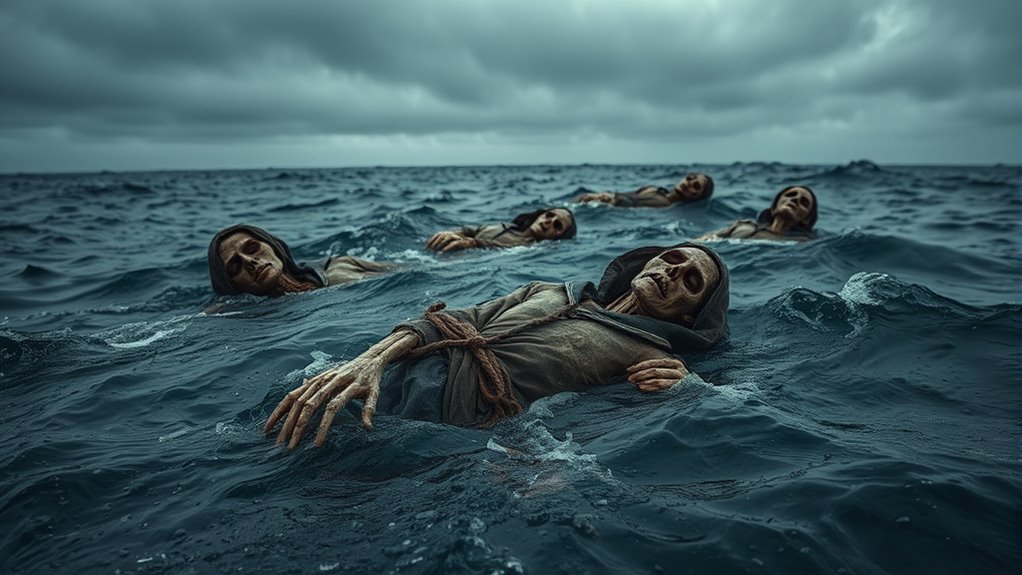

In sailor lore, corpses at sea are seen as powerful messages and warnings from the ocean, not just lifeless bodies. They symbolize spirits, omens, and signs of danger or guidance from the water. The tradition holds that these remains carry spiritual meaning, often linked to warnings of cursed waters or safe passage. Respectful rituals and folklore helped sailors interpret and cope with these mysteries. To uncover more about their deep origins and significance, continue exploring this fascinating subject.
Key Takeaways
- Corpses at sea are seen as omens, spirits, and messages from the ocean in maritime folklore.
- Floating bodies symbolize spiritual signs, warnings, or guides for sailors navigating dangerous waters.
- Rituals, prayers, and respectful treatment of the dead were used to appease spirits and ensure safe voyages.
- Stories of drowned spirits helped sailors cope with loss and reinforced the sea’s spiritual significance.
- Modern folklore persists, reflecting ongoing reverence and symbolic meaning of corpses at sea in maritime tradition.
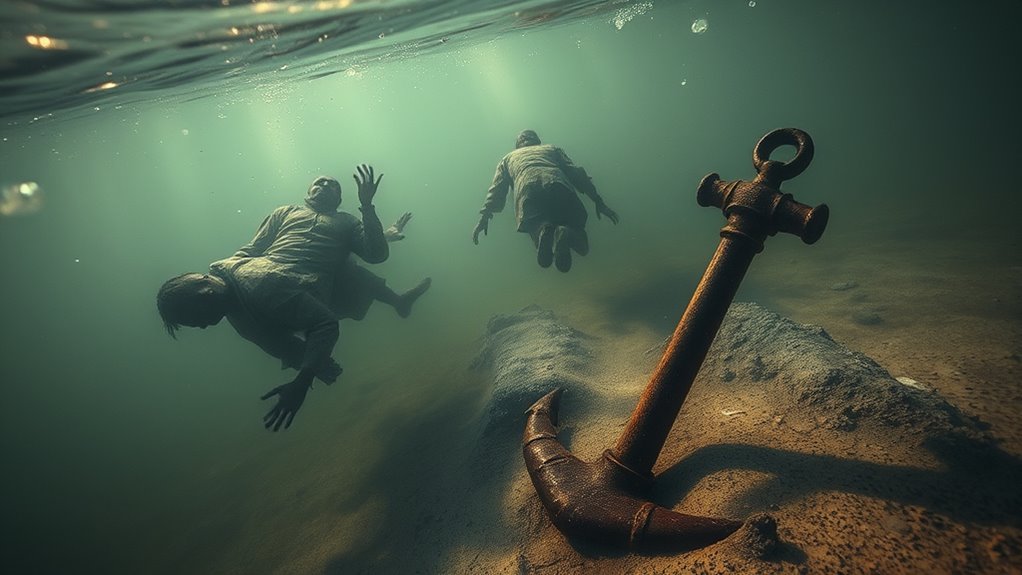
When ships sink or vessels abandon their crews at sea, the discovery of corpses becomes an unavoidable reality. In these somber moments, the ocean’s silence often conceals stories of tragedy, and shipwreck survival becomes a desperate fight against the relentless waves. Maritime folklore has long shaped how sailors interpret these grim finds, blending superstition, respect, and mystery into tales passed down through generations. You might hear stories about floating corpses as omens from the sea, warnings of impending storms, or manifestations of vengeful spirits. These narratives serve both as cautionary tales and as ways to make sense of the incomprehensible loss.
Floating corpses at sea are seen as omens, spirits, and messages from the ocean in maritime folklore.
In maritime folklore, a corpse at sea isn’t just a lifeless body; it’s a symbol imbued with meaning. Sailors believed that the sea had its own language, and the sight of a drifting body could be a sign from the ocean itself—perhaps a plea for mercy or a message from the drowned. Such stories helped crews cope with the trauma of shipwrecks and disappearances, turning grief into tradition. They often regarded these floating remains as the spirits of those lost, warning sailors of dangerous waters or cursed routes. These tales, rooted in superstition, reinforced the idea that the ocean was alive with unseen forces, and respecting it was essential for survival. Additionally, the use of rituals and prayers was believed to help ease the spirits’ unrest and ensure safe passage for future voyages.
You might also come across folklore that assigns spiritual significance to corpses at sea, with some cultures believing they serve as guides or protectors. For example, a body that drifts onto a beach might be seen as a sign that the victim’s spirit has found peace, or as a warning to future sailors. These stories often reinforced the importance of rituals, prayers, and offerings to honor the dead and appease the spirits, fostering a sense of connection between the living and the drowned. Such beliefs provided comfort in a harsh environment where death was an ever-present threat, and they helped maintain morale among crews facing the formidable challenges of maritime life.
Today, while modern technology has reduced the mystery surrounding corpses at sea, the folklore persists. It reminds us of the deep respect sailors have always had for the ocean’s unpredictable power. The stories of shipwreck survival and the spirits of the drowned continue to evoke a mix of awe and reverence. They serve as a reminder that, even in death, the sea keeps its secrets—secrets that sailors have tried to interpret through tales, legends, and rituals for centuries. In this way, maritime folklore keeps alive the memory of those lost and the enduring bond between humanity and the vast, mysterious ocean.

Sound Like a Sailor: The Book of Nautical Expressions
As an affiliate, we earn on qualifying purchases.
As an affiliate, we earn on qualifying purchases.
Frequently Asked Questions
How Did Sailors Historically Handle Deceased Crew Members Aboard Ships?
You learn that sailors historically handled deceased crew members with specific burial rituals rooted in maritime superstition. They often placed bodies in coffins or wrapped them in sailcloth, then committed them to the sea, believing it would appease spirits and ensure safe voyages. Sometimes, they threw the body overboard, accompanied by prayers or rituals, to prevent bad luck or displeasure from the maritime gods, reflecting deep-seated beliefs and traditions.
What Symbolic Meanings Are Associated With Corpses at Sea in Sailor Lore?
You see corpses at sea in sailor lore as rich with spiritual symbolism and cultural interpretations. They often represent the departed’s journey to the afterlife or serve as protective talismans to ward off evil spirits. Sailors believe these remains embody respect for the dead and acknowledge the spiritual connection between life and the sea. Such symbolism reinforces the sacred respect sailors hold for their fallen comrades and the ocean’s mysterious power.
Are There Specific Maritime Laws Regarding Burial at Sea?
You should know that maritime law sets specific burial regulations for burial at sea. These laws require you to follow proper procedures, such as using biodegradable materials and maintaining certain depths, to prevent pollution. You must also coordinate with authorities and adhere to international treaties like MARPOL. Failing to comply can result in penalties. So, always make certain you understand and follow these maritime laws when planning a burial at sea.
How Have Practices Regarding Corpses at Sea Evolved Over Centuries?
Over centuries, practices regarding corpses at sea have shifted from elaborate ship burial traditions to more practical nautical funeral rites. Historically, up to 80% of sailors believed proper rites guaranteed safe voyages. Today, many prefer simple burials or crew dispersal, reflecting changing customs and laws. You’ll notice these evolving traditions blend respect for the dead with safety and environmental concerns, shaping modern maritime burial practices.
What Are Modern Maritime Protocols for Dealing With Deceased Sailors?
Modern maritime protocols prioritize safety and dignity when dealing with deceased sailors. You follow strict procedures, including conducting respectful funeral rites, coordinating with maritime safety authorities, and ensuring proper documentation. You must isolate the body, prevent contamination, and use designated areas for handling remains. These practices help maintain safety standards at sea while honoring the fallen, reflecting evolving standards of respect and safety that protect all crew members.

RENEMEGO Amethyst Crystal Pendulum – Pendulos De Energia, Witchcraft Supplies for Divination, Wiccan Supplies and Tools, Spiritual Pointed Crystals for Altar Reiki Energy Balancing Chakra Meditation
Reiki Healing Crystal Pendulum: The pendulum is made of natural gemstone chips, copper wires, and surface used of…
As an affiliate, we earn on qualifying purchases.
As an affiliate, we earn on qualifying purchases.
Conclusion
As you now see, the lore of corpses at sea isn’t just stories—it’s a tapestry woven with history, superstition, and respect. These tales remind you that even in the vast, unforgiving ocean, the spirits of sailors linger like shadows, forever etched into maritime legend. Understanding their origins helps you appreciate the ocean’s boundless power and mystery, which, like an endless storm, can swallow entire histories in a single, roaring sweep.

Sheng Jewelry Anchor Urn Necklaces for Human Ashes Navy Cremation Jewelry Ocean Theme Memorial Keepsake Urn Pendant Necklace for Men Women (Silver), S025-S
Medical Material: Premium Grade Stainless steel pendant & chain will never rust, corrode, rust or stain. Screw &…
As an affiliate, we earn on qualifying purchases.
As an affiliate, we earn on qualifying purchases.
AZFVBQL Compass Necklace for Men Chain Stainless Steel Compass Pendants Male Jewelry
Compass Necklace Pendant Made from hypo-allergenic surgical grade stainless steel for long life. High polished.It is durable and…
As an affiliate, we earn on qualifying purchases.
As an affiliate, we earn on qualifying purchases.