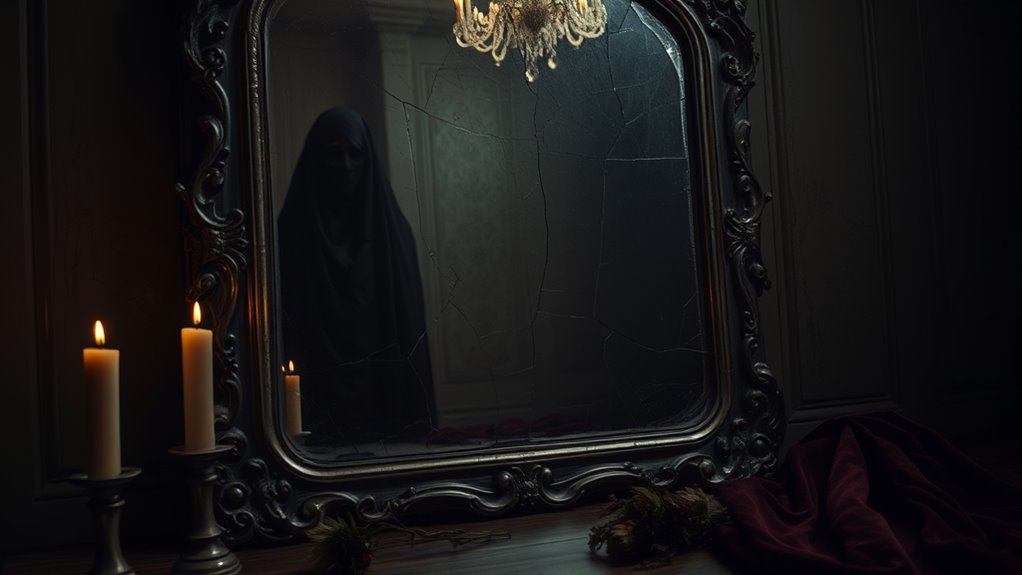

Covering mirrors during death customs stems from ancient beliefs that mirrors can trap spirits or serve as portals between worlds. Many cultures do this to protect the deceased’s soul from harm and prevent restless spirits from haunting the living. This tradition also shows respect for the departed and maintains spiritual harmony. If you keep exploring, you’ll discover the fascinating origins and cultural variations behind this meaningful practice.
Key Takeaways
- Covering mirrors during mourning originates from beliefs that mirrors can trap or reflect the spirit of the deceased.
- The practice is rooted in cultural superstitions aimed at protecting the soul and preventing spiritual disturbances.
- Different cultures, such as Jewish, Latin American, and Asian traditions, use mirror covering to honor the dead and ensure spiritual harmony.
- Covering mirrors symbolizes reverence for the departed, safeguarding the living from restless spirits and negative influences.
- The custom reflects universal themes of mourning, spiritual protection, and respect that persist across societies.

Have you ever wondered why people cover mirrors during certain times of grief or tragedy? It’s a practice rooted in a mix of superstitious beliefs and cultural variations that span centuries and societies. When tragedy strikes, especially the death of a loved one, covering mirrors is often seen as a way to respect the departed and prevent negative spiritual consequences. Some believe that mirrors can trap or reflect the soul, which is why covering them during mourning helps protect the deceased’s spirit from wandering or being trapped. Others think it’s about preventing the living from being haunted by images of death, which might intensify grief or invite misfortune.
Superstitions play a significant role in this tradition. For example, many cultures hold the belief that mirrors are portals between the physical world and the spiritual domain. During times of mourning, covering mirrors is thought to ensure that the soul of the deceased isn’t caught or disturbed, especially as the barrier between life and death becomes thinner. This belief is common in European traditions, where covering mirrors is part of funeral rites and mourning customs. In some cases, it’s believed that if mirrors aren’t covered, the soul of the deceased could become trapped or that the living might be cursed with bad luck or restless spirits. These superstitions aren’t just fears; they’re deeply embedded in cultural practices aimed at honoring the dead and safeguarding the living.
Many cultures believe mirrors are portals to the spiritual world, so covering them during mourning protects the soul and prevents restless spirits.
Cultural variations further influence how and when mirrors are covered. In Jewish mourning customs, for instance, mirrors are often covered for seven days after a death to encourage reflection on the spiritual journey and to avoid vanity during a time of mourning. In parts of Latin America, families might cover mirrors to prevent the soul of the departed from becoming trapped or to avoid seeing their reflection, which could attract negative spirits. In Asian traditions, covering mirrors might be linked to ancestor veneration and respect, emphasizing the importance of creating a sacred, undisturbed space for the deceased. Each culture has its own reasons, but they all revolve around the core idea of respecting the dead, protecting the living, and maintaining spiritual harmony.
Ultimately, covering mirrors during times of grief is a powerful symbol of reverence and protection. It’s a practice that transcends specific customs, rooted in universal human concerns about life, death, and the unseen world. Whether motivated by superstitions or cultural traditions, these acts serve as a reminder of the deep respect we hold for the departed and the importance of honoring their memory. It’s a tradition that continues to evolve, yet remains a poignant gesture of mourning and spiritual safeguarding across many societies.

FLIR E5 Pro - Commercial Thermal Imaging Camera with Wifi. High Resolution Infrared Camera with FLIR Ignite Cloud
Model E5 Pro: Handheld IR camera measures temperatures from -20°C to 400°C (-4°F to 752°F)
As an affiliate, we earn on qualifying purchases.
Frequently Asked Questions
Are Mirror Coverings Used in Modern Funeral Practices Worldwide?
You’ll find that mirror coverings are still used in some modern funeral customs worldwide, especially in cultures that emphasize mirror symbolism. These coverings help prevent the deceased’s spirit from being trapped or disturbed by reflections, aligning with traditional beliefs. While not universal, many communities incorporate this practice into their funeral customs, reflecting respect for the dead and their spiritual journey, blending old customs with contemporary practices.
How Do Different Cultures Interpret Mirror Covering During Death Rituals?
Like a scene from a ghost story, different cultures see mirror covering during death rituals as a way to safeguard the living from spirits. In some traditions, it’s rooted in superstitions about the soul’s journey, while others view it as symbolic of closing the chapter on life. Cultural variations reveal that this practice helps communities honor the deceased and ensure peace, blending superstition and symbolism seamlessly.
What Materials Are Traditionally Used for Covering Mirrors in Funeral Customs?
You’ll find that traditional materials for covering mirrors often include cloth, black fabric, or paper, which serve as a protective barrier over the reflective surface. These materials hold significant cultural symbolism, representing mourning or respect for the deceased. By covering the reflective surface, you honor customs that emphasize spiritual purity and prevent the soul’s reflection from interfering with the afterlife journey, reflecting deep-rooted beliefs about death and the beyond.
Are There Any Health or Safety Concerns With Covering Mirrors?
When you cover mirrors during a funeral, you might worry about health hazards like dust or mold buildup, which could pose safety risks. Make certain the covering material is clean and secure to prevent accidents or contamination. Use safety precautions such as gentle cleaning beforehand and avoid sharp edges or loose coverings. By taking these steps, you protect both your health and the safety of everyone involved, honoring tradition responsibly.
How Have Modern Beliefs About Death Influenced Mirror Covering Traditions?
Modern beliefs about death have made superstitions about mirrors more prominent, causing you to cover mirrors to prevent spirits from being trapped. This tradition also has psychological effects of covering, such as providing comfort or reducing fear during mourning. You might find that these beliefs help you process grief by creating a sense of protection or separation from the spiritual domain, reflecting how cultural perceptions of death influence personal mourning practices.

FOXWELL RT280 Thermal Imaging Camera, 320 X 240 2.8" LCD Screen Thermal Camera, TISR Resolution 240 x 180, 25Hz Handheld Infrared Cameras with Laser, PC Analysis, Photo & Video Recording, 8GB Storage
【Enhanced Thermal Clarity for Precise Inspections】The RT280 handheld thermal imaging camera features a 2.8-inch 320×240 LCD screen for...
As an affiliate, we earn on qualifying purchases.
Conclusion
Next time you see mirrors covered during a funeral, remember it’s more than tradition—it’s a symbol of mourning and respect. Imagine a family covering their loved one’s mirror, believing it helps guide the spirit. This simple act connects us to centuries of customs rooted in honoring the dead. By understanding these practices, you gain insight into how cultures process grief and celebrate life beyond death, reminding us that every gesture holds deep meaning.

FLIR TG165-X Thermal Imaging Camera with Bullseye Laser: Commercial Grade Infrared Camera for Building Inspection, HVAC and Electrical
MODEL TG165-X: 4,800 pixel IR camera measures temperatures from -25°C to 300°C (-13°F to 572°F)
As an affiliate, we earn on qualifying purchases.

Klein Tools TI223 Mobile Thermal Imaging Camera, Thermal Imager for iOS and Android, 19,200 Pixels, Wide Temperature Range of -4 to 752-Degree Fahrenheit, Professional Infrared Camera
19,200-PIXEL RESOLUTION: High-quality thermal imaging camera delivers excellent resolution for troubleshooting hot and cold spots in electrical and...
As an affiliate, we earn on qualifying purchases.