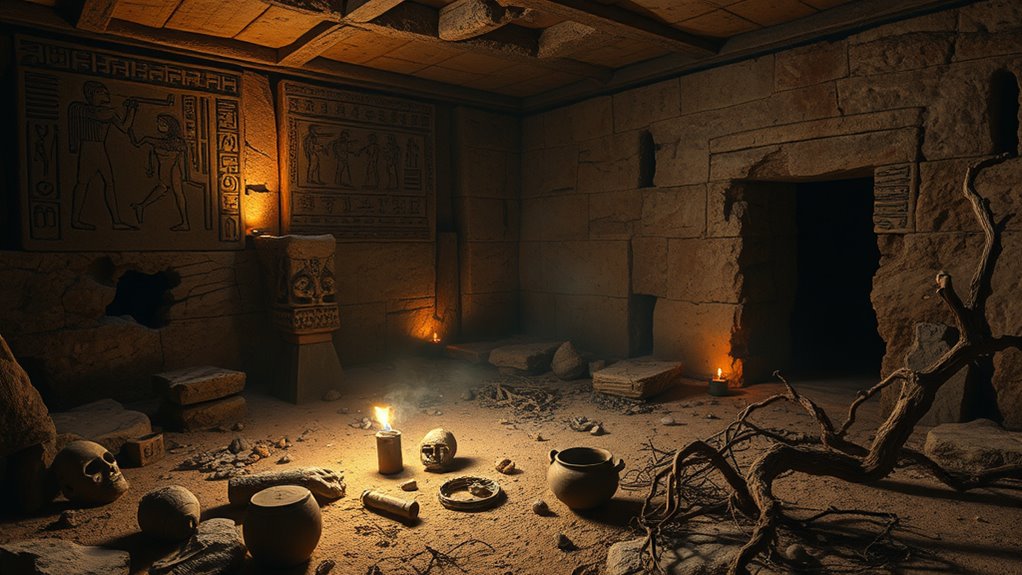

Cursed tombs stem from ancient beliefs that disturbing sacred resting places could unleash divine wrath, misfortune, or disasters. These legends often warn explorers to respect the dead, reflecting cultural fears and mythology, especially from civilizations like Egypt. While many think curses are supernatural, archaeologists recognize tangible risks like structural collapse or toxic substances. If you want to understand how these legends developed and what they really mean today, there’s more to uncover below.
Key Takeaways
- Cursed tombs originate from ancient cultural beliefs that disturbing the dead could invoke divine or supernatural retribution.
- Legends and myths have historically linked tomb disturbances to misfortune, illness, or death, reinforcing fears of curses.
- Archaeologists approach these sites with caution due to physical dangers and cultural respect, rather than believing in supernatural curses.
- The idea of tomb curses served to discourage tomb raiding and preserve sacred burial sites in ancient societies.
- Modern understanding attributes “curses” to cultural storytelling, with risks rooted in physical hazards rather than supernatural forces.
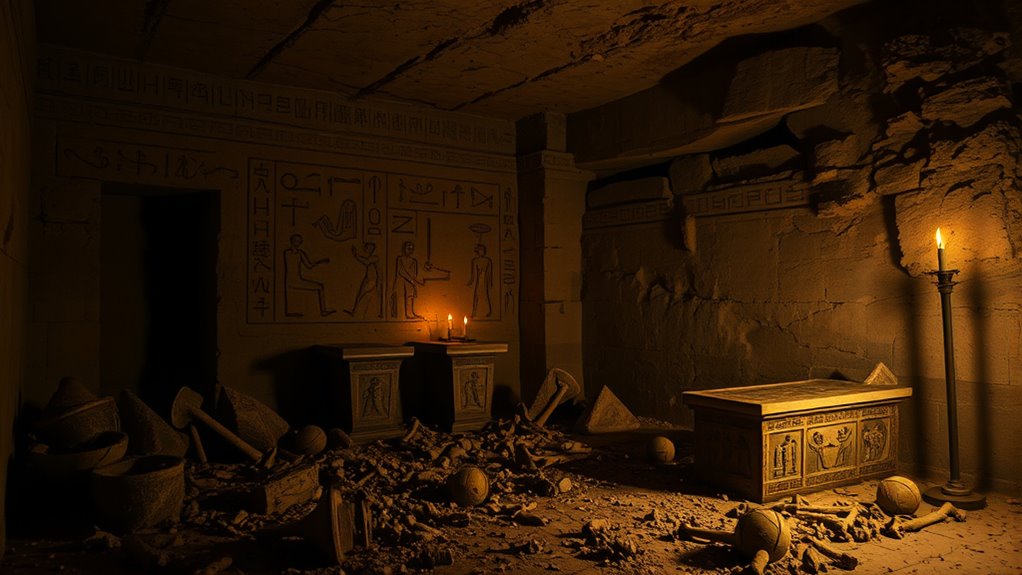
Throughout history, archaeologists have uncovered tombs believed to be cursed, sparking fears that disturbing these ancient sites might bring misfortune. These stories often stem from ancient curses—powerful warnings inscribed on tomb walls or passed down through legends—that warn against disturbing the resting places of the dead. Such tales heighten the tension surrounding excavation risks, making archaeologists cautious before opening these sacred or supposedly cursed sites. The idea of ancient curses persists because many ancient cultures believed that disturbing the dead could unleash divine wrath, hauntings, or disasters upon the living. These beliefs served as warnings to respect the dead and preserve the sanctity of burial sites, but they also fueled the myth that breaking these tombs could trigger supernatural consequences. Additionally, the cultural storytelling surrounding these sites often amplifies fears, regardless of scientific evidence. When you consider excavation risks linked to cursed tombs, it’s not just about physical dangers from collapsing structures or hidden traps. Instead, the fear of supernatural repercussions plays a significant role. Stories from ancient Egypt, for example, warn that removing treasures or disturbing the mummies could invoke curses that cause illness, misfortune, or death. These narratives have persisted through centuries, often amplifying the perceived dangers of unearthing such sites. Modern archaeologists, aware of these legends, approach these tombs with both caution and skepticism. They follow strict protocols, knowing that beyond the physical risks, they might be treading into a domain filled with symbolic or spiritual hazards. However, many experts argue that these curses are more about cultural storytelling than actual supernatural threats. They believe the real dangers lie in the physical risks of excavation—such as unstable structures, toxic substances like mold or ancient chemicals, or the accidental release of harmful biological material. Yet, the allure of these cursed tombs persists, fueling a mixture of fascination and fear. People are drawn to the idea that some ancient sites are off-limits because of sacred or cursed reasons, which only adds to their mystique and the perceived risks of excavation. In the end, whether driven by genuine fear or cultural storytelling, the concept of cursed tombs continues to influence archaeological work. It reminds you that beneath the surface, these sites are not just archaeological treasures but also cultural symbols steeped in history and myth. Respecting the stories and legends tied to these tombs is essential, even as modern science seeks to uncover their secrets safely. The balance between curiosity and caution remains crucial in exploring these ancient mysteries, ensuring that you honor both the past and the risks involved in uncovering it.
Frequently Asked Questions
Are There Real Curses Associated With Ancient Tombs?
There are no real curses associated with ancient tombs, despite superstitious beliefs. Archaeological skepticism suggests these stories are myths or misinterpretations, often fueled by sensationalized media. You might encounter tales of curses to deter tomb robbers, but evidence shows no supernatural power affecting modern-day explorers. Instead, these stories serve cultural or psychological purposes, reinforcing superstitions rather than reflecting actual curses rooted in history.
How Do Archaeologists Protect Themselves From Tomb Curses?
You protect yourself from tomb curses by following strict safety protocols. Wear protective amulets to ward off negative energies and perform ritual purification before entering. These measures help guarantee you’re spiritually cleansed and safeguarded. Additionally, archaeologists often avoid disturbing cursed areas unnecessarily and use symbolic barriers to prevent direct contact with potential negative influences. Combining these practices minimizes risks when exploring ancient tombs.
Have Any Curses Ever Been Proven to Cause Harm?
You might wonder if curses have ever truly caused harm; while superstitious beliefs have fueled fears, there’s little historical evidence to support this. Imagining dark tombs whispering ancient secrets, it’s tempting to think curses could be real, but science shows no confirmed cases of a curse causing injury or misfortune. Most harm results from accidents or natural causes, not supernatural curses, making them more myth than reality.
What Are Some Famous Cursed Tombs Discovered so Far?
You’ve probably heard of famous cursed tombs like the tomb of Tutankhamun, which legendary artifacts and superstitious beliefs surround. Other notable examples include the Mausoleum of Qin Shi Huang and the Tomb of the Green Knights. These tombs gained notoriety because of stories about curses that supposedly protect the resting places, fueling fears and legends that continue to captivate explorers and enthusiasts alike.
Do Modern Excavations Encounter Curses or Supernatural Phenomena?
Modern excavations rarely encounter supernatural phenomena, with less than 1% of archaeological digs reporting supernatural encounters. While archaeological fears about curses persist, scientific explanations often dismiss these stories. Most archaeologists focus on careful, evidence-based methods, knowing that supernatural encounters are usually stories or misinterpretations. Nonetheless, the myth persists, fueling curiosity and caution during excavations, but there’s no substantial proof that modern explorers face real curses or supernatural phenomena.
Conclusion
You might think cursed tombs are just stories to scare explorers, but some believe the curses stem from real fears of disturbing sacred sites. While there’s no concrete proof of curses causing harm, the idea persists because of archaeological mishaps and legends. Whether myth or reality, the fascination with cursed tombs reminds us of the respect and caution owed to ancient secrets. Ultimately, respecting these sites guarantees history remains preserved and safe for future generations.