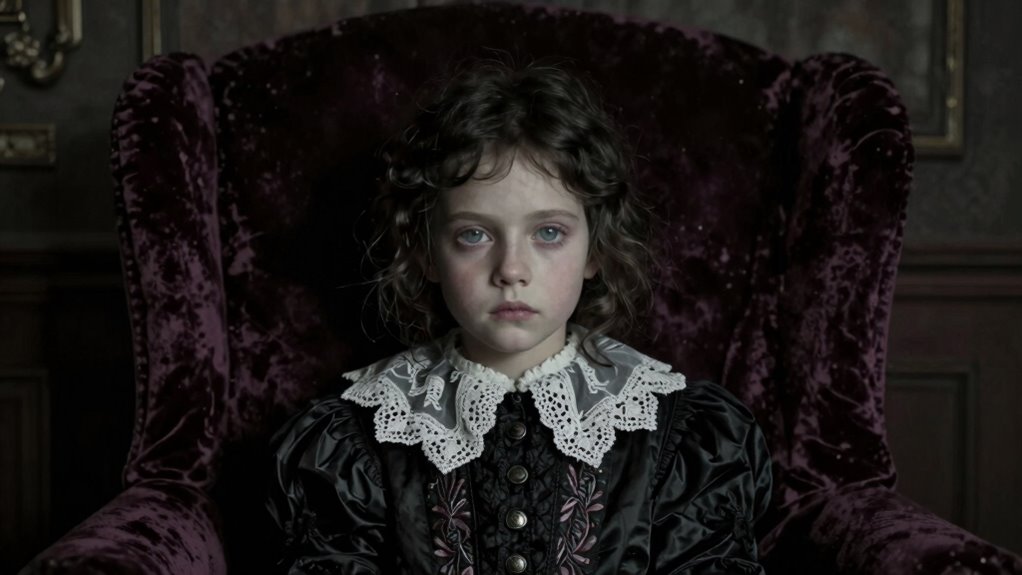

Victorian society was captivated by death portraits because they allowed you to see death as a natural, meaningful part of life. These portraits showed loved ones as if they were alive, creating a lasting memorial and easing the pain of loss. They were often surrounded by symbols and rituals that humanized death, making it feel closer and more comfortingly eternal. To discover how these images shaped Victorian views on mourning, keep exploring this poignant tradition.
Key Takeaways
- They humanized death, making it a shared, tangible experience through realistic and respectful depictions of the deceased.
- Death portraits served as lasting memorials, reinforcing emotional bonds and remembrance for loved ones.
- Victorian society viewed death as a natural, meaningful part of life, transforming mourning into a visually expressive tradition.
- They reflected cultural efforts to find beauty and comfort in loss, blending symbolism and ritual to cope with mortality.
- The portraits contributed to a broader fascination with mortality, emphasizing eternal connection and the importance of remembrance.
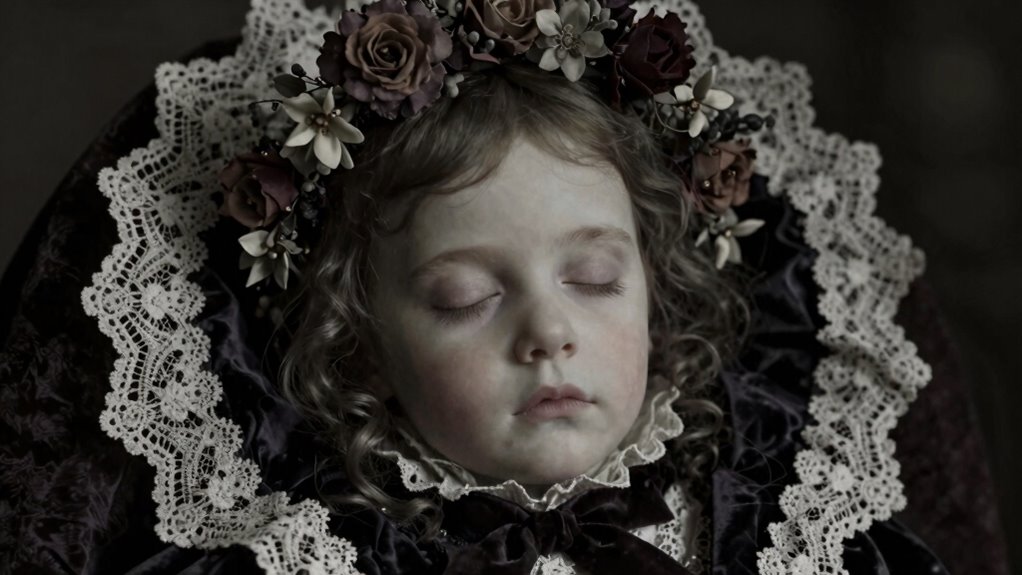
You might notice how these portraits often differ from typical family photos. They are frequently formal, with the deceased posed as if alive, sometimes surrounded by family members or in a setting that hints at their personality or social standing. The act of creating these images was deeply intertwined with mourning practices. Families would often display these portraits prominently during funerals and mourning periods, reinforcing the connection between the living and the dead. They provided comfort, allowing loved ones to feel close to those they lost, especially when physical presence was no longer possible. Additionally, the mourning customs surrounding death portraits often involved specific rituals and symbolic objects that deepened the emotional significance of these images. Mourning jewelry plays a significant role in understanding why death portraits captivated the Victorian mind. These jewelry pieces, often made from hair or featuring photographs of the deceased, became wearable memorials that kept loved ones close. Wearing mourning jewelry was a daily reminder of loss, and it complemented the visual memorials in the form of death portraits. The cultural significance of these practices reveals how Victorian society processed grief and sought to find beauty in remembrance. This layered approach to mourning reflected a broader cultural attitude toward death as a natural and meaningful part of life. You can see how these mourning customs and death portraits work hand in hand to shape Victorian attitudes toward death. They transform what might be seen as macabre into expressions of love and remembrance. The fascination comes from the way these images and rituals humanize death, turning it into a shared experience that honors the deceased’s memory. In a time when mortality rates were high and death often struck suddenly, these portraits and mourning practices offered a comforting way to hold on to loved ones, making their memory tangible and eternal. The funeral rituals further illuminate how deeply ingrained these practices were in Victorian culture. An understanding of death symbolism can deepen appreciation for the layered symbolism embedded in these mourning artifacts.

Victorian Gothic Frame Death Portrait with Skull and Spiders T-Shirt
Goth grunge emo punk vampire witch slogans 4 death rockers, evil divas bad guys & dolls rebel ghouls…
As an affiliate, we earn on qualifying purchases.
As an affiliate, we earn on qualifying purchases.
Frequently Asked Questions
How Were Death Portraits Created and Preserved During the Victorian Era?
You see that death portraits in the Victorian era were created through funeral photography, capturing the deceased often posed and dressed as if alive. Artists used artistic symbolism, like flowers or angels, to honor the departed and evoke emotion. These portraits were carefully preserved, often framed or kept in family albums, serving as cherished mementos. They reflected the era’s fascination with mortality and the desire to remember loved ones vividly.
Did Families Keep Death Portraits in Their Homes Permanently?
Yes, Victorian families often kept death portraits in their homes permanently. They displayed these images during funeral rituals and beyond, as a way to remember loved ones. Using artistic techniques like retouching and careful posing, they created respectful, serene portraits. These images served as emotional keepsakes, helping families cope with loss and maintain a connection with the departed long after the funeral rites concluded.
Were Death Portraits Considered Respectful or Morbid by Victorian Society?
You see, Victorian society viewed death portraits through the lens of post mortem artistry, considering them respectful memorials rather than morbid images. Cultural perceptions shaped how families cherished these photographs, seeing them as a way to honor loved ones and preserve memory. While modern eyes might find them unsettling, Victorians regarded them as meaningful, solemn tributes that reflected their values around mourning and remembrance.
How Did Death Portraits Influence Victorian Mourning Customs?
You might think Victorian death portraits were just morbid keepsakes, but they actually shaped mourning customs through Victorian artistic styles and societal perceptions. These portraits encouraged a more personal, visual way to mourn, making loss feel tangible. Ironically, they helped normalize death’s presence in daily life, blending respect with societal expectations. This influence led to elaborate rituals and a focus on memorialization, forever altering how Victorians processed grief.
Were Death Portraits Ever Used for Identification Purposes?
Yes, death portraits were sometimes used for identification purposes. You might notice funeral photography, where post mortem artistry captured the deceased’s features, helping families recognize loved ones. These images served practical functions, especially when identification was essential. Victorian mourners often kept these photographs as lasting mementos, blending memorial art with post mortem artistry, which made the images both meaningful and useful for identification during that era.

Victorian-style Hand Dangle Earrings with Vintage Mourning Beads
Mourning Earrings
As an affiliate, we earn on qualifying purchases.
As an affiliate, we earn on qualifying purchases.
Conclusion
You see, Victorian death portraits aren’t just images—they’re haunting whispers from the past, capturing souls frozen in time like delicate butterflies caught in amber. These portraits invite you into a world where life and death dance closely, painting a poignant tapestry of love, loss, and longing. They beckon you to peer beyond the surface, revealing the fragile beauty of mortality, forever etched in the quiet, haunting glow of a bygone era’s memory.

3-Ring Photo Album 504 Pockets Hold 4×6 Photos, Hunter Green
Leatherette cover with gold stamping
As an affiliate, we earn on qualifying purchases.
As an affiliate, we earn on qualifying purchases.

Funeral Poster Board Personalized, 24 x 36 Inch Size, 3/16" Foam Board, Funeral Portrait, Celebration Of Life Sign Ideas, Memorial Poster Board For Funeral, In Loving Memory,Single Photo Design
Personalized Touch with Funeral Prints Poster: Honor your loved one’s memory with a personalized sign for their funeral,…
As an affiliate, we earn on qualifying purchases.
As an affiliate, we earn on qualifying purchases.