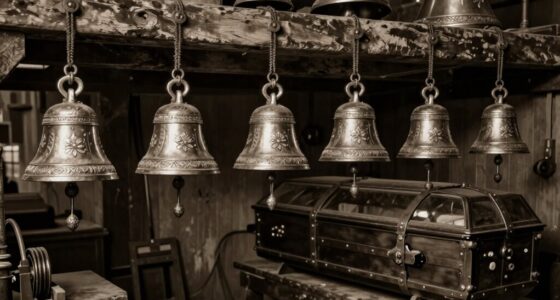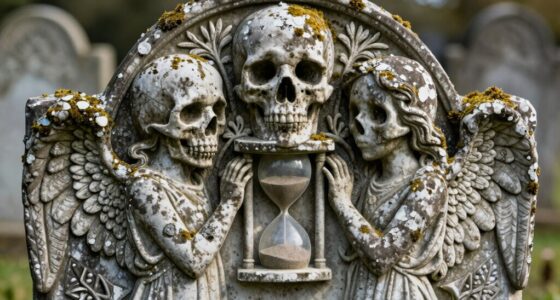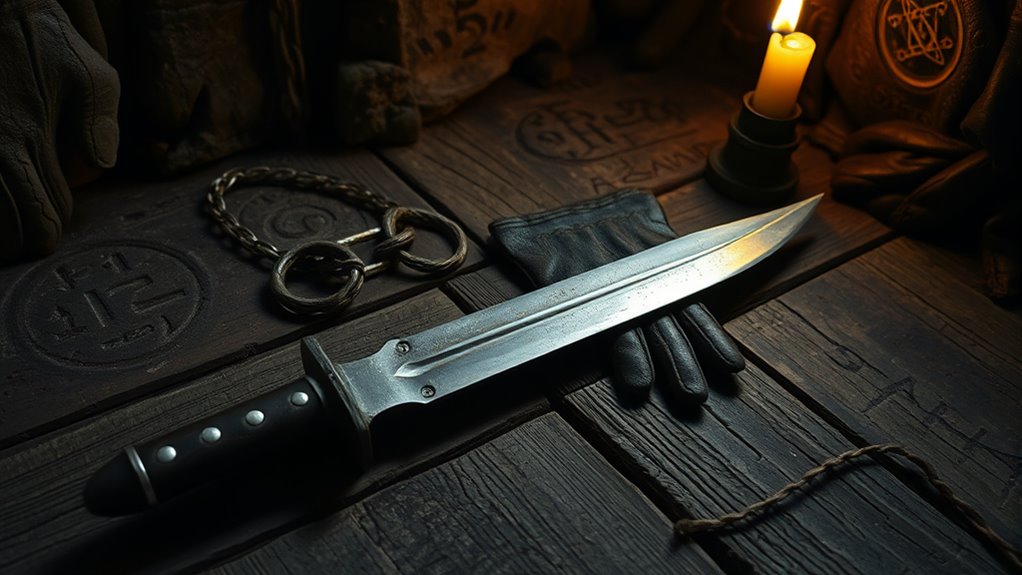

You might find that executioners have long been wrapped in superstition and fear, seen as mystical intermediaries between society and supernatural forces. Their roles involved ritualized methods of execution—like beheading and burning—that symbolized divine justice and moral cleansing. These acts often carried layered meanings, with specific tools and locations holding spiritual significance. Understanding these traditions reveals how executioners embodied societal norms and spiritual beliefs, and if you continue exploring, you’ll uncover even deeper connections between superstition and justice.
Key Takeaways
- Historically, executioners were viewed as supernatural intermediaries embodying divine justice and spiritual authority.
- Their methods and tools carried symbolic meanings linked to ritual purification and moral cleansing.
- Superstition attributed mystical powers to executioners, casting them as bearers of supernatural or protective forces.
- Public executions functioned as communal rituals, reinforcing societal morals through symbolic acts and divine symbolism.
- The mystique surrounding executioners reinforced beliefs in their role as spiritual mediators between humans and divine or supernatural realms.
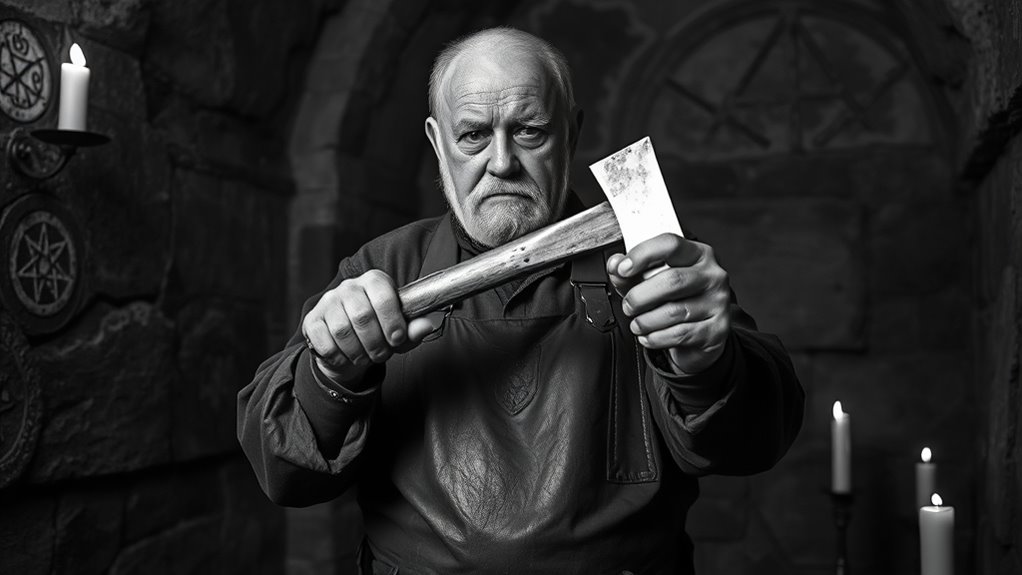
Throughout history, executioners have been shrouded in superstition and fear, often viewed as ominous figures tied to dark rituals and supernatural beliefs. In medieval justice, their role extended beyond mere execution; they embodied the grim enforcement of societal order through ritual symbolism that reinforced the power of the state. You might imagine that the public saw executioners not simply as enforcers of law but as essential participants in a symbolic act that maintained cosmic and social balance. The methods of execution, such as beheading, hanging, or burning, were often steeped in ritual significance, designed to send a clear message: justice was divine and absolute. These acts, performed in public, served as theatrical displays that reinforced societal hierarchies and moral codes. As an executioner, you would have been more than a mere technician of death—you were a living embodiment of the social order, channeling spiritual and cultural beliefs through your work.
In medieval times, justice was deeply intertwined with ritual symbolism. The execution process often involved specific gestures, objects, and locations that carried layered meanings. For instance, the chopping block or scaffold wasn’t just a tool or platform; it represented the severing of evil from society, a tangible symbol of moral cleansing. The act of tying the condemned, the use of specific instruments, and the manner of execution itself reflected ritualized procedures rooted in superstition, meant to invoke divine justice or ward off evil spirits. You might have observed that these rituals aimed to purify the community and reaffirm divine authority, with the executioner playing a pivotal role in this symbolic act. The crowd’s participation amplified this effect, as witnesses became part of a communal ritual designed to reinforce societal values and deter crime through the spectacle of punishment. Additionally, the belief that executioners served as supernatural intermediaries contributed to their mystique and the rituals surrounding their work.
medieval ritual execution tools
As an affiliate, we earn on qualifying purchases.
As an affiliate, we earn on qualifying purchases.
Frequently Asked Questions
How Did Executioners Acquire Their Social Status Historically?
You might assume executioners had high social status, but historically, they faced social stigma. They often gained their position through medieval guilds, which regulated their work and skills. Despite their essential role in justice, society viewed them with suspicion and disdain, making it hard for them to attain respect. Their social standing was usually low, and they struggled to escape the negative reputation linked to their grim duties.
What Role Did Superstition Play in Executioner Rituals?
Superstitions cast a shadow over executioner rituals, turning them into symbolic gestures that ward off evil spirits. You see, these superstitious rituals act like armor, protecting both the executioner and society from unseen forces. They transform grim duties into sacred acts, emphasizing the gravity and superstition surrounding death. By incorporating these beliefs, the rituals become more than mere procedures—they embody a collective hope to tame the chaos of mortality.
Were Executioners Ever Considered to Have Supernatural Powers?
You might think executioners were believed to have supernatural powers, but there’s little evidence they were considered to possess mystical abilities. Instead, superstitions often attributed them a kind of dark power or feared influence over death, fueling myths around their role. These beliefs heightened fears and gave executioners a sinister reputation, but they weren’t seen as truly having supernatural powers—they were just part of the superstition-driven fears surrounding death and justice.
How Did Public Perception of Executioners Change Over Time?
You might think executioners were always feared, but over time, public perception shifted from fear to moral judgment. As societies grew more humane, people began seeings executioners less as supernatural figures and more as necessary agents of justice. Public fear declined, replaced by a sense of moral distancing, and executioners became symbols of government authority rather than mystical beings. This change reflects evolving attitudes toward justice and human rights.
Are There Modern Practices Linked to Historical Superstitions About Executioners?
Yes, modern folklore still links executioners to medieval rituals and superstitions, often portraying them as ominous figures. You might see this in stories or films where executioners are depicted with supernatural powers or cursed roles. These beliefs continue to influence perceptions, even though today’s practices are strictly procedural. The lingering superstition keeps the old fears alive, blending historical rituals with contemporary culture in a way that sparks curiosity and unease.
public execution replica models
As an affiliate, we earn on qualifying purchases.
As an affiliate, we earn on qualifying purchases.
Conclusion
As you reflect on the history of executioners and superstition, remember they’re like shadows cast by society’s fears and beliefs. Their roles symbolize the thin line between justice and superstition, a mirror to human morality’s fragile edge. Just as the noose hangs silently, these traditions linger, whispering that even in darkness, hope for understanding can dawn. Ultimately, their story reminds you that myths often conceal deeper truths waiting to be uncovered beneath the surface.
superstition symbolism in justice artifacts
As an affiliate, we earn on qualifying purchases.
As an affiliate, we earn on qualifying purchases.
historical executioner costumes
As an affiliate, we earn on qualifying purchases.
As an affiliate, we earn on qualifying purchases.