
The origins of grave goods and burial objects stem from ancient traditions of honoring the dead and expressing social status, spiritual beliefs, and cultural values. People started including items like jewelry, tools, and pottery in tombs to serve the deceased in the afterlife, reflect societal hierarchy, and reinforce cultural identity. These objects also reveal mortuary rites and societal structures. By exploring the history behind these artifacts, you’ll uncover how ancient societies viewed life, death, and what lay beyond.
Key Takeaways
- Grave goods originated from early rituals to honor the dead and ensure protection or provision in the afterlife.
- Ancient societies began placing personal and symbolic objects in graves as offerings and status indicators.
- Burial objects reflect cultural beliefs, spiritual practices, and societal hierarchy evolving over time.
- The use of grave goods expanded with technological advances, trade, and cultural exchanges.
- Early burial practices aimed to communicate social identity, religious beliefs, and cultural values across generations.

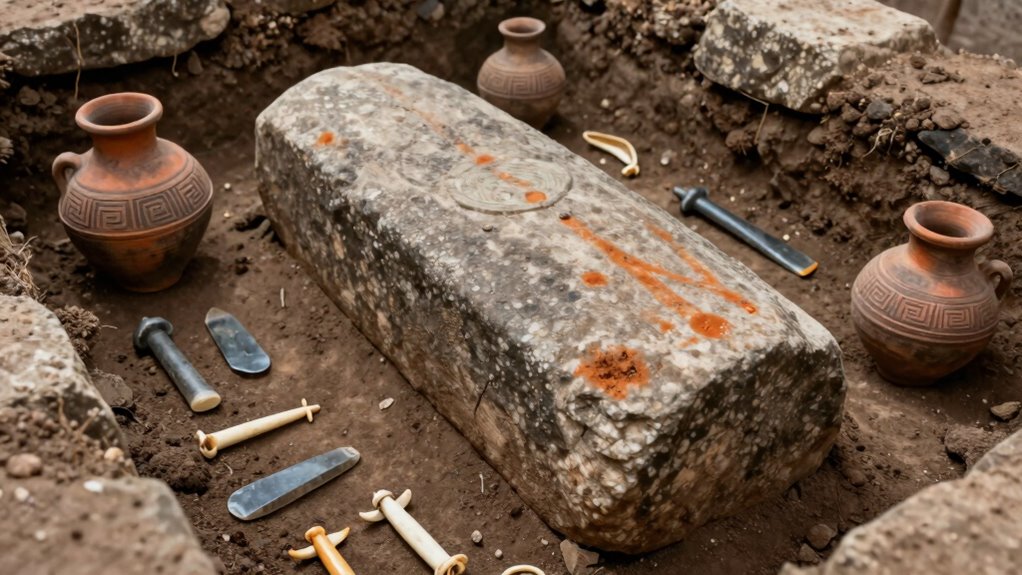
Throughout human history, the practice of including grave goods and burial objects in tombs has served as a meaningful way to honor the dead and convey their social status. When you explore ancient burial sites, you quickly realize that these objects are more than just offerings—they’re a window into the funeral rituals of past cultures. These artifacts reveal what a society valued, whether it was power, wealth, spiritual beliefs, or daily life. As you examine tombs filled with pottery, jewelry, weapons, or tools, you gain insight into how ancient peoples approached death and what they believed awaited the deceased. The presence and type of burial objects often reflect complex social hierarchies and cultural norms, making them invaluable for understanding historical communities.
From an archaeological standpoint, grave goods carry immense significance. They help archaeologists piece together the customs, trade networks, and technological advancements of ancient civilizations. Every object left behind is a clue, helping you reconstruct rituals and societal structures that otherwise would be lost to time. For instance, elaborate burial chambers filled with precious objects suggest a society with stratified social classes, where the elite could afford luxurious grave goods. Conversely, simpler burials might indicate more egalitarian communities. These differences provide a clearer picture of social organization and economic conditions. Additionally, the types of objects buried with individuals often have symbolic meanings, tying into spiritual or religious beliefs about the afterlife. You might see amulets for protection or ritual items meant to serve the deceased in the next world. Understanding cultural practices related to funerary objects enriches your comprehension of these ancient societies.
Grave goods reveal social hierarchies, trade, technology, and spiritual beliefs of ancient civilizations.
Funeral rituals involving grave goods also serve to reinforce cultural values and collective identity. When you observe the placement of objects or specific rites performed during burials, it becomes evident that these practices weren’t random. They were deliberate acts meant to honor the deceased and guarantee their transition into the afterlife, if such beliefs existed. The act of burying objects can also be seen as a form of communication, sending messages across generations about what is important to the community. Over time, these rituals and the accompanying objects evolve, reflecting changing beliefs, technological innovations, or contact with other cultures. Understanding the cultural significance of these artifacts allows us to better grasp the worldview and societal priorities of ancient peoples. By analyzing these objects, archaeologists can also trace the influence of external cultures and the spread of new ideas or technologies.
In essence, grave goods and burial objects are vital for understanding ancient funeral rituals and their archaeological significance. They’re more than mere artifacts; they’re narratives etched into stone, pottery, or metal, speaking volumes about the people who created them. By studying these objects, you reveal stories of social structure, spiritual beliefs, and cultural identity—stories that have endured long beyond the lives of those they commemorate.
ancient burial jewelry
As an affiliate, we earn on qualifying purchases.
As an affiliate, we earn on qualifying purchases.
Frequently Asked Questions
How Did Different Cultures Develop Unique Burial Practices?
You see that different cultures develop unique burial practices through their funerary rituals and cultural symbolism. These rituals reflect their beliefs about life, death, and the afterlife, shaping the objects they include in graves. For example, some cultures place valuables or symbolic items with the deceased to honor their journey or status. Variations in these practices reveal how societies interpret death and what they consider essential for the afterlife.
What Materials Were Most Commonly Used for Grave Goods?
You’ll find that bone and stone were the most common materials for grave goods, used in many funerary rituals. About 60% of ancient cultures included these materials in their symbolic artifacts, reflecting their availability and cultural significance. Funerary rituals often involved embedding items like shell jewelry or clay figurines, which served as essential symbolic artifacts. These materials helped convey social status, spiritual beliefs, and personal identity in burial practices.
Are Grave Goods Linked to Social Status or Wealth?
Yes, grave goods are often linked to social status or wealth. You can see this through funerary symbolism and ritual significance, as wealthier individuals are typically buried with more elaborate items that reflect their higher social standing. These objects serve to honor the deceased and signify their importance within the community, reinforcing social hierarchies and providing insight into their life and status.
How Do Archaeologists Date and Authenticate Burial Objects?
You can date and authenticate burial objects through methods like ceramic typology and radiocarbon dating. Ceramic typology involves comparing pottery styles to established chronological sequences, helping you estimate age. Radiocarbon dating measures the decay of carbon isotopes in organic materials associated with the objects, providing precise age ranges. These techniques combined allow you to verify the antiquity and authenticity of burial objects effectively.
What Influence Did Trade Have on Burial Object Contents?
Trade routes and cultural exchange profoundly influenced burial object contents by introducing new materials and ideas. When you examine artifacts, you’ll notice exotic items or styles that reflect distant regions, showing how trade expanded access to diverse resources. This exchange often led to a blending of cultural symbols, making burial objects more elaborate and meaningful. As a result, trade played a key role in shaping the diversity and significance of burial offerings across ancient societies.
funerary artifacts display case
As an affiliate, we earn on qualifying purchases.
As an affiliate, we earn on qualifying purchases.
Conclusion
You now understand the fascinating origins of grave goods and burial objects, uncovering their cultural, spiritual, and societal significance. By examining these artifacts, you see how societies sought to symbolize status, guarantee safety, or honor ancestors. Remember, each object tells a story—spanning centuries, shaping cultures, and sharing secrets of the past. So, explore further, discover their stories, and let these burial beauties inspire your curiosity about human history and heritage.
burial ritual tools replica
As an affiliate, we earn on qualifying purchases.
As an affiliate, we earn on qualifying purchases.
ancient grave goods replica
As an affiliate, we earn on qualifying purchases.
As an affiliate, we earn on qualifying purchases.