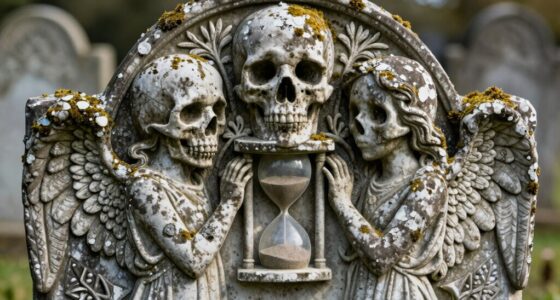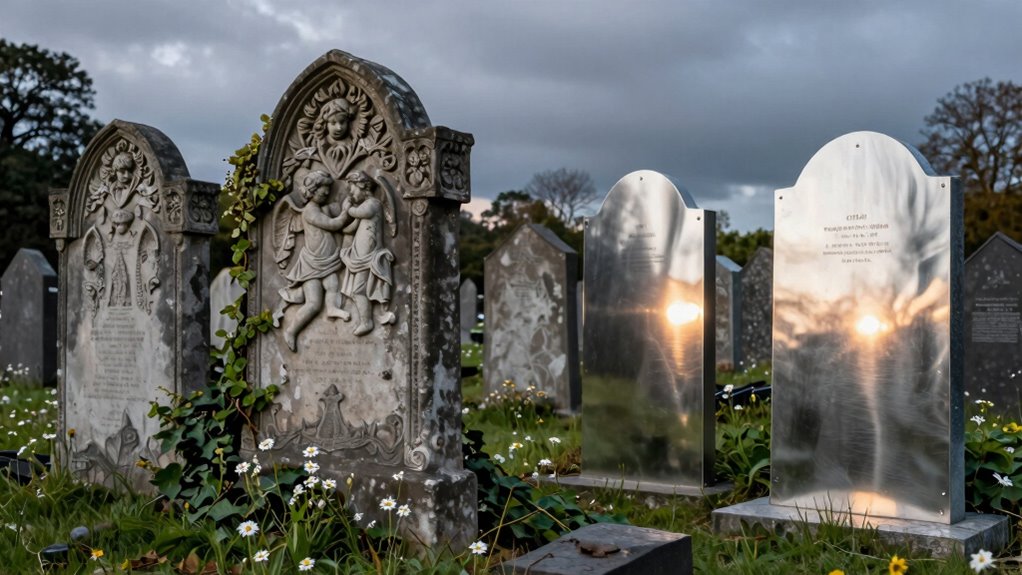

Over centuries, graveyard symbolism has shifted from simple markers reflecting social status and religious beliefs to more personalized and secular motifs. In ancient times, tombstones symbolized spiritual ideas and societal hierarchy. During the Middle Ages, religious symbols like crosses and angels predominated, emphasizing hope and moral virtues. Later, in the Renaissance and Baroque periods, tombs became ornate, expressing achievements and transcendence. Today, symbols are more diverse, reflecting individual beliefs and cultural changes—if you explore further, you’ll see how these symbols reveal evolving attitudes toward death.

Get books and reading essentials delivered free — and shop member deals
- Fast, free delivery on millions of items
- Access to Prime Big Deal Days deals on October 6–7
- Prime Video, Amazon Music and more included
Key Takeaways
- Ancient tombs used symbols to reflect social status, spiritual beliefs, and cultural values.
- Medieval gravestones incorporated religious symbols like crosses and angels to convey hope and moral virtues.
- Renaissance and Baroque tombstones became more ornate, emphasizing spiritual transcendence and societal achievements.
- Modern graveyards feature personalized, secular symbols representing hope, peace, and individual interests.
- Societal attitudes evolved from religious reverence to personalized, relaxed expressions of memory and identity.
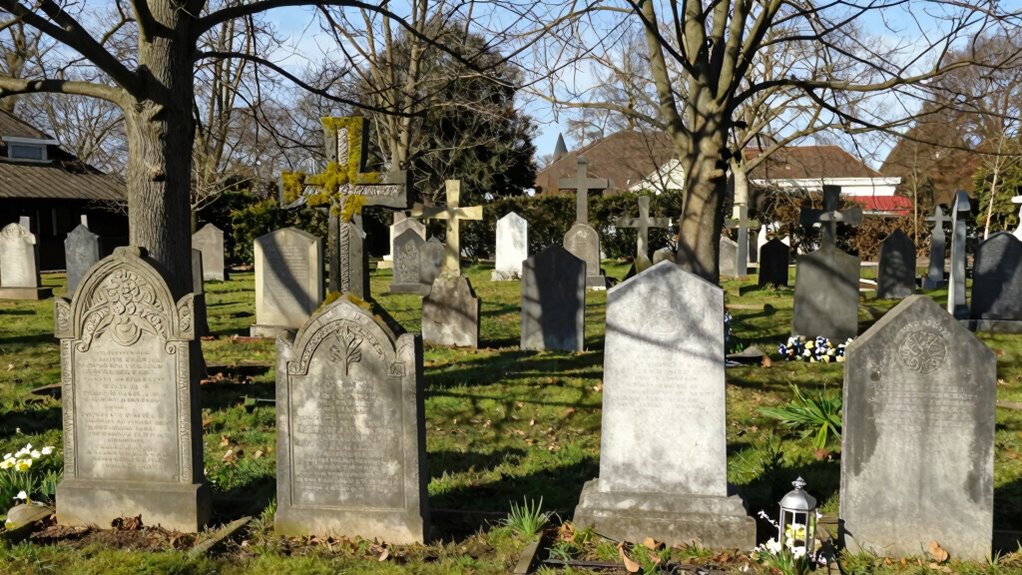
Throughout history, graveyards have served not only as resting places for the deceased but also as powerful symbols reflecting cultural beliefs, spiritual ideas, and societal values. Over the centuries, the way people approach burial sites reveals a lot about how they view life, death, and what comes after. Funeral rites have evolved significantly, shaping the design and purpose of graveyards. In ancient times, rituals often involved elaborate ceremonies, with tombs built to honor the dead and ensure their safe passage to the afterlife. These rites influenced the placement of graves and the types of monuments used, often reflecting social status or religious beliefs. As different cultures developed, the focus shifted; some emphasized communal remembrance, while others prioritized individual remembrance through detailed tombstone engravings. These engravings became more than mere identifiers; they became symbols of identity, status, and spiritual beliefs.
During the medieval period, graveyards were often located around churches, serving as sacred spaces where funeral rites could be performed with reverence. Tombstone engravings from this era often featured religious symbols like crosses, angels, and inscriptions that conveyed hope for resurrection. The inscriptions themselves became a way to communicate moral values or personal virtues, turning tombstones into storytelling devices that preserved the memory of the departed. Moving into the Renaissance and Baroque eras, tombstones grew more ornate, with intricate carvings and elaborate epitaphs. Funeral rites during this time also became more ceremonial and personalized, reflecting a shift toward celebrating the individual’s life. The symbolism on tombstones and the style of graveyards showcased societal ideals about mortality and the afterlife—sometimes emphasizing spiritual transcendence, other times focusing on earthly achievements. Additionally, the development of funeral practices influenced the way graveyards were designed and how their symbolism evolved over time. As society continued to change, the use of cemetery symbolism also expanded to include more secular and personal motifs, reflecting a broader range of beliefs about death.
In modern times, graveyard symbolism continues to shift. Funeral rites often incorporate more personal touches, and tombstone engravings tend to emphasize individual personality and life stories rather than solely religious themes. Graveyards now serve not only as places for mourning but also as parks of remembrance, where the design and symbolism can be more relaxed and personalized. Symbols related to peace, hope, or personal interests are common. This change reflects a broader societal move toward viewing death as a natural part of life, and graveyard symbolism adapts accordingly. Whether through simple stones or elaborate memorials, the ways you encounter and interpret graveyards reveal evolving attitudes toward mortality. From solemn religious symbols to personalized expressions, the story of graveyard symbolism is a mirror of cultural shifts across centuries.
As an affiliate, we earn on qualifying purchases.
Frequently Asked Questions
How Did Religious Beliefs Influence Graveyard Symbolism?
Religious beliefs heavily influenced graveyard symbolism by shaping funeral rituals and death representations. You see symbols like crosses, angels, and saints reflecting Christian faith, emphasizing salvation and eternal life. In other traditions, such as pagan or Buddhist, symbols like trees or lotus flowers highlight rebirth or spiritual enlightenment. These symbols guide funeral practices and help mourners understand death’s significance, reinforcing religious messages about the afterlife and spiritual continuity.
What Symbols Were Used in Ancient Versus Modern Graveyards?
Imagine walking through a silent forest of memories, where ancient tombstone motifs like skulls and angels tell stories of mortality and hope. In ancient graveyards, symbols like crosses, cherubs, and palm branches represented faith and eternal life. Today, funeral art leans toward personal symbols—flowers, hearts, and doves—reflecting individual remembrance. These tombstone motifs evolve, yet all serve as silent whispers of human connection beyond death.
How Did Societal Changes Affect Burial Symbolism?
Societal changes lead you to see burial symbolism as a reflection of cultural reinterpretations and artistic expressions. As societies evolved, they shifted from religious symbols to more personalized or secular motifs, emphasizing individual identity or societal values. These changes mirror broader cultural shifts, influencing how communities honor the dead and express their beliefs about life, death, and remembrance through evolving artistic styles and symbolic representations in graveyards.
Were Any Symbols Universally Recognized Across Cultures?
You’ll find that certain symbols in funeral art and mourning rituals, like the cross or skull, are widely recognized across cultures. These symbols often represent mortality, spiritual transformation, or protection. While specific meanings may vary, their universal presence shows a shared human desire to understand death and honor the deceased. Across different societies, such symbols create a common language, easing mourning and emphasizing the universal journey of life and death.
How Has Technology Impacted Graveyard Symbolism Today?
Technology has transformed graveyard symbolism today through digital memorials and virtual cemeteries. You can now create online spaces that honor loved ones, using symbols like photos, videos, and virtual flowers to express remembrance. These digital platforms make symbolism more personal and accessible, allowing you to connect beyond physical boundaries. As a result, traditional symbols adapt to modern technology, blending history with innovation to keep memories alive in new, meaningful ways.
Conclusion
As you’ve seen, graveyard symbolism shifts much like the moon’s phases, reflecting society’s evolving beliefs and fears. From the somber crosses of yesterday to the ornate sculptures of today, each tells a story, much like the whispered secrets of the ancients. Remember, these symbols are your silent guides, connecting you to those who walked before. Just as Dante journeyed through the circles of Hell, you walk through history’s quiet, sacred places—each marker a chapter in the eternal story.
Fall Picks
fall essentials
As an affiliate, we earn on qualifying purchases.